




Best Sugar Free Energy Pouches: Clean Boost, No Crash
| Key Insight | Explanation |
|---|---|
| Most energy pouches are sugar-free by design | Unlike energy drinks, quality oral pouches use xylitol or plant-fiber bases — no sugar, no calories, no liquid required. |
| Caffeine absorption differs from drinks | Sublingual and buccal delivery (through the gum tissue) means caffeine enters the bloodstream faster and more steadily than swallowing a drink. |
| Nootropics separate premium pouches from basic ones | Top-tier sugar free energy pouches pair caffeine with compounds like L-Theanine and Alpha-GPC to smooth the stimulant curve and enhance focus. |
| The ritual matters as much as the ingredient | Based on the 30/30/30 Addiction Rule, 60% of pouch dependency is habit and sensory cue — not chemistry. Matching that ritual is what makes substitution work. |
| Not all "clean" labels are equal | Watch for artificial sweeteners, undisclosed fillers, and unverified caffeine doses. European-manufactured pouches with GMP certification are the safer benchmark. |
| Sugar free energy pouches serve multiple use cases | Pre-workout, deep work focus, nicotine reduction, and smoke-free social settings are all valid contexts — the best pouch depends on your specific goal. |
Sugar free energy pouches are small, tobacco-free oral sachets that deliver caffeine and nootropics directly through the gum tissue — with zero sugar, zero nicotine, and no liquid required. The best options on the market in 2026 combine 40–80mg of caffeine with focus-enhancing compounds like L-Theanine (an amino acid that smooths the stimulant curve) and Alpha-GPC (a choline precursor linked to sharper cognition), all in a clean, plant-fiber base sweetened with xylitol instead of sugar. If you're done with the blood sugar spike and crash of energy drinks, or you're looking for a discreet, portable focus tool that doesn't involve a shaker bottle, this guide covers everything you need to make the right call.
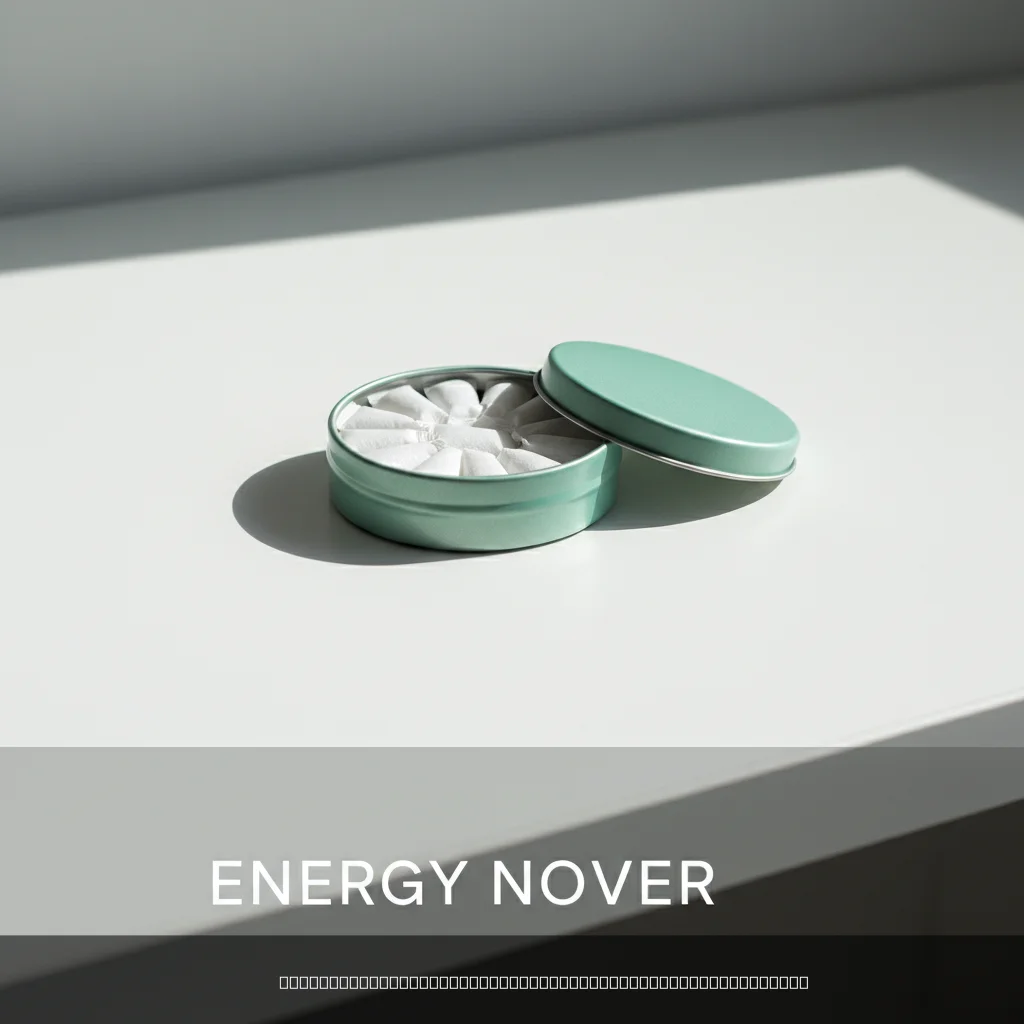
What Are Sugar Free Energy Pouches?
Sugar free energy pouches are tobacco-free oral sachets containing caffeine and functional compounds, placed under the lip for 15–45 minutes to deliver a steady, measured energy boost without swallowing anything.
The format itself isn't new. Oral pouches originated in the Scandinavian snus tradition, but the modern energy pouch strips out tobacco, nicotine, and sugar entirely. What you're left with is a delivery mechanism that's genuinely cleaner than most alternatives on the shelf [1].
The Anatomy of a Clean Energy Pouch
A quality sugar free energy pouch typically contains:
- Plant-fiber filler — the structural base that creates the "pillow" feel under the lip
- Caffeine — usually 40–80mg per pouch, sourced from green tea extract or synthetic caffeine anhydrous
- Nootropics — compounds like L-Theanine, Alpha-GPC, or B-vitamins that modify or enhance the caffeine effect
- Xylitol or erythritol — sugar alcohols that provide sweetness without spiking blood glucose
- Natural flavoring — typically mint, citrus, or berry
- Moisture agents — to maintain the correct texture and gum contact
Notice what's missing: tobacco, nicotine, sugar, and calories. According to the Banned Substances Control Group (BSCG), energy pouches provide "a delivery method that does not require liquid consumption, offers clear portion control, and excludes sugar and calories" [1] — a meaningful structural advantage over canned energy drinks.
Who Actually Uses Them?
The user base has diversified significantly since 2024. In practice, you'll find three distinct groups reaching for sugar free energy pouches:
- Productivity-focused professionals who want clean, discreet focus during deep work without a coffee mug or crash
- Fitness-minded athletes who need a pre-workout stimulant with a clean label and zero sugar
- Former nicotine pouch users who want to maintain the oral ritual without the chemical dependency
That third group is larger than most people realize. The oral pouch ritual — the placement, the burn, the pillow sensation — is deeply habitual. Sugar free energy pouches that replicate that sensory experience are uniquely positioned to serve people stepping away from nicotine, not just people stepping away from Red Bull.
How Sugar Free Energy Pouches Work in 2026
Sugar free energy pouches deliver caffeine through buccal absorption — the active compounds pass through the mucous membrane of the gum directly into the bloodstream, bypassing the digestive system entirely.
This is a meaningful pharmacokinetic difference from drinking caffeine. When you swallow a coffee or energy drink, caffeine passes through the stomach and small intestine before entering circulation. That process takes 30–60 minutes and is affected by food in your stomach, gastric pH, and gut motility. Buccal delivery is faster and more predictable [2].
The Absorption Mechanism Explained
Here's the practical sequence:
- You place the pouch between your upper lip and gum
- Moisture from saliva activates the pouch, releasing caffeine and other compounds
- The active ingredients cross the buccal mucosa (the thin tissue lining the cheek and gum)
- They enter the capillary network and reach systemic circulation within 10–20 minutes
- Effects typically peak at 20–30 minutes and sustain for 60–90 minutes
The result is a smoother onset than a shot of espresso and a cleaner tail-off than most energy drinks. No mid-morning cortisol spike. No sugar crash at 2pm. Just a measured, controlled lift [3].
Pro Tip: For deep work sessions, place your energy pouch 10–15 minutes before you need to be fully focused — not when you're already in the flow state. The onset curve rewards anticipation, not reaction.
Why Sugar-Free Matters for the Formula
Sugar isn't just a dietary concern here. It's a formulation issue. Sugar in an oral pouch creates a hygroscopic (moisture-attracting) environment that degrades the pouch texture and alters the release profile of active ingredients. Xylitol-based formulas maintain structural integrity longer and have the added benefit of being actively tooth-friendly — xylitol inhibits the oral bacteria (Streptococcus mutans) that cause decay [4].
As of 2026, the leading European-manufactured pouches use xylitol as the primary sweetener specifically because it solves both the dental and formulation problem simultaneously. It's not just a marketing claim. It's the right ingredient for the format.
Best Sugar Free Energy Pouches Ranked for 2026
The best this practice in 2026 combine a verified caffeine dose, at least one synergistic nootropic, a clean plant-fiber base, and a sensory profile that makes you actually want to use them consistently.
Here's a structured comparison of the leading options available as of 2026, evaluated on formula quality, caffeine dose, nootropic stack, and ingredient transparency:
| Brand / Product | Caffeine per Pouch | Nootropics | Sugar-Free | Nicotine-Free | Notable Feature |
|---|---|---|---|---|---|
| Outdare Energy Pouch | 50mg | Yes (proprietary blend) | Yes (xylitol base) | Yes | Identical taste/burn to nicotine pouch for ritual substitution |
| NZE Nootropic Pouches [5] | Varies by SKU | Yes | Yes (no artificial sweeteners) | Yes | Caffeine-free variant available |
| Mojo Energy Pouches [6] | 50mg | Not specified | Yes | Yes | 4 flavors, widely distributed |
| Wip Energy Pouches [7] | 85mg (green tea) | B-vitamins | Yes (sweetener-free) | Yes | No sweeteners at all — natural only |
| Cyclone Pods Focus [8] | 50mg guarana | 5 adaptogens | Yes | Yes | Adaptogen stack for stress resilience |
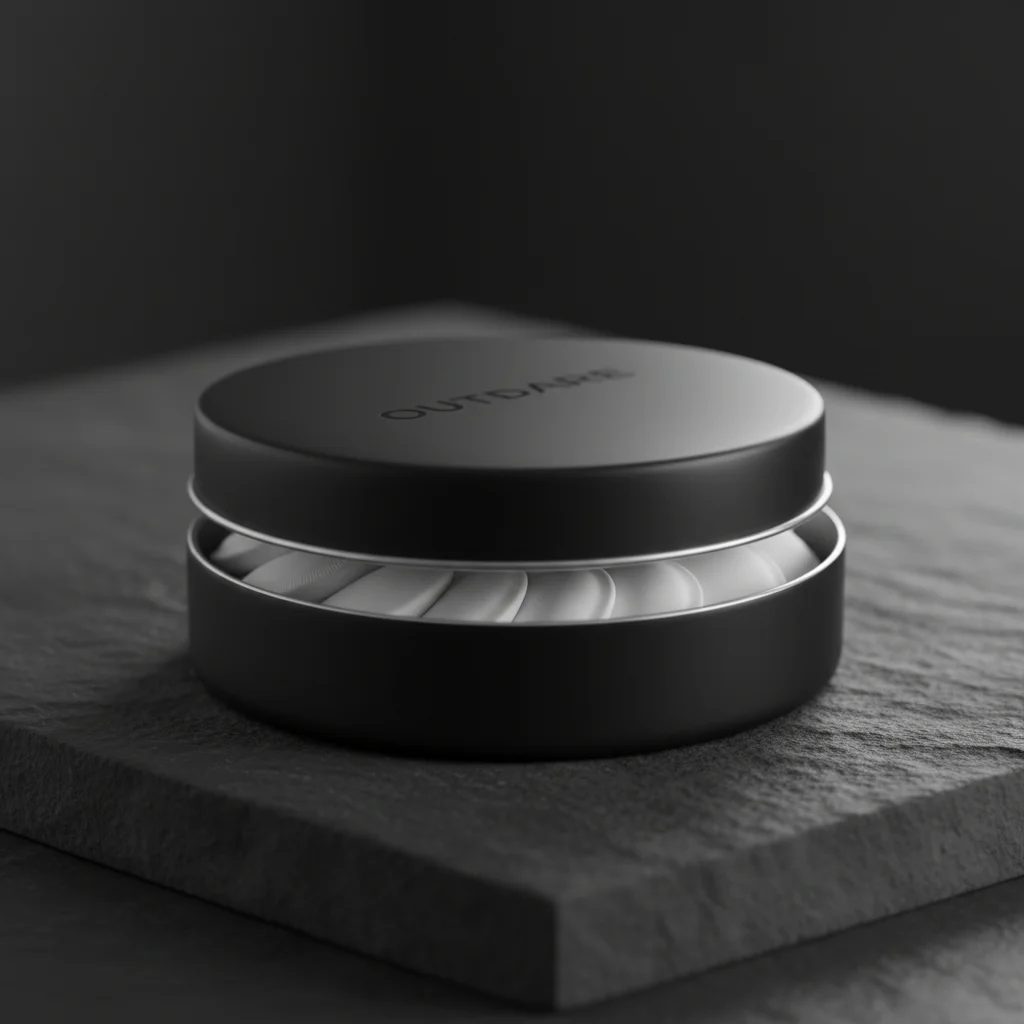
1. Outdare Energy Pouch — Best for Nicotine Ritual Substitution
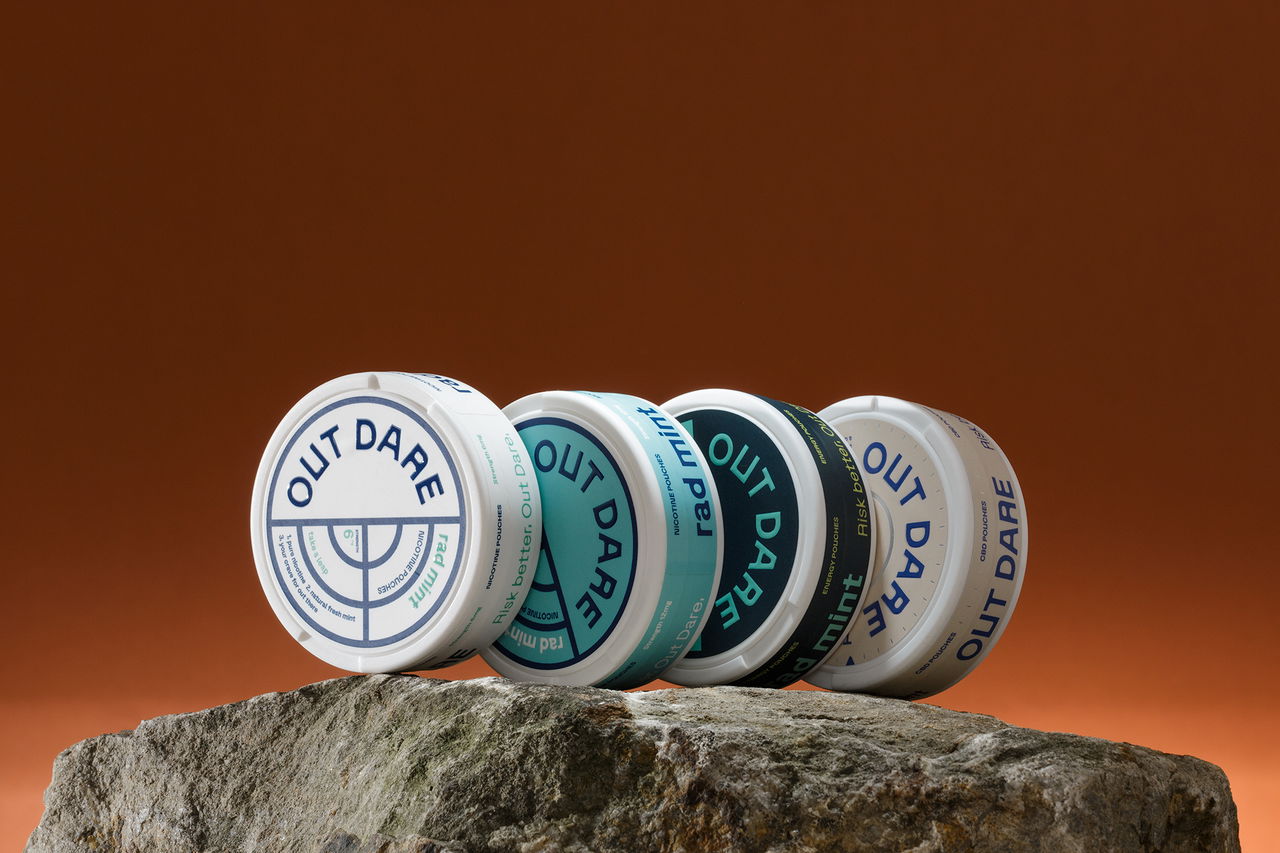
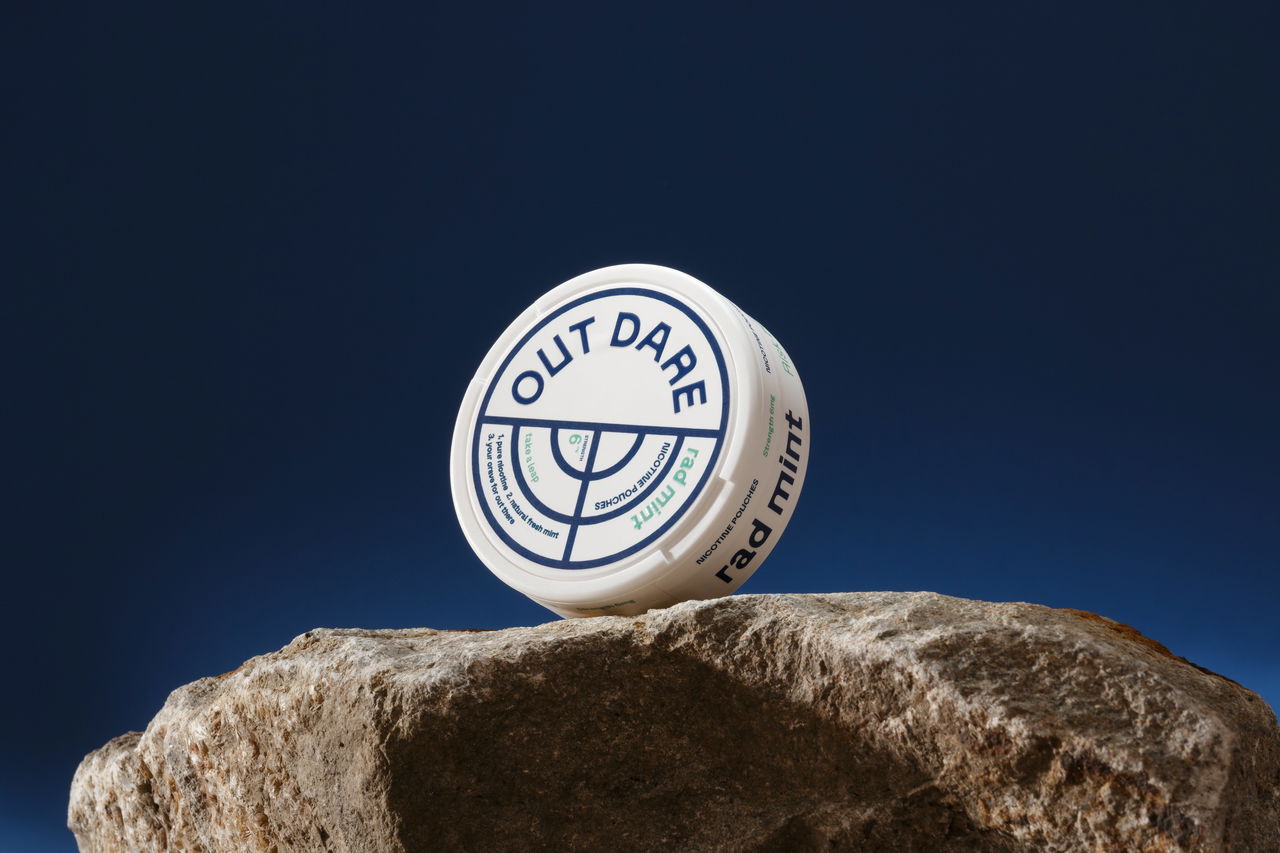
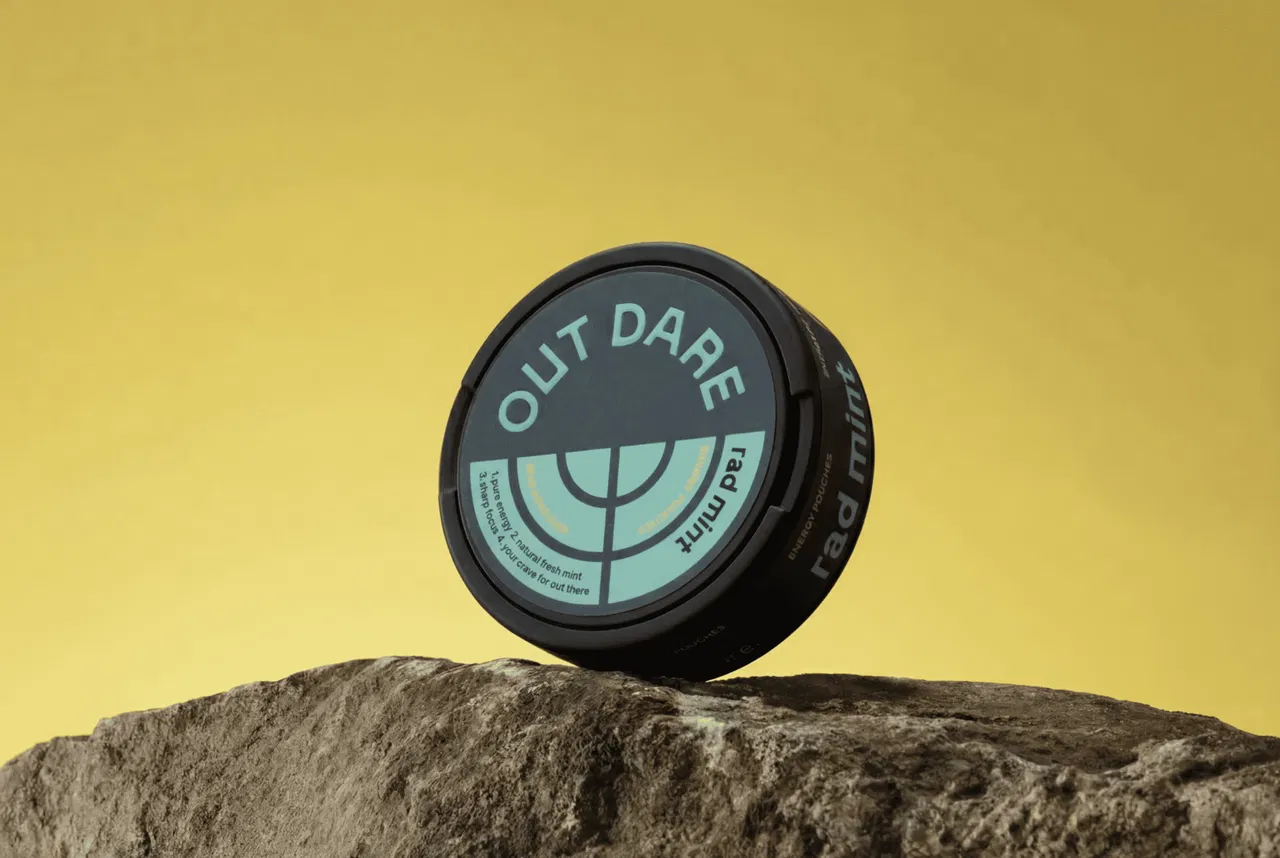
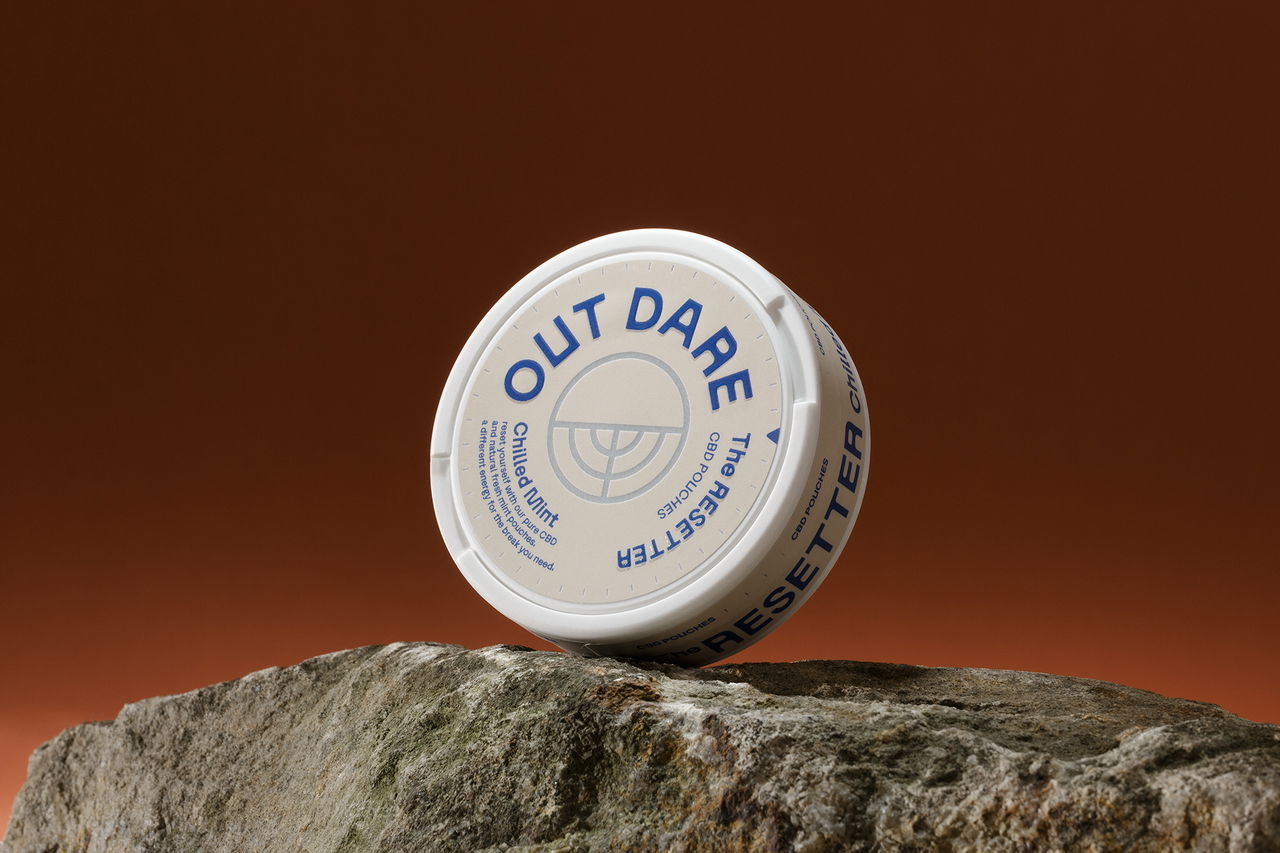
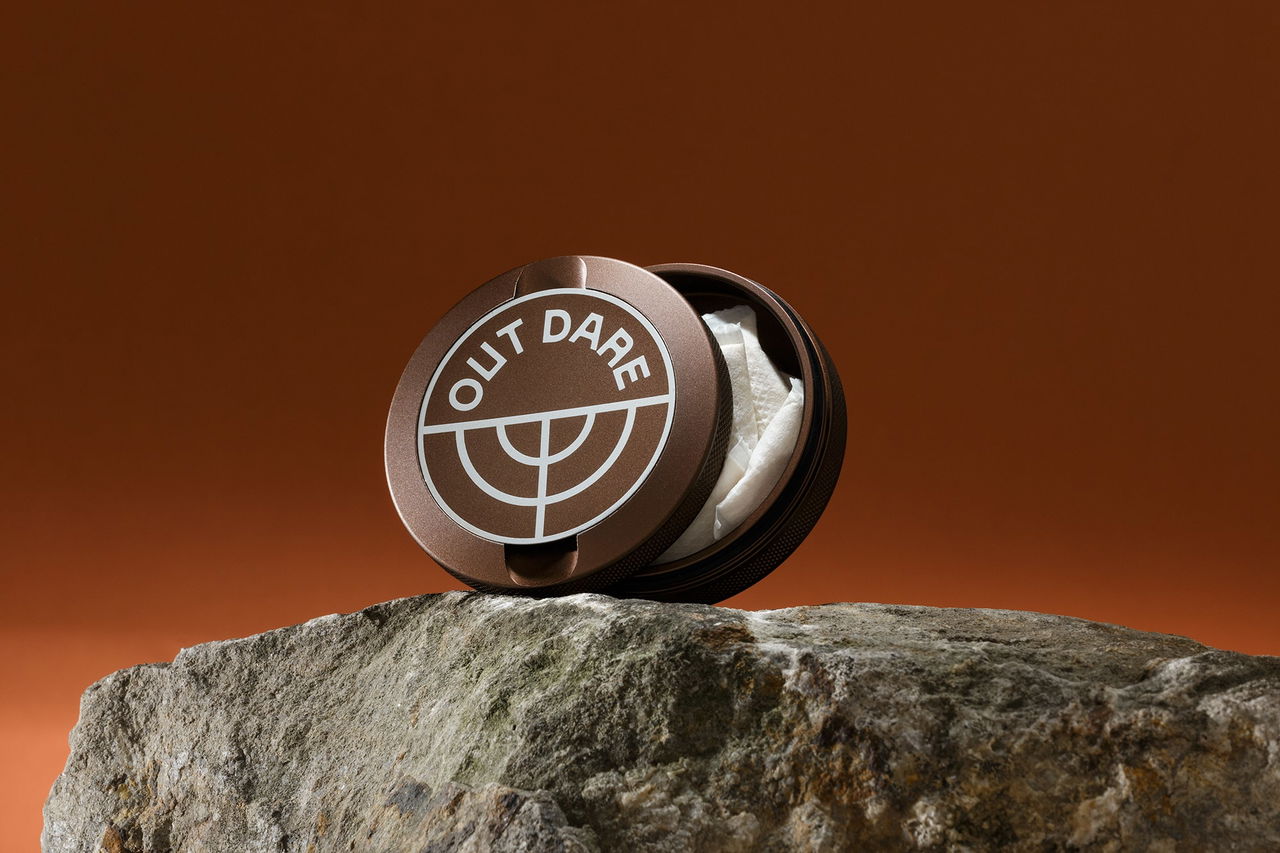
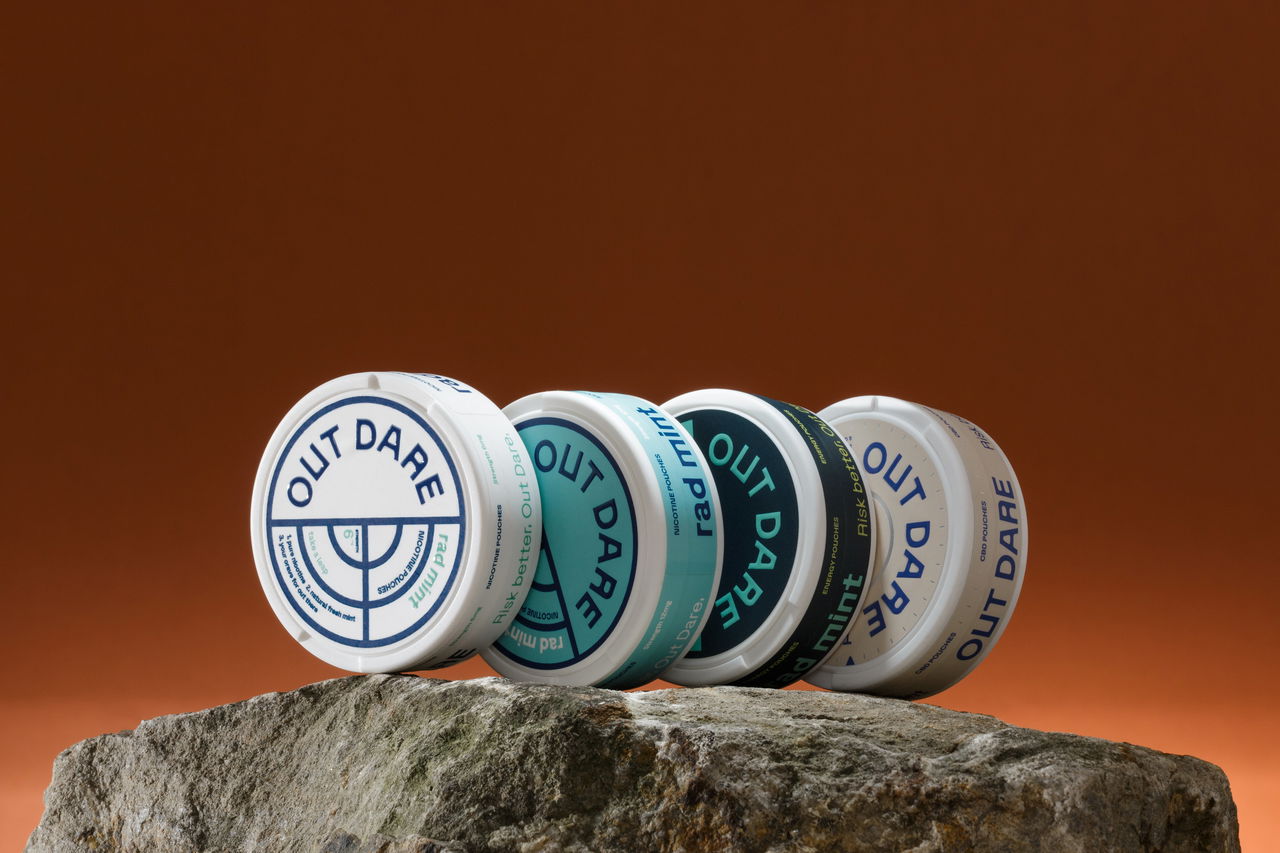
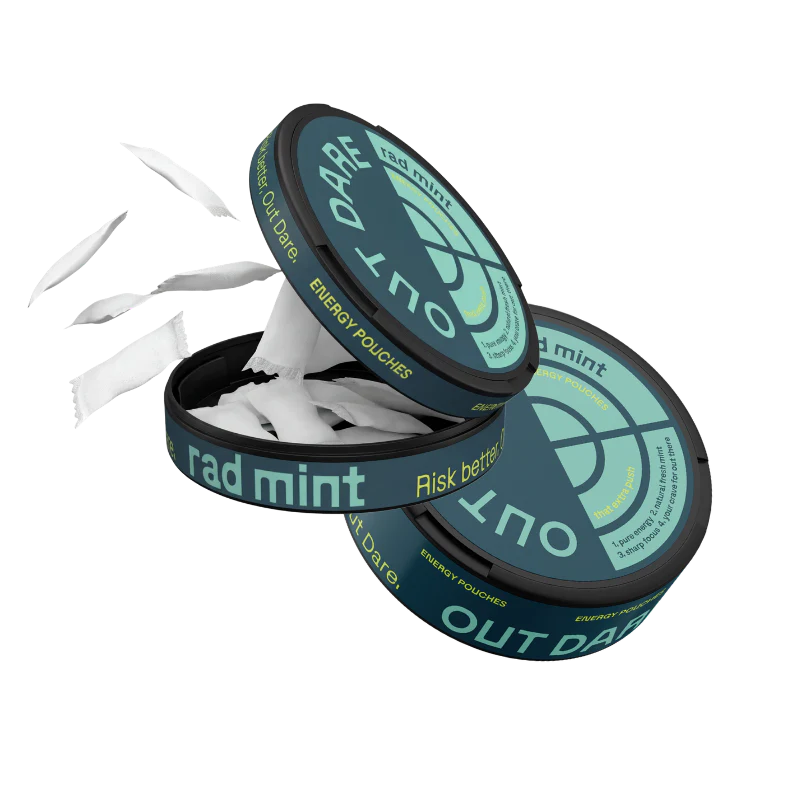
Outdare's Energy Pouch delivers 50mg of caffeine combined with nootropics in a xylitol-based, plant-fiber formula that is completely sugar-free and nicotine-free. What separates it from every other entry on this list is a deliberate design choice: the mint flavor, gum burn, and pillow mouthfeel are engineered to be sensorially identical to Outdare's nicotine pouches.
That's not an accident. It's the core of the Outdare system. If you're a former nicotine pouch user, your brain has associated the oral ritual with relief, focus, and reward. Swap in a pouch that feels and tastes exactly the same, and you satisfy 60% of the dependency loop without touching the chemical component. The Energy Pouch handles the habit and sensory cue. You manage the nicotine reduction separately, on your own timeline.
- Best for: Former nicotine pouch users, productivity-focused professionals, pre-workout use
- Caffeine dose: 50mg (equivalent to a moderate espresso)
- Formula: Plant-fiber filler, xylitol base, natural mint, nootropic blend
- Manufacturing: Clean European production, tobacco-free
2. NZE Nootropic Pouches — Best for Caffeine-Free Focus
NZE offers one of the most transparent nootropic stacks in the category, with no artificial sweeteners and a caffeine-free variant for users who are sensitive to stimulants but still want cognitive support [5]. According to their product listing, the formula specifically avoids ingredients that cause "headaches, digestive and health issues" — a nod to the gut problems that plague many energy drink users.
- Best for: Caffeine-sensitive users, afternoon focus without sleep disruption
- Notable: One of the few sugar free energy pouches with a verified caffeine-free SKU
3. Wip Energy Pouches — Best for Sweetener-Sensitive Users
Wip goes further than most by eliminating not just sugar but all sweeteners, including sugar alcohols [7]. At 85mg of green tea-derived caffeine per serving, it's on the stronger end of the category. The trade-off is a slightly more bitter taste profile that some users prefer for its "clean" feel.
- Best for: Users who react to xylitol or erythritol, higher caffeine needs
- Notable: Natural caffeine from green tea, no synthetic additives
Pro Tip: If you're using energy pouches as a nicotine replacement tool, start with a 50mg caffeine option rather than jumping to 80–85mg. The lower dose gives you the ritual satisfaction without over-stimulating a nervous system that's already adjusting to reduced nicotine.
Ingredients to Look For (and Avoid)
The ingredient list on a sugar free energy pouch tells you whether the brand is serious about clean formulation or just slapping "sugar-free" on a mediocre product.
The category has grown fast since 2024, and not every new entrant has earned the "clean" label. Men's Health noted in their 2026 review of the category that several energy pouches on the market contain "undisclosed proprietary blends" that make it impossible to verify actual caffeine doses [4]. That's a real problem when you're using pouches as a precision focus tool.
Ingredients That Signal Quality
- L-Theanine — an amino acid found naturally in green tea that reduces the jitter and anxiety response to caffeine without blunting the stimulant effect. The 2:1 L-Theanine to caffeine ratio is the evidence-backed benchmark.
- Alpha-GPC — a choline precursor that supports acetylcholine production, linked to improved working memory and attention in multiple human trials.
- Plant-fiber matrix — a cellulose-based filler that creates the correct mouthfeel and acts as a controlled-release vehicle for active ingredients.
- Xylitol — a sugar alcohol with a low glycemic index (GI of 7 vs. 65 for table sugar) that provides sweetness without blood glucose impact and actively supports dental health.
- Natural caffeine sources — green tea extract, guarana, or coffee fruit are preferable to synthetic caffeine anhydrous for a smoother release profile.
Ingredients That Are Red Flags
- Aspartame or acesulfame-K — artificial sweeteners with ongoing regulatory scrutiny; not inherently dangerous at normal doses but unnecessary when xylitol is available
- Undisclosed "proprietary blends" — a label tactic that hides actual dosages; avoid any pouch that won't tell you exactly how much caffeine is in it
- Synthetic dyes or colorants — no functional role in a pouch; their presence signals cost-cutting in the formula
- Tobacco-derived nicotine listed as an ingredient — obvious, but worth checking, especially on pouches marketed ambiguously as "energy" products
A common mistake consumers make is assuming "sugar-free" automatically means "clean." Those are two different claims. A pouch can be sugar-free and still contain artificial sweeteners, synthetic fillers, and undisclosed stimulants. Read the full ingredient panel, not just the front-of-pack claim [1].
Pro Tip: When evaluating a new brand, look for GMP (Good Manufacturing Practice) certification on the label or product page. GMP certification means the facility has been audited for ingredient accuracy, contamination controls, and label compliance — it's the minimum credibility bar for any oral health product.
How to Choose the Right Sugar Free Energy Pouch in 2026
Choosing the right sugar free energy pouch comes down to four variables: your caffeine tolerance, your use case, your sensitivity to sweeteners, and whether you need the pouch to replicate the sensory profile of a nicotine pouch.
The market has matured enough that there's no single "best" option — the right choice depends on what you're actually trying to accomplish. Here's a practical decision framework:
Decision Framework by Use Case
- For deep work and cognitive focus: Prioritize a caffeine + L-Theanine stack. The 50mg caffeine range is ideal for sustained focus without the anxiety spike that higher doses can trigger. Outdare's Energy Pouch and NZE both fit this profile well.
- For pre-workout energy: A slightly higher caffeine dose (70–85mg) with a clean formula is appropriate. Wip's green tea caffeine at 85mg is a solid option here, particularly for users who prefer no sweeteners at all.
- For nicotine reduction or quitting: The sensory match matters as much as the caffeine dose. You need a pouch that replicates the burn, the pillow, and the mint — not just the stimulant. This is where Outdare's system has a structural advantage no other brand has addressed as of 2026.
- For evening use or anxiety management: Skip caffeine entirely. A CBD pouch or a caffeine-free nootropic pouch (like NZE's caffeine-free variant) gives you the ritual without the stimulant that would disrupt sleep.
The 30/30/30 Framework for Nicotine Users
At Outdare LTD, we've found that the single biggest mistake former nicotine pouch users make when switching to energy pouches is choosing a product that doesn't replicate the sensory experience. They pick a pouch based on caffeine dose alone, find that it doesn't scratch the itch, and go back to nicotine within a week.
The 30/30/30 Addiction Rule explains why. Nicotine dependency breaks down as roughly:
- 30% chemical — the actual nicotine molecule and its effect on dopamine receptors
- 30% physical habit — the placement ritual, the pillow sensation under the lip
- 30% sensory cue — the burn, the mint, the taste that your brain has associated with relief
A sugar free energy pouch that handles the physical habit and sensory cue components addresses 60% of the dependency loop. That leaves only the chemical component to manage — which is a much more tractable problem than quitting the whole thing cold turkey. Research consistently shows that cold-turkey quit attempts fail at rates above 95% within the first year [3].
The practical implication: if you're using energy pouches as part of a nicotine reduction strategy, sensory parity with your nicotine pouch isn't a nice-to-have. It's the mechanism.
Sources & References
- BSCG, "Energy Pouches — Safety, Ingredients and Compliance Risk," 2026
- Ashley Addiction Treatment, "What Are Caffeine Pouches?," 2026
- Partnership to End Addiction (drugfree.org), "How Much Caffeine Is Safe for Teens? Limits, Energy Drinks, and Caffeine Pouches," 2026
- Men's Health, "Some 'Energy Pouches' Are Sketchy. But These Three Actually Work.," 2026
- NZE Pouches, Official Product Site, 2026
- Mojo Energy Pouches, Official Product Site, 2026
- Wip Energy Pouches, Official Site, 2026
- Cyclone Pods, "Sugar-Free Energy Pouches: 7 Best Brands Compared (2026)," 2026
Frequently Asked Questions
1. Do energy pouches have sugar?
Most quality this method contain no sugar at all. Instead, they use xylitol or erythritol — sugar alcohols with a negligible glycemic index — to provide sweetness without spiking blood glucose. This makes them structurally different from energy drinks, which often contain 25–54g of sugar per can. Always verify the sweetener type on the ingredient panel, since "sugar-free" doesn't rule out artificial sweeteners like aspartame, which some brands still use.
2. Are sugar free energy pouches safe?
For healthy adults, this strategy with verified caffeine doses (40–85mg per pouch) and clean ingredient lists are generally considered safe for regular use. The BSCG notes that the format's portion control is a structural safety advantage over drinks. That said, results may vary — users with cardiovascular conditions, caffeine sensitivity, or anxiety disorders should consult a physician before use. Pregnant women should avoid all caffeine-containing products. The key safety variable is dose transparency: avoid brands that don't disclose exact caffeine content.
3. How long does a sugar free energy pouch take to work?
Most users report feeling effects within 10–20 minutes of placement, with peak effect at 20–30 minutes. This is faster than drinking caffeine because buccal absorption (through the gum tissue) bypasses the digestive system. The effect typically sustains for 60–90 minutes. Using the pouch 10–15 minutes before a task — rather than mid-task — gives you the smoothest onset curve.
4. Can energy pouches help with nicotine reduction?
Yes — specifically, energy pouches that replicate the sensory experience of a nicotine pouch can address up to 60% of the dependency loop. According to the 30/30/30 Addiction Rule, only 30% of pouch dependency is chemical (nicotine). The remaining 60% is the physical habit and sensory cue — the burn, the pillow, the mint. A sugar free energy pouch that matches those sensory signals lets the brain maintain the ritual while the chemical dependency is gradually reduced. Most users who follow a structured 4-week substitution method reduce nicotine intake by 60–90% in the first month.
5. What's the difference between an energy pouch and a nicotine pouch?
The delivery format is identical — both are small oral sachets placed under the lip. The difference is the active ingredient. Nicotine pouches contain nicotine (typically 4–15mg), which stimulates dopamine and norepinephrine release. Energy pouches contain caffeine (typically 40–85mg) and often nootropics like L-Theanine, with zero nicotine. The sensory experience can be made nearly identical through formula engineering — same burn, same mouthfeel, same taste — which is exactly what makes energy pouches effective as a nicotine replacement tool when the formulas are matched.
6. How many sugar free energy pouches can I use per day?
The safe upper limit for caffeine intake for healthy adults is generally cited as 400mg per day by major health authorities. At 50mg per pouch, that's a theoretical ceiling of 8 pouches — but in practice, 2–4 per day is the typical usage range for sustained focus without overstimulation. Space them at least 90 minutes apart to avoid stacking the caffeine curve. If you're also drinking coffee or other caffeinated beverages, factor those into your daily total.
Conclusion
this approach have moved well past novelty in 2026. They're a legitimate, clean-label alternative to energy drinks for anyone who wants a precise, portable caffeine delivery system without the sugar, the calories, or the crash. The best options combine a verified caffeine dose, at least one synergistic nootropic, and a plant-fiber xylitol base that keeps the formula honest from start to finish.
For nicotine pouch users specifically, the formula choice matters even more. Matching the sensory experience of your existing pouch isn't optional — it's the mechanism. A sugar free energy pouch that replicates the burn, the pillow, and the mint handles 60% of the dependency loop and makes the chemical reduction manageable rather than miserable.
Outdare LTD built its entire Energy Pouch around this insight. Same taste. Same burn. Same ritual. Zero nicotine. Zero sugar. If you're ready to keep the habit and lose the chemical, that's the system worth starting with. Risk Better. Out Dare.
Recommended Articles
Explore more from our content library: