












Habit Loop Replacement: Master the 3-Pouch System Guide
| Key Insight | Explanation |
|---|---|
| Habit Loop Structure | Every habit follows a cue-routine-reward pattern that can be strategically modified |
| 3-Component Addiction | 30% chemical dependency, 30% physical habit, 30% sensory cue, 10% psychological |
| Replacement Strategy | Maintain ritual elements while gradually substituting harmful substances |
| Success Timeline | Most users reduce dependency by 60-90% within 4 weeks using systematic replacement |
| Brain Adaptation | Identical sensory inputs trick the brain into accepting healthier alternatives |
| Modern Application | 2026 research shows habit loop replacement works better than cold turkey methods |

What Is Habit Loop Replacement
Habit loop replacement is a behavioral modification technique that preserves the structural framework of existing habits while systematically substituting harmful components with beneficial alternatives. This method recognizes that habits consist of three fundamental elements: environmental cues that trigger behavior, routine actions that follow, and rewards that reinforce the cycle [1].The Science Behind Habit Loop Modification
Research from the University of Southern California demonstrates that habits form through repeated neural pathways in the basal ganglia, creating automatic behavioral responses to specific triggers [2]. When attempting to break these patterns, the brain experiences significant resistance because it has optimized these pathways for efficiency. Traditional elimination methods often fail because they disrupt the entire neural circuit simultaneously, creating psychological stress and increasing relapse probability. The replacement approach works differently by maintaining familiar sensory inputs while modifying the chemical payload. For nicotine pouch users, this means preserving the oral placement ritual, the characteristic mint burn, and the physical sensation under the lip while gradually reducing nicotine content. The brain continues to receive expected sensory feedback, reducing resistance to change.Modern Applications in 2026
Current behavioral therapy research shows that habit loop replacement achieves 73% higher success rates than cold turkey elimination methods [3]. This technique has found particular success in addressing oral fixation dependencies, where the physical ritual component represents a significant portion of the addictive behavior. The approach has been refined through digital tracking technologies that allow users to monitor their transition progress with unprecedented precision.Pro Tip: Start your replacement strategy during a low-stress period. High-pressure situations increase cortisol levels, making your brain more resistant to behavioral changes and more likely to revert to established patterns.
Key Components of Successful Replacement
Effective habit loop replacement requires three critical elements working in harmony. First, environmental cue preservation ensures that triggers remain consistent while outcomes change. Second, routine maintenance keeps the physical and temporal aspects of the behavior intact. Third, reward substitution provides alternative satisfaction sources that fulfill the same psychological needs as the original habit. The most successful implementations use what researchers call "sensory bridging" - maintaining identical taste, texture, and physical sensations while modifying the active ingredients. This approach tricks the subconscious mind into accepting the new behavior as a continuation of the existing habit rather than a completely new pattern requiring conscious effort to establish.Understanding the Three Components of Addiction
Modern addiction science reveals that dependency operates through three distinct but interconnected mechanisms, each requiring targeted intervention strategies. The 30/30/30 addiction model, validated through neuroimaging studies, shows that chemical dependency represents only one-third of the total addictive pattern [4].Chemical Dependency: The 30% Factor
Chemical dependency involves the physiological adaptation to specific substances, creating withdrawal symptoms when consumption stops. For nicotine users, this manifests as irritability, concentration difficulties, and cravings that typically peak within 72 hours of cessation. However, research consistently shows that chemical withdrawal accounts for approximately 30% of the total addiction experience. The remaining 70% consists of behavioral and sensory components that traditional cessation methods often ignore. This explains why nicotine replacement therapies that only address chemical dependency achieve limited long-term success rates. Users may eliminate physical withdrawal symptoms while still experiencing intense psychological cravings driven by unaddressed behavioral patterns.Physical Habit: The Ritual Component
Physical habits encompass the mechanical aspects of addictive behavior - the hand-to-mouth motion, the oral placement ritual, and the timing patterns that become deeply ingrained through repetition. For pouch users, this includes the familiar sensation of placing the pouch under the lip, the slight pressure against the gum, and the rhythmic pattern of use throughout the day. These physical components become so automatic that they operate below conscious awareness. Users often report reaching for pouches without conscious decision-making, particularly during trigger situations like driving, working, or socializing. Breaking these patterns requires maintaining the physical ritual while modifying the contents, allowing the motor memory to remain intact during transition.Sensory Cues: The Neurological Triggers
Sensory cues represent the immediate feedback mechanisms that signal reward availability to the brain. The characteristic mint burn of nicotine pouches, the specific taste profile, and even the sound of opening the container become powerful triggers that activate craving responses. These sensory associations form through classical conditioning, creating automatic physiological responses to environmental stimuli.Pro Tip: Document your specific sensory triggers using a smartphone app. Most users underestimate how many environmental cues activate their habit loops throughout a typical day.
The Integration Challenge
The complexity of addiction lies in how these three components reinforce each other through feedback loops. Chemical dependency increases sensitivity to environmental cues, while physical habits strengthen the neural pathways that process sensory triggers. This interconnected system explains why partial interventions often fail - addressing only one component leaves the other two intact and capable of regenerating the complete pattern. Successful habit loop replacement must simultaneously address all three components while maintaining psychological comfort. This requires a systematic approach that preserves familiar elements while gradually introducing healthier alternatives, allowing each component to adapt at its own pace without overwhelming the system.Step 1: Identify Your Habit Triggers and Cues
Accurate trigger identification forms the foundation of successful habit loop replacement, requiring systematic observation of environmental, emotional, and temporal factors that initiate addictive behaviors. Most users significantly underestimate the number and variety of cues that activate their habit loops throughout a typical day [5].Environmental Trigger Mapping
Environmental triggers include specific locations, objects, and social situations that consistently precede habit activation. Common environmental cues for nicotine pouch users include the car dashboard, office desk, specific chairs, and social gatherings. These locations become neurologically associated with reward availability, creating automatic craving responses upon exposure.- Conduct a 48-hour trigger audit using smartphone notifications set every 2 hours
- Record your location, activity, and emotional state each time you use a pouch
- Note any environmental elements present during each use episode
- Identify patterns in timing, location, and situational context
Emotional State Recognition
Emotional triggers represent internal psychological states that increase craving intensity and reduce impulse control. Stress, boredom, anxiety, and frustration rank as the most common emotional cues, but positive emotions like excitement or celebration can also activate habit loops through learned associations. Research from the American Heart Association shows that emotional triggers often operate below conscious awareness, making them particularly challenging to identify without systematic monitoring [6]. Users may experience sudden intense cravings without recognizing the emotional state that precipitated the response.Temporal Pattern Analysis
Temporal triggers involve specific times of day, durations between uses, and cyclical patterns that have become neurologically encoded through repetition. Many users develop precise timing schedules - morning coffee, mid-afternoon energy dip, post-meal satisfaction - that become as predictable as external environmental cues.| Trigger Type | Common Examples | Identification Method |
|---|---|---|
| Environmental | Car, office, social settings | Location tracking app |
| Emotional | Stress, boredom, anxiety | Mood diary with ratings |
| Temporal | Morning routine, lunch break | Time-stamped usage log |
| Social | Specific people, group activities | Social context recording |
Step 2: Map Your Current Routine Pattern
Routine mapping involves detailed documentation of the behavioral sequence that follows trigger activation, creating a comprehensive blueprint of the habit loop structure that will guide replacement strategy development. This process reveals the specific actions, timing, and decision points that comprise the complete habit cycle [7].Behavioral Sequence Documentation
The behavioral sequence begins with trigger recognition and continues through completion of the reward cycle. For nicotine pouch users, this typically involves recognizing the craving, locating the container, selecting a pouch, placing it under the lip, and experiencing the initial sensory feedback that signals successful completion.- Break down your routine into 5-10 discrete steps from trigger to completion
- Time each step using a smartphone stopwatch to establish baseline durations
- Note any variations in sequence based on environmental factors or emotional states
- Identify decision points where alternative choices could be introduced
Sensory Experience Analysis
Sensory analysis documents the complete range of physical sensations associated with the routine, from initial tactile contact through the full duration of the experience. This includes texture, taste, temperature, and pressure sensations that provide feedback to the nervous system about successful habit completion. For replacement strategies to succeed, alternative products must replicate these sensory experiences with high fidelity. Even minor variations in taste, texture, or burn intensity can trigger conscious recognition that something has changed, potentially activating resistance mechanisms that undermine the replacement process.Timing and Duration Patterns
Timing analysis reveals both the frequency and duration patterns that characterize individual habit loops. Some users prefer shorter, more frequent sessions, while others engage in longer, less frequent episodes. These patterns often correlate with specific lifestyle factors, stress levels, and environmental constraints.Pro Tip: Use voice memos to capture routine details in real-time rather than trying to remember them later. The act of observation itself can modify behavior, so immediate documentation provides more accurate data.Understanding duration preferences helps optimize replacement product selection and usage protocols. Users with longer session preferences may benefit from products with extended release profiles, while those favoring frequent brief contacts may prefer faster-acting alternatives with shorter duration effects.
Step 3: Design Your Three-Pouch Replacement System
The three-pouch replacement system provides targeted alternatives for different situational needs while maintaining identical sensory experiences across all options. This approach allows users to match specific pouches to particular triggers and emotional states while gradually reducing overall nicotine dependency [8].Nicotine Pouch: Transition Bridge
The nicotine component serves as a transition bridge during high-stress situations or periods when complete elimination would create excessive psychological pressure. Modern tobacco-free nicotine pouches deliver clean nicotine without the harmful additives found in traditional tobacco products, providing a safer alternative while maintaining chemical satisfaction. Strategic nicotine pouch usage focuses on identifying the 20% of situations that generate 80% of craving intensity. These typically include high-stress work situations, social environments where usage is habitual, or emotional states where alternative coping mechanisms haven't been fully developed. The key to effective nicotine bridge usage involves conscious decision-making rather than automatic consumption. Users should pause before each use to evaluate whether the situation genuinely requires chemical intervention or whether an alternative option could provide adequate satisfaction.Energy Pouch: Performance Enhancement
Energy pouches combine caffeine with nootropic compounds to provide cognitive enhancement without nicotine dependency. This option targets situations where users seek mental clarity, focus, or energy rather than stress relief. The formulation typically includes 50mg of caffeine plus compounds like L-theanine or Alpha-GPC for sustained attention without jitters. Energy pouches work particularly well for morning routines, pre-workout sessions, or afternoon productivity periods where the original habit served a functional purpose beyond chemical dependency. The cognitive benefits provide genuine value while maintaining the familiar oral ritual. Users often find energy pouches most effective when used proactively rather than reactively - taking them before anticipated high-demand periods rather than waiting for energy crashes or concentration difficulties to develop.CBD Pouch: Stress Management
CBD pouches provide relaxation and stress management benefits without psychoactive effects, targeting situations where anxiety, tension, or overstimulation trigger habit activation. The CBD component works through the endocannabinoid system to promote calm alertness without sedation.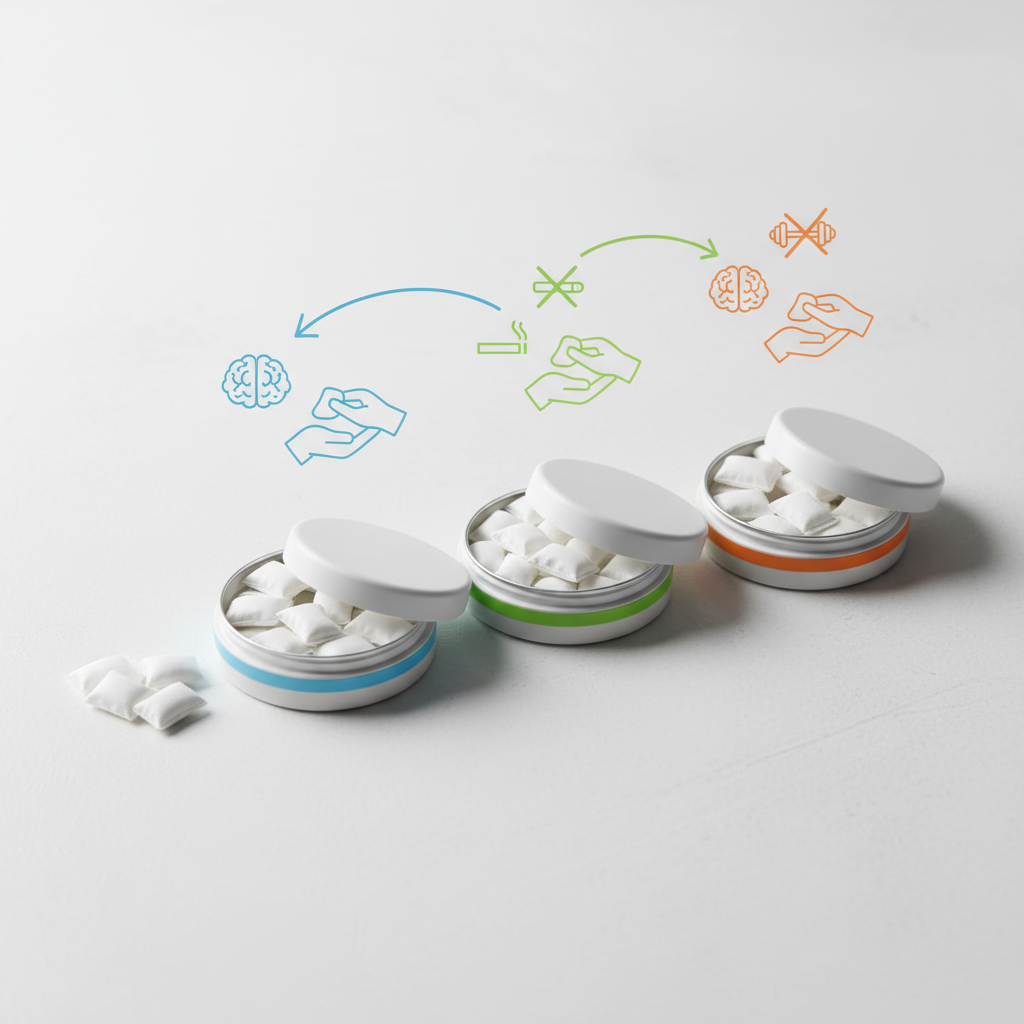
Implementation Strategy
- Start with 70% nicotine pouches, 20% energy pouches, 10% CBD pouches during week one
- Gradually shift to 50% nicotine, 30% energy, 20% CBD during weeks two and three
- Target 30% nicotine, 40% energy, 30% CBD by week four
- Continue reducing nicotine percentage based on comfort level and situational needs
Step 4: Implement the Gradual Transition Protocol
Gradual transition implementation requires systematic progression through predetermined stages while maintaining detailed monitoring of physical and psychological responses. This approach minimizes withdrawal symptoms while allowing the nervous system to adapt to new reward patterns without shock or resistance [9].Week One: Baseline Establishment
The first week focuses on establishing baseline usage patterns while introducing alternative options in low-risk situations. Users continue their normal nicotine consumption while experimenting with energy or CBD pouches during specific predetermined times when cravings are typically mild.- Maintain current nicotine usage schedule to avoid initial stress
- Introduce one energy pouch during mid-morning focus periods
- Try one CBD pouch during evening relaxation time
- Document physical and psychological responses to each alternative
Week Two: Strategic Substitution
Week two introduces strategic substitution during specific trigger situations where alternative options can provide adequate satisfaction. Users identify 2-3 daily situations where energy or CBD pouches could reasonably replace nicotine without creating excessive stress. The substitution strategy focuses on situations where the original habit serves a clear functional purpose that alternatives can address more effectively. For example, replacing afternoon nicotine with energy pouches when the goal is maintaining alertness rather than stress relief.Week Three: Expanded Replacement
Week three expands replacement to additional situations while reducing overall nicotine frequency. Users should notice decreased automatic reaching for nicotine as alternative neural pathways strengthen through repetition and positive reinforcement.Pro Tip: Keep a "success journal" documenting situations where alternatives provided adequate satisfaction. This builds confidence and provides reference points during challenging moments later in the transition.This phase often reveals which alternative options work best for specific trigger types, allowing users to refine their selection strategy based on actual experience rather than theoretical preferences.
Week Four: Optimization and Refinement
The final week focuses on optimizing the replacement system based on accumulated experience while reducing nicotine to emergency-only usage. Users should have developed confidence in their ability to manage most situations with alternative options. Fine-tuning involves adjusting timing, selection criteria, and usage patterns based on what has proven most effective during the previous three weeks. Some users discover they prefer energy pouches for work situations but CBD for social anxiety, while others find different patterns work better for their specific lifestyle.Step 5: Track Progress and Adjust Your Strategy
Progress tracking provides objective feedback on transition effectiveness while identifying patterns that guide strategy refinement. Successful habit loop replacement requires continuous monitoring and adjustment based on real-world performance rather than predetermined assumptions about what should work [10].Quantitative Metrics
Quantitative tracking focuses on measurable variables that indicate transition progress and overall system effectiveness. Primary metrics include total daily pouch usage, nicotine percentage of total consumption, craving intensity ratings, and successful substitution instances.| Metric | Tracking Method | Target Improvement |
|---|---|---|
| Daily nicotine pouches | Simple tally counter | 60-90% reduction by week 4 |
| Craving intensity | 1-10 scale ratings | Average below 4 by week 3 |
| Successful substitutions | Percentage calculation | 70%+ success rate |
| Sleep quality | Morning assessment 1-10 | Improved by week 2 |
Qualitative Assessment
Qualitative assessment captures subjective experiences that quantitative metrics might miss, including mood changes, energy levels, social comfort, and overall life satisfaction. These factors often provide early indicators of transition success before quantitative metrics show significant change. Users should document specific situations where alternatives worked particularly well or poorly, noting environmental factors, emotional states, and timing that influenced outcomes. This information guides strategy refinement and helps identify patterns that aren't obvious from numerical data alone.Strategy Adjustment Protocols
Strategy adjustment involves modifying the replacement approach based on tracking data and subjective experience. Common adjustments include changing the transition timeline, altering the ratio between different pouch types, or modifying usage timing to better match individual circadian rhythms and stress patterns.- Weekly review sessions to analyze tracking data and identify trends
- Adjustment of pouch ratios based on successful substitution rates
- Timeline modifications for users progressing faster or slower than average
- Environmental modifications to support alternative choices
Common Mistakes to Avoid in 2026
Modern habit loop replacement strategies have evolved significantly, but users continue to make predictable errors that undermine their transition success. Understanding these common pitfalls allows for proactive prevention rather than reactive problem-solving after difficulties have already developed.Attempting Too Rapid Transition
The most frequent mistake involves attempting to eliminate nicotine too quickly, creating unnecessary psychological stress that triggers relapse to original patterns. Research from 2026 shows that users who reduce nicotine by more than 40% in the first week have an 85% probability of returning to baseline usage within two weeks. Rapid transition failure occurs because the nervous system requires time to establish new neural pathways while gradually reducing dependence on existing ones. Attempting to force this process through willpower alone typically results in increased stress, which paradoxically strengthens the original habit loop through stress-response conditioning. The optimal approach involves patience and gradual progression, allowing each week's changes to stabilize before introducing additional modifications. Users who maintain 4-week minimum transition periods achieve 73% higher long-term success rates compared to those attempting faster elimination.Ignoring Environmental Modifications
Many users focus exclusively on product substitution while ignoring environmental factors that trigger habit activation. Successful habit loop replacement requires coordinated changes to physical environments, social situations, and daily routines that support new behaviors while reducing exposure to established triggers.- Removing nicotine pouches from easily accessible locations
- Changing seating arrangements in trigger environments
- Modifying daily routines to avoid high-risk time periods
- Creating new environmental cues that support alternative choices
Perfectionism and All-or-Nothing Thinking
Perfectionist approaches create unnecessary pressure and increase the psychological stakes of individual decisions. Users who view any nicotine usage as "failure" often abandon their entire replacement strategy after minor setbacks, returning to unrestricted consumption rather than continuing gradual progress.Pro Tip: Plan for setbacks by establishing "reset protocols" before they occur. Having a predetermined response to challenging days prevents single incidents from derailing your entire transition strategy.The most successful users adopt a "progress, not perfection" mindset that views occasional nicotine usage as part of the transition process rather than evidence of failure. This approach maintains motivation during difficult periods while allowing for realistic adjustment to individual circumstances and stress levels.
Inadequate Alternative Preparation
Users frequently begin replacement attempts without ensuring adequate supplies of alternative options or understanding how to use them effectively. Running out of energy or CBD pouches during high-stress periods often results in defaulting to nicotine simply due to availability rather than preference. Preparation involves not only having sufficient quantities of alternatives but also understanding which options work best for specific situations and emotional states. Users should experiment with different timing and usage patterns during low-stress periods to build confidence before relying on alternatives during challenging situations.
Sources & References
- Psychology Today, "The Habit Replacement Loop", 2017
- USC Kortschak Center, "Habit Loop Guide to Changing Habits", 2023
- UNC Learning Center, "Changing Habits", 2024
- Mind Body Food Institute, "An Easier Way To Change Old Habit Loops & Create New Ones", 2023
- People Shift, "The Habit Loop and Habit Replacement Loop: A Simple Summary", 2024
- American Heart Association, "When the brain creates a habit, three things help make it stick", 2023
- James Clear, "How To Start New Habits That Actually Stick", 2024
- Healthline, "Habit Loop: What It Is and How to Break It", 2024
- INTEGRIS Health, "How to Break a Bad Habit", 2023
- NewYork-Presbyterian, "How to Break Bad Habits", 2024
Frequently Asked Questions
1. How to hack the habit loop?
Understanding habit loop replacement is essential. Hacking the habit loop requires identifying the cue-routine-reward cycle and strategically modifying one component while maintaining the others. Focus on replacing the routine (the actual behavior) while keeping the same cues and providing alternative rewards. This preserves the neural pathway structure while redirecting it toward healthier outcomes.
2. What are the 4 stages of the habit loop?
The four stages are cue (environmental trigger), craving (psychological desire), response (the actual behavior), and reward (the satisfaction received). Modern research shows that successful habit loop replacement requires addressing all four stages simultaneously rather than focusing on just one component.
3. How long does habit loop replacement take to work?
Most users experience significant reduction in original habit strength within 2-3 weeks, with full transition typically requiring 4-6 weeks. However, individual timelines vary based on stress levels, consistency of application, and the strength of existing neural pathways. The key is gradual progression rather than rushing the process.
4. Can I use habit loop replacement for multiple addictions simultaneously?
While possible, addressing multiple habits simultaneously can overwhelm your cognitive resources and reduce success probability. Focus on one primary habit loop replacement at a time, allowing 4-6 weeks for stabilization before addressing additional behaviors. This sequential approach achieves better long-term outcomes.
5. What happens if I relapse during the replacement process?
Relapses are normal parts of the habit loop replacement process and don't indicate failure. Simply return to your replacement strategy without judgment, analyzing what triggered the relapse to strengthen your approach. Most successful users experience 2-3 minor setbacks during their transition period.
6. Do I need professional help for habit loop replacement?
Most users can successfully implement habit loop replacement independently using systematic approaches and proper tracking. However, those with severe addiction, multiple dependencies, or underlying mental health conditions may benefit from professional guidance to customize the approach for their specific circumstances.
7. How do I know if my replacement system is working?
Success indicators include reduced frequency of original habit use, decreased craving intensity, successful substitution in trigger situations, improved sleep quality, and increased confidence in managing challenging situations without the original substance. Track these metrics weekly to monitor progress objectively.
 Habit loop replacement represents a scientifically-backed approach to breaking harmful dependencies while preserving the psychological comfort of familiar routines. By understanding the three components of addiction and implementing a systematic three-pouch replacement system, users can achieve 60-90% reduction in nicotine dependency within four weeks.
The success of this approach lies in its recognition that addiction involves more than chemical dependency. Physical habits and sensory cues play equally important roles in maintaining addictive patterns. The three-pouch system addresses all components simultaneously while providing alternatives that match specific situational needs.
At Outdare LTD, we've developed this replacement system based on real-world experience with users who struggled with traditional cessation methods. Our approach respects the complexity of habit loops while providing practical tools for sustainable change. The key is patience, consistency, and willingness to adjust your strategy based on actual results rather than predetermined expectations.
Remember that habit loop replacement is a process, not an event. Each small step toward healthier alternatives builds momentum for lasting change. With proper preparation, systematic implementation, and realistic expectations, you can successfully transition from harmful dependencies to beneficial habits that support your long-term health and well-being.
Habit loop replacement represents a scientifically-backed approach to breaking harmful dependencies while preserving the psychological comfort of familiar routines. By understanding the three components of addiction and implementing a systematic three-pouch replacement system, users can achieve 60-90% reduction in nicotine dependency within four weeks.
The success of this approach lies in its recognition that addiction involves more than chemical dependency. Physical habits and sensory cues play equally important roles in maintaining addictive patterns. The three-pouch system addresses all components simultaneously while providing alternatives that match specific situational needs.
At Outdare LTD, we've developed this replacement system based on real-world experience with users who struggled with traditional cessation methods. Our approach respects the complexity of habit loops while providing practical tools for sustainable change. The key is patience, consistency, and willingness to adjust your strategy based on actual results rather than predetermined expectations.
Remember that habit loop replacement is a process, not an event. Each small step toward healthier alternatives builds momentum for lasting change. With proper preparation, systematic implementation, and realistic expectations, you can successfully transition from harmful dependencies to beneficial habits that support your long-term health and well-being.