



Quitting Nicotine Pouches: The Honest Method
By Thomas Agaraté · Daily pouch user since 2014 · About
Quitting nicotine pouches works when you stop trying to change everything at once and change one variable per week instead. I used pouches daily for years before I built OutDare, and the plan below is the one I actually ran, not a brochure. You will find the mechanism (why the hold feels like more than the milligrams), a week-by-week protocol, what fails, and the searches you probably already tried. If you want to see the range the method uses, it lives here: OutDare Nicotine Pouches.
- We ship from our warehouse in Denmark
- Shipping from €9.45
- Prices are charged in euros.
- 18+ only. Age is verified at checkout.
- Rules on nicotine products vary by country and can change, check what applies where you live.
| Key Insight | Explanation |
|---|---|
| One variable changes per week | The protocol swaps brand, then daypart, then the evening slot, one step at a time. |
| The hold has three parts | Roughly a third nicotine, a third the cushion under the lip, a third the burn. |
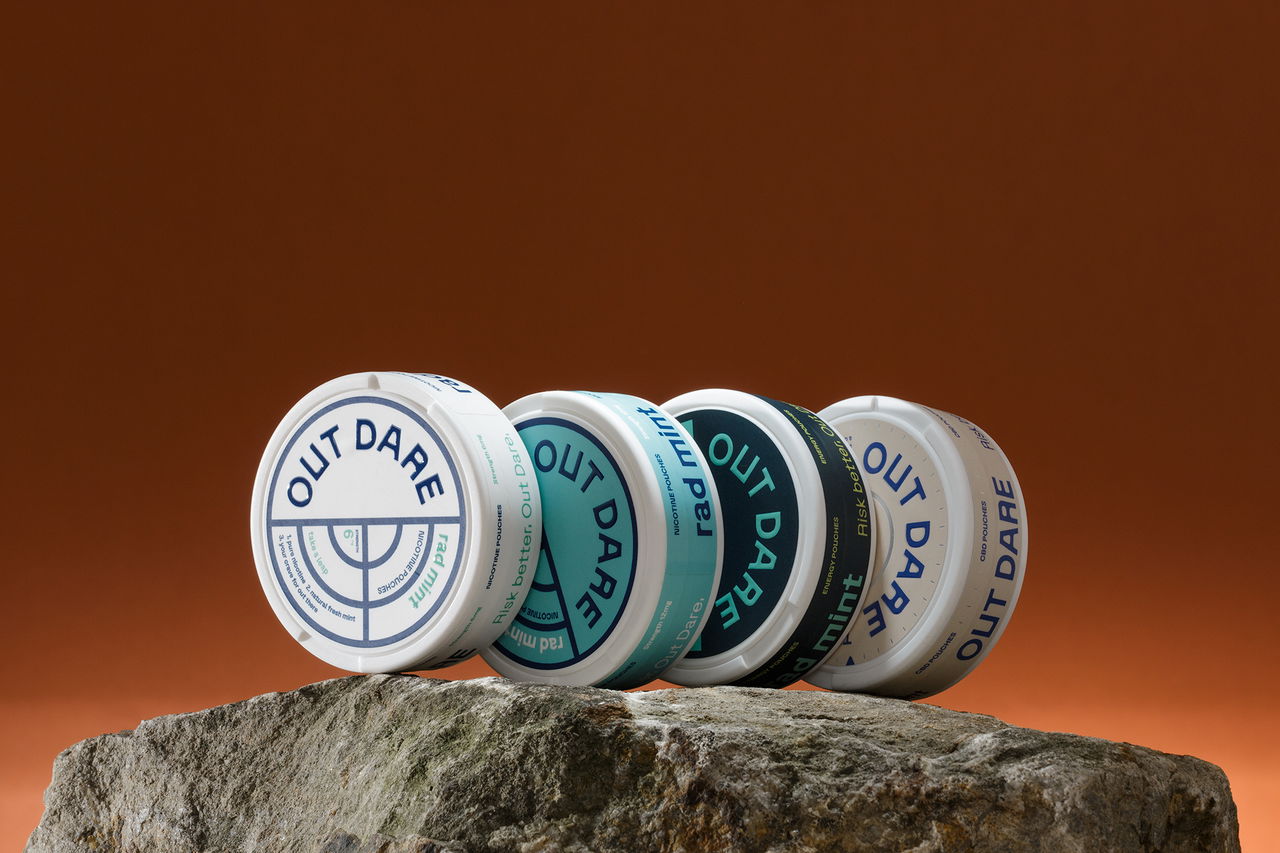
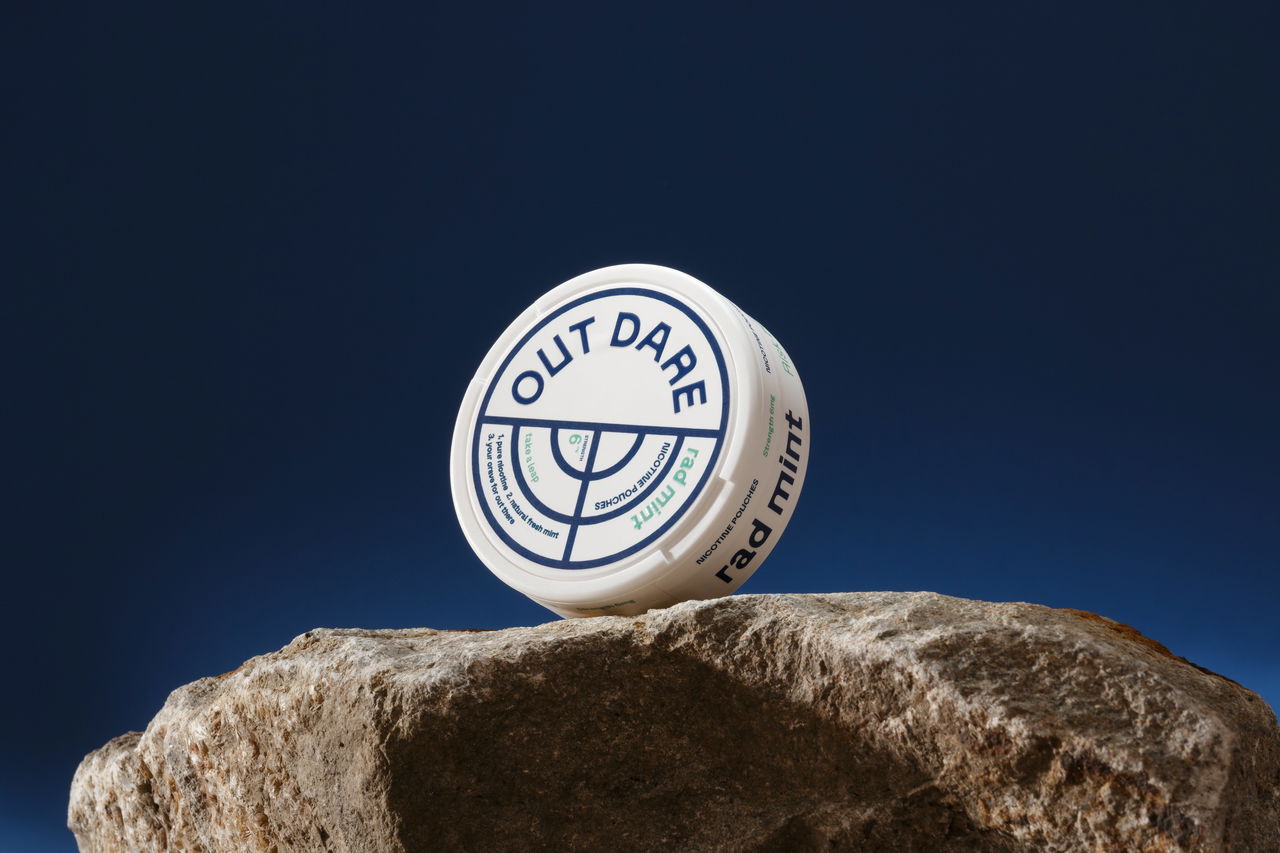
| OutDare comes in 6 mg and 12 mg | Both strengths carry Rad Mint, so the flavour and burn stay constant as the milligrams move. |
| Same mint across the three formats | Nicotine, energy and sleep share the mouthfeel and burn, so the ritual does not change. |
| Changing two things at once fails | Swap brand and strength the same day and you cannot tell which pull you are feeling. |
| Every order is charged in EUR | Prices show in euros at checkout, whatever card or currency you spend in day to day. |
| Shipped from Denmark by PostNord Express | Cost varies by zone, adults only, and import VAT or duty may apply on arrival outside the EU. |
- What are you actually living right now?
- The three thirds: why the hold feels bigger than the milligrams
- Quitting nicotine pouches: the week-by-week protocol
- What fails: changing two variables at the same time
- What Week 4 actually looks like
- When does nicotine withdrawal peak?
- Benefits of quitting nicotine: what the timeline usually describes
- Zyn withdrawal and quitting Zyn timeline: what Reddit actually reports
- What OutDare pouches are, and what they are not
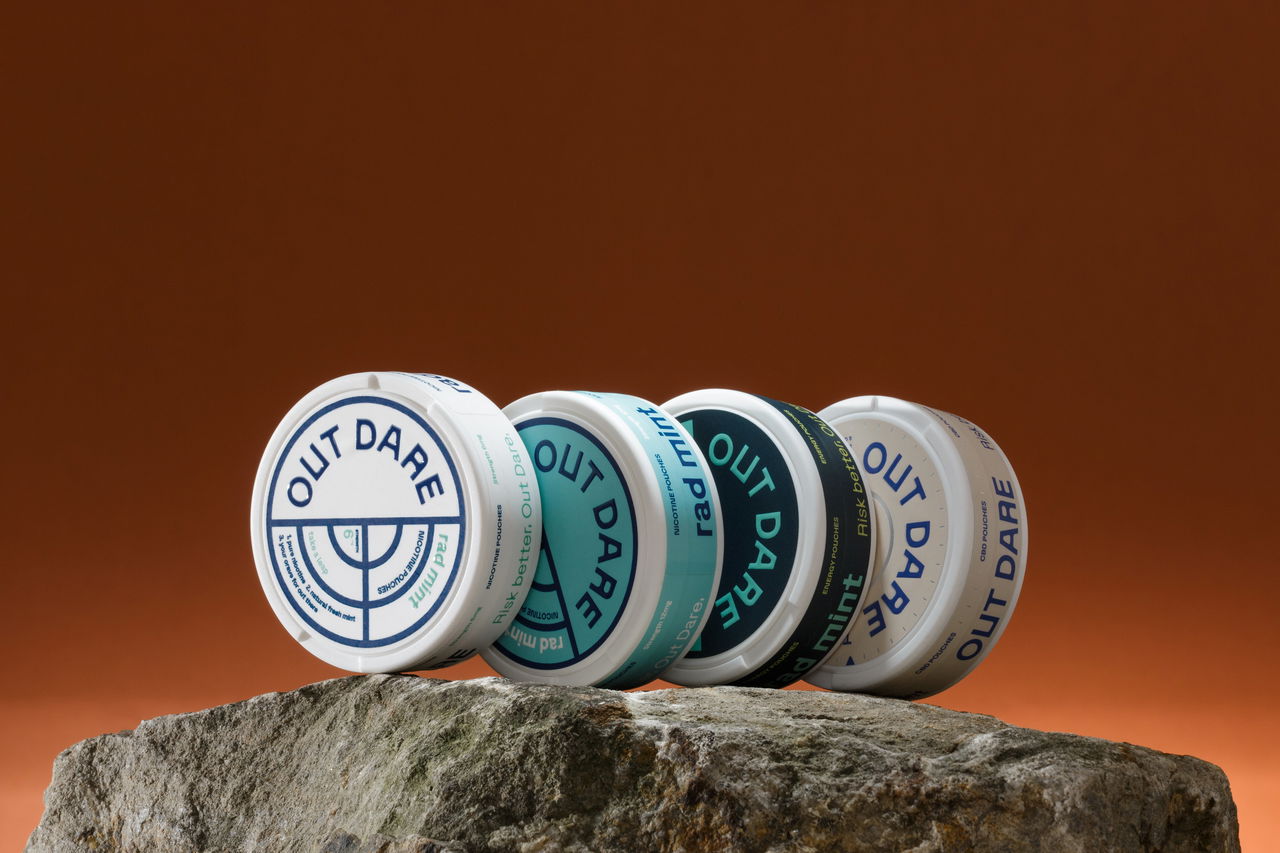
The range, same flavour, same burn, three chemistries
| Pouch | Strength | Best for | Flavour | Price | |
|---|---|---|---|---|---|
| Nicotine Pouches | 6 mg | when you need control | Rad Mint | €7.00 | |
| Nicotine Pouches | 12 mg | when you need control | Rad Mint | €7.00 | |
| Energy Pouches | 75 mg | for daytime focus | Rad Mint | €7.00 | |
| Sleep Pouches (The Resetter) | 20 mg | for the evening reset | Chilled Mint | €10.00 |


Shipped from Denmark by PostNord Express · Trustpilot 4.6
Three pouches, one ritual · Shipped from Denmark · 210+ countries · Trustpilot 4.6
What are you actually living right now?
You already know the shape of it. You count how many cans a week without meaning to, you notice the top lip going sore on the right side because that's where you always park it, and your hand is on the can before you've decided anything at all. That's what people mean when they type quitting nicotine pouches into a search bar: not a plan yet, a loop they can already feel.
None of this makes you weak. It makes you honest. The pouch is doing exactly what a pouch does: sits under the lip, delivers its load, and leaves a familiar burn. What has crept up on you is the ritual around it, and rituals don't respond to willpower alone.
The signals that put you here
- The count: two cans a day where six months ago it was one.
- The clock: reaching for a pouch on autopilot, before coffee, in the car, walking out of a meeting.
- The lip: raw on one side, so you switched sides, and now it's sore on both.
- The dose creep: the 6 mg used to bite, now you're on 12 mg and eyeing stronger.
- The evening: you can't wind down without one, and one has become two.
If any two of those land, you're at the point where a plan is more useful than a diary. What follows is a protocol, not a lecture, built around how the pouch actually holds you. One change per week. Watch what shifts. Decide from there.
The first thing to name honestly: the milligrams are only part of what's got you. If it were pure chemistry, a step-down would fix it in ten days flat, and half the people reading this wouldn't be reading this. The reason it doesn't work that way is what the next section is about, and it's the whole point of the method.
The three thirds: why the hold feels bigger than the milligrams

Roughly a third of the hold is the nicotine, a third is the ritual of having a cushion under your lip, and a third is the burn that tells you it landed. Those thirds are lived experience across years of daily use, not a study, and they're the reason milligrams on their own don't tell you the whole story.
What each third is actually doing
The chemical third is the one everyone talks about because it's the one you can put a number on. Move from 12 mg to 6 mg and you've cut that third in half. That is real, and it's the easiest part to shift because it's a dial: OutDare Rad Mint comes at 6 mg for when you want control and 12 mg for a fuller pull, at €7.00 a can, same flavour and same burn across both strengths.
The ritual third is the cushion. It's the physical fact of something sitting between lip and gum, and your day has learned to expect it. This third survives a milligram drop untouched, because it has nothing to do with chemistry. You can be on a zero-nicotine pouch and still feel the itch the moment the mouth is empty.
The burn third is the mint. It's the signal your nervous system reads as landed. Without it, a pouch feels wrong even at the correct strength, which is why people who like a hot burn feel underwhelmed by a mild one and vice versa. Rad Mint is engineered as a fresh-mint hit, and the intensity of that burn doesn't change when you drop the mg.
- Chemistry: moves with milligrams. 6 mg or 12 mg per pouch.
- Ritual: cushion under the lip. Doesn't move with milligrams at all.
- Burn: the Rad Mint hit. Consistent across 6 mg and 12 mg.
Why does this matter for the protocol? Because if you try to change all three thirds at once, you leave yourself nothing to lean on. A step-down that also swaps flavour and format loses two anchors in the same week, and the whole thing collapses inside four days. The plan in the next section changes exactly one third at a time, on purpose.
Shipped from Denmark by PostNord Express · Trustpilot 4.6
Quitting nicotine pouches: the week-by-week protocol
Four weeks, one variable changed per week. That's the whole protocol, and it works because the three OutDare pouches share the same fresh-mint profile, the same mouthfeel and the same burn, so you're only ever moving one thing at a time.
Week 1: change the brand, keep everything else
You keep your usual slots, your usual count, your usual strength if it matches. All you swap is the brand. If your current pull is closer to a strong nicotine pouch, land on OutDare Rad Mint 12 mg at €7.00 a can. If you're already on the lighter side, the 6 mg does the same job at a lower load. Nothing else changes this week. Same times, same lip, same count. What you're doing is teaching your ritual to accept a new can before you start moving anything else.
Week 2: swap part of the daytime for caffeine
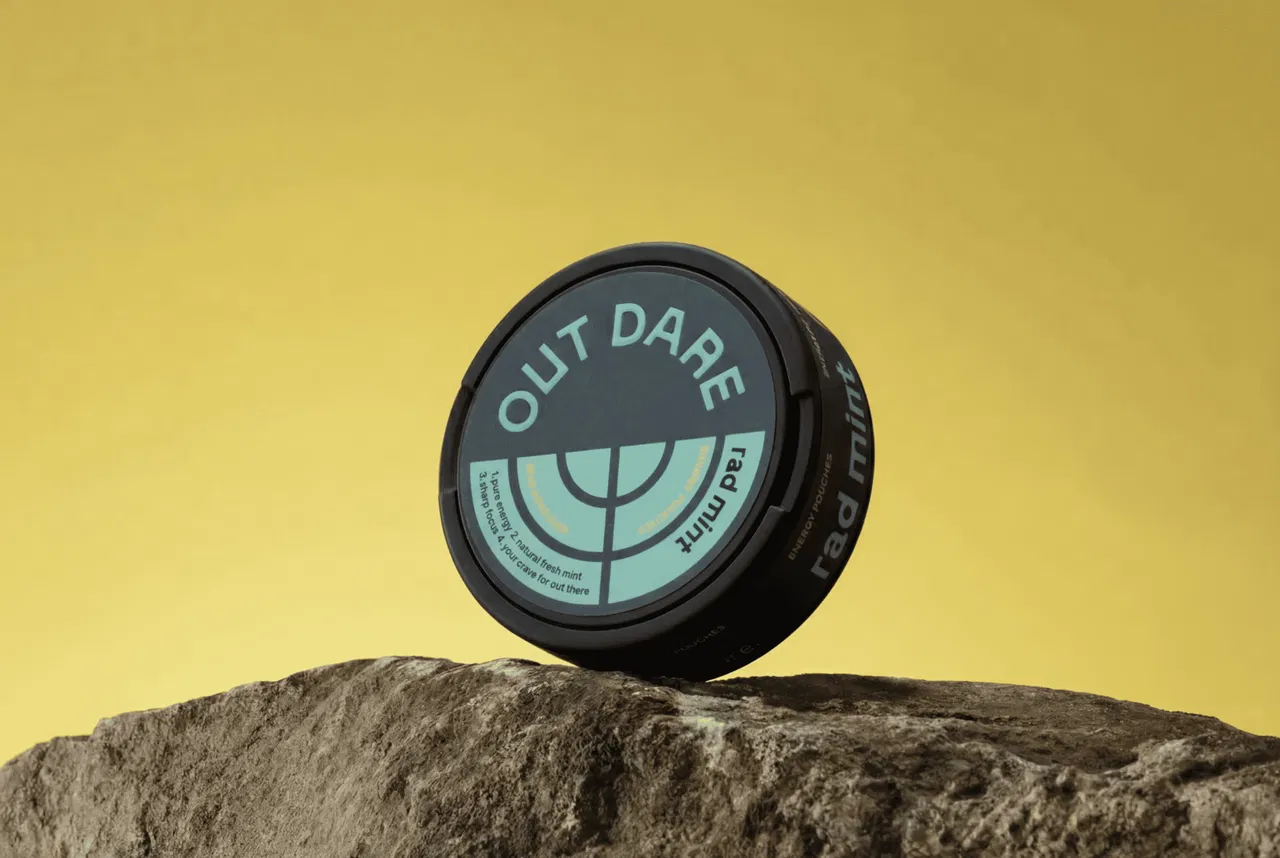
Now you change one slot, not all of them. Pick the mid-morning or the afternoon pouch, the one that's more habit than hit, and replace it with OutDare Energy Pouches at 75 mg of caffeine per pouch, same Rad Mint flavour, €7.00 a can. The cushion is still there, the burn is still there, the ritual is intact. What's moved is one part of the chemistry, on one part of the day.
Week 3: the evening becomes the reset
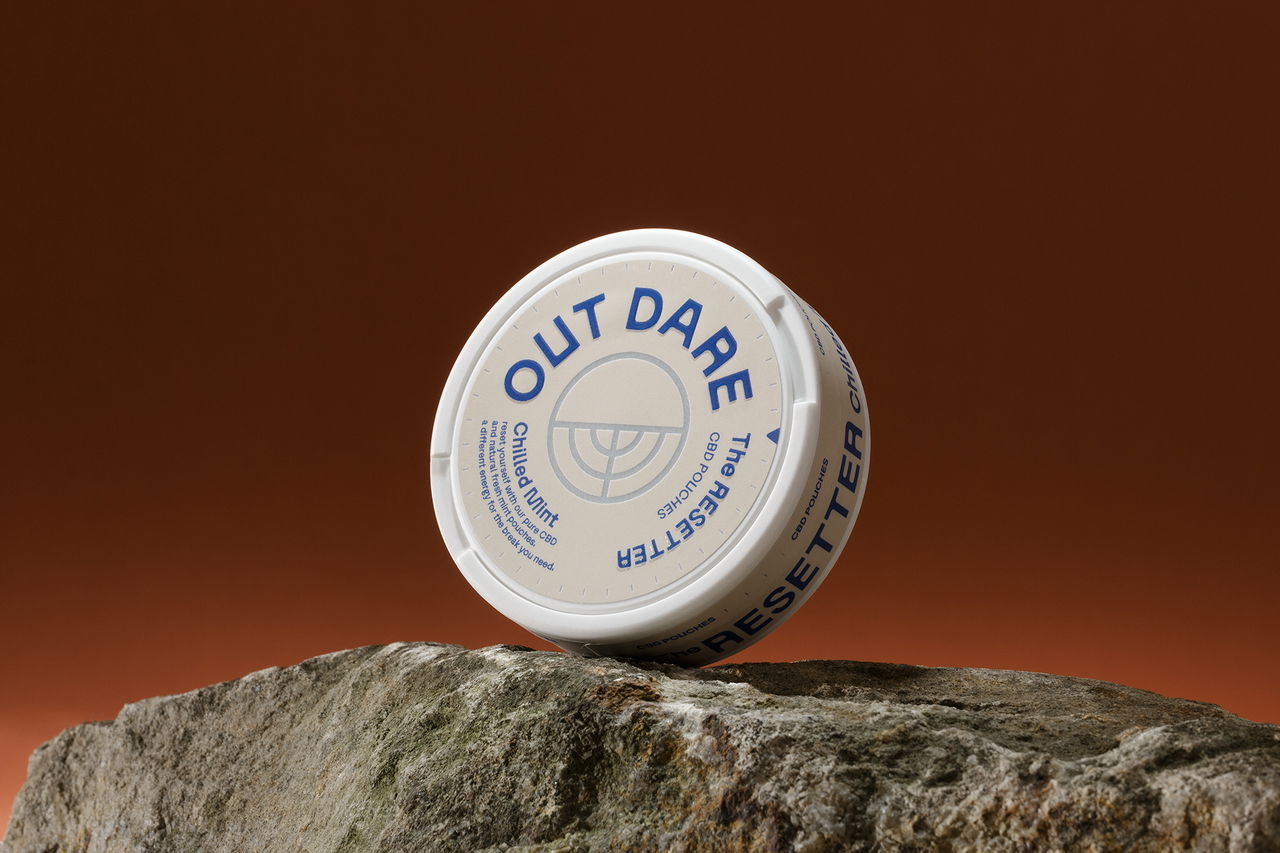
The evening slot is usually the hardest, because it's the one carrying the wind-down. This week that slot becomes Sleep Pouches (The Resetter) at 20 mg of CBD per pouch, Chilled Mint flavour, €10.00 a can. Same format, same cushion, still fresh mint. You're keeping the ritual and changing what's inside it.
Pro Tip: Write the slot you're changing on the can itself. Not because you'll forget, but because when the week gets messy you want the decision already made, not negotiated in the moment.
Week 4: the decision point
By now your count is down without you having to force it, because two of your slots aren't nicotine anymore. Week 4 is where you choose: stop nicotine entirely, or keep it only in the slots where you actively want it. There is no correct answer. There is only what you decide with a clear head, after three weeks of watching what you actually reach for.
- Week 1: OutDare Rad Mint nicotine, brand swap only.
- Week 2: one daytime slot becomes Energy Pouches.
- Week 3: the evening becomes Sleep Pouches (The Resetter).
- Week 4: decide from data, not from craving.
What fails: changing two variables at the same time
The single reason a switch stops feeling like a plan and starts feeling like white-knuckling is simple: you changed two things at once and now you cannot read what any of them are doing. The protocol works because only one variable moves per week. Break that rule and the signal gets buried under noise you made yourself.
The three mistakes that hide the signal
- Dropping brand and mg the same morning. You go from a 12 mg pouch of one maker to a 6 mg pouch of another on Monday, and by Wednesday you cannot tell whether the fidgeting is the halved nicotine or a burn that lands differently in your lip. Two unknowns, no answer.
- Swapping flavour family mid-week. The mint you have used for months is not just taste, it is the cue your mouth uses to register that a pouch has landed. Switch to a berry or a citrus in the middle of a step-down and the ritual gets loud. You will read that noise as craving.
- Going straight from 12 mg to zero. That is not a step-down, that is a cliff. You keep the ritual, you keep the burn, and you strip the chemistry out in one move. Most readers reach for a can inside 48 hours and call it a failure of willpower. It was a failure of method.
Each mistake shares one shape: too many things moving. The boring version reads better. Week 1 the brand changes and nothing else, so you learn what a different burn feels like on the same mg. Week 2 a daytime slot becomes the Energy pouch at 75 mg of caffeine, so you learn whether the daytime pull was nicotine or just a habit needing a cushion. Week 3 the evening changes. One variable per week is not slow, it is legible.
Pro Tip: If you have already muddled two variables in the same week, do not start over. Hold whatever you are on for four days without another change, note when you reach for a pouch and why, then resume with the next single step. Reading beats restarting.
What Week 4 actually looks like
By Week 4 the ritual has been rebuilt around three cans: mint in the morning, caffeine through the day, the evening reset on the desk after dinner. The 12 mg can you started on is a memory. Now the fork. There are two honest ways to finish this, and neither of them is the one you thought you had to pick.
The two versions of Week 4
- You stop the nicotine pouch entirely. The daytime slot stays as an Energy pouch at 75 mg of caffeine per pouch, the evening stays as the Sleep pouch with 20 mg of CBD in a Chilled Mint, and the lip still gets its cushion. The ritual you built in Weeks 1 to 3 is doing the work the nicotine used to do, so removing the last variable is a smaller step than it looks on paper.
- You keep one can of 6 mg Rad Mint at €7.00 for the moments you actually want one. Not the reflex reach at 09:00 because the kettle boiled. The moments you noticed and chose. For a lot of readers this is where the reach gets rare enough that a single can lasts most of the week.
Neither route is failure. The plan was never a moral finish line, it was a way to strip the reach-for-a-can down to its parts so you could see which parts you still wanted and which you had been carrying out of habit. A reader who stops the nicotine and a reader who keeps a 6 mg Rad Mint on the desk for the two moments a day they mean it have both used the protocol correctly. Both endings are the plan working.
What you should not do in Week 4 is reintroduce the 12 mg because the day got hard. That is not a route, that is undoing three weeks of legibility to buy a bad hour. If the day is loud, hold the current variable and let it get quiet again before the next move.
When you are ready, the 6 mg Rad Mint is the can most people finish the month on.
When does nicotine withdrawal peak?

Nicotine withdrawal is most commonly reported to peak within the first 72 hours after the last dose, with the intensity easing gradually over the two to four weeks that follow. That is the pattern described by public-health bodies including the NHS and the US CDC, and it is worth reading as a category description, not a schedule your body has agreed to.
The pattern most sources describe
- Hours 4 to 24. The first pull. Restlessness, irritability, a sense that something in the routine is missing. This tracks the ritual as much as the chemistry.
- Days 2 to 3. Widely reported as the peak. Sleep can get thin, concentration wobbles, appetite shifts. The reach for a pouch is loudest here.
- Days 4 to 14. The intensity tapers. Cravings become episodic rather than constant, often tied to specific cues: coffee, driving, the end of a meal.
- Weeks 2 to 4. Most acute symptoms have faded for most people. Habit prompts can persist for longer, which is why the reach-for-a-can often outlasts the physical part of the curve.
Two things worth naming. First, some people find Day 3 harder than Day 2, some find Day 5 the worst, and some barely notice a peak at all. The curve is a shape drawn across a lot of reports, not a promise about any one week. Second, the sharpness of it is influenced by how much nicotine you were taking and how you were taking it, which is why a step-down structured week by week reads differently to a cliff-edge stop. Neither shortens the curve, they change what you can see while you are on it.
If any symptom you are living with worries you, or you take medication that interacts with nicotine, speak to a clinician who knows your history. What this section can do is describe the shape of the days, so you know whether what you are feeling on Day 3 is the timeline doing what the timeline usually does, or something worth a professional eye.
Benefits of quitting nicotine: what the timeline usually describes
When people search for a "benefits of quitting nicotine timeline", they usually land on a chart written by health bodies for smokers, not for pouch users. The NHS and the CDC both publish versions of it, and it is worth reading it for what it is: a category timeline for nicotine and, mostly, for tobacco smoke.
The commonly cited milestones
Here is the shape most of those pages agree on. I have kept the attributions in the same line so you can tell who is claiming what.
- 20 minutes: the NHS reports heart rate and blood pressure moving towards baseline.
- 8 to 12 hours: the CDC reports carbon monoxide in the blood dropping. This one is smoke-specific: it does not apply to pouches, because there is no combustion in the first place.
- 24 to 72 hours: most of the nicotine has cleared the body according to NHS material, and withdrawal is usually loudest in this window.
- 2 to 12 weeks: the NHS reports circulation improving.
- 3 to 9 months: the NHS cites lung capacity rising in ex-smokers. Again, a smoke line, not a pouch line.
- 1 year: the NHS cites a reduction in coronary heart disease risk versus continued smoking.
What this means if you were on pouches, not cigarettes
Most of the timeline was built around smoke. The lung and CO milestones were never yours. What is left, once you strip those out, is the nicotine curve itself: a rough 24 to 72 hour peak, then a taper across the following weeks. That curve is roughly the same whether the nicotine came from a cigarette, a vape or a pouch, because the molecule is the molecule.
Two honest notes before you use any of this:
- The numbers are averages published for population-level messaging. Your own week will not look like a graph.
- The timeline describes a body coming off nicotine. It does not describe the ritual around it: the reach into the pocket, the top-lip pressure, the burn. The ritual is what makes week two hard, and no NHS chart shows you that column.
Read the health-body timeline for what it says about the molecule. Read the next section for what actual users say about the ritual.
Zyn withdrawal and quitting Zyn timeline: what Reddit actually reports
Search "Zyn withdrawal Reddit", "quitting Zyn timeline Reddit" or "Zyn withdrawal timeline Reddit" and you get a fairly consistent story, told in first person, across r/Zyn, r/QuittingZyn and the general nicotine subreddits. I have used pouches for years and read the same threads, and the pattern is stable enough to summarise honestly.
What users typically describe
- Days 1 to 3: the loudest window. Headaches, irritability, "brain fog", broken sleep, jaw or gum soreness from the empty ritual.
- Days 4 to 10: the physical noise drops off, cravings turn situational (after a meal, at the desk, in the car).
- Weeks 2 to 4: most posts describe the ritual gap as the last thing to go. The hand still reaches for the can.
- Month 2 and beyond: the majority of long-form updates describe residual triggers rather than daily withdrawal.
ZYN strengths versus OutDare, in plain numbers
ZYN in the United States is sold at 3 mg and 6 mg per pouch. Other markets carry higher strengths under the same name. OutDare Nicotine Pouches come in 6 mg and 12 mg, one flavour, Rad Mint, €7.00 per can. That is the whole nicotine line: two strengths, one flavour, so the only thing that changes between them is the milligrams.
Pro Tip: if you are moving off ZYN 6 mg, start on OutDare 6 mg Rad Mint, not 12 mg. Keep the milligrams flat and let the flavour, mouthfeel and burn carry the weight of week 1. Change one variable at a time.
Why the Reddit story rhymes with the mechanism
The reason those threads all sound alike is the same reason the week-by-week protocol earlier in this article holds up. Roughly a third of the hold is the nicotine, a third is the ritual of having a cushion under your lip, a third is the burn. Pull all three at once and days 1 to 3 arrive as one wall. Keep the burn and the ritual steady and only move the nicotine, and the wall becomes a slope.
You do not need Reddit to tell you a week feels bad. You need it to tell you which week, and roughly how long.
What OutDare pouches are, and what they are not
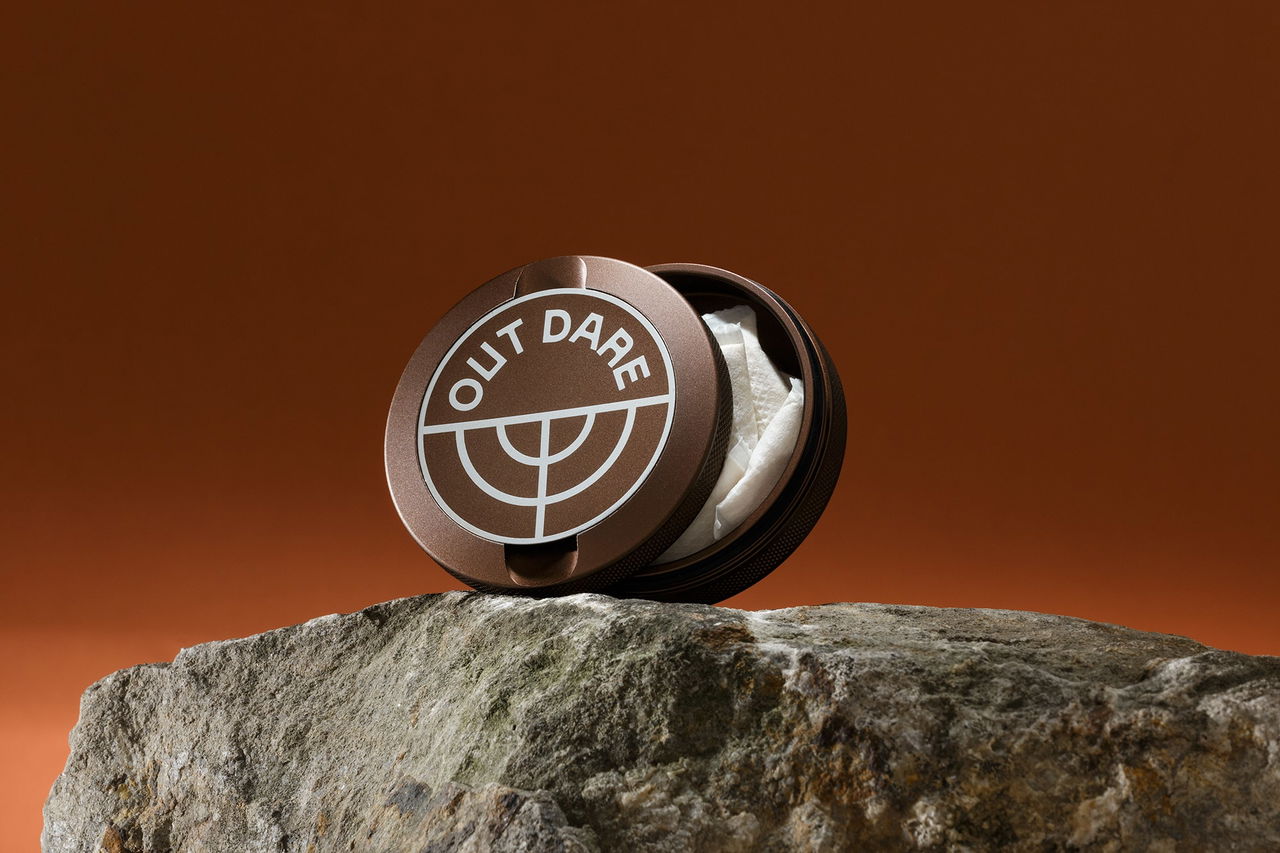
OutDare pouches are a small, honest range. Here is what they are, in one sentence: a white pouch you park between your lip and your gum, tobacco-free, no smoke, no spit, 6 mg or 12 mg of nicotine, one flavour called Rad Mint, made in a European factory. That is it.
What is in the pouch
- Format: white pouch, worn between top lip and gum, discreet under a beard or a mask.
- Strengths: 6 mg per pouch (when you want control), 12 mg per pouch (when you want it to land harder).
- Flavour: Rad Mint, a fresh-mint profile developed by a former mixologist.
- Filling: plant fibre, xylitol in place of most of the sucralose, high-grade pouch paper.
- Price: €7.00 per can as a single, with bulk tiers on the product page bringing the per-can cost down.
- Origin: made in a European factory, shipped from Denmark by PostNord Express.
What OutDare is not
OutDare is a brand and a product range, not a programme. Not a treatment, not a clinic, not an app that pings you at week 3. The three pouches (nicotine, energy, sleep) share the same fresh-mint family, mouthfeel and burn so that when you swap one for another the ritual around your top lip stays constant. That is a fact about how they are made. What you do with that fact is your call.
If you have read this whole article: the three thirds are the mechanism, one variable per week is the protocol, and the Reddit patterns are the reality check. The product is the tool the method uses. The two are separate on purpose. You could run the same protocol on any pouch line whose flavour and burn stay constant across formats. OutDare exists because most brands do not build their line that way.
Where to go next
If you are ready to start on 6 mg Rad Mint (the honest starting point for anyone coming off a 3 mg or 6 mg ZYN or VELO habit), the range lives at /products/nicotine-pouches. Every order is charged in EUR, whichever country you are ordering from. Rules around nicotine products differ from country to country and they change: check what applies where you live before you order.
Sources & References
- Nicotine: withdrawal and stopping smoking · NHS (2024)
- Smoking Cessation: Fast Facts · Centers for Disease Control and Prevention (2024)
- Tobacco: key facts · World Health Organization (2024)
- Nicotine pouches: what we know · Action on Smoking and Health (2024)
- Tobacco and related products regulation · European Commission, Public Health (2024)
Frequently Asked Questions
How long does a pouch stay under the lip?
A pouch sits between the lip and the gum for roughly twenty to forty minutes, depending on the format and how hard you park it. When the burn drops off and the mint fades, that is the signal to bin it and move on. Never sleep with one in.
What is inside an OutDare pouch?
Plant fibre filling, natural flavours developed by a former mixologist, xylitol instead of most of the sucralose, high-grade pouch paper, and the active ingredient: 6 mg or 12 mg of nicotine for the Rad Mint nicotine cans. No tobacco leaf, no smoke, no spit.
6 mg or 12 mg: which should I start with?
If you are already on a strong pouch and know your pull, 12 mg keeps the hold you recognise. If you are lighter or unsure, 6 mg gives you room to read what you actually feel. Both are Rad Mint, so only the milligrams change.
When does nicotine withdrawal peak?
Public health sources including the NHS and the CDC describe withdrawal from nicotine as peaking within the first few days after stopping, then easing over the following weeks. The pattern varies from person to person. This is category information, not a claim about any pouch.
Is the OutDare method a quit programme?
No. It is a way to change one variable per week using three pouches that share the same mint and burn: nicotine, energy, sleep. You decide at Week 4 what you keep and what you drop. It is a ritual you run, not a treatment.
Can I order OutDare in the United States?
Yes, we ship from Denmark by PostNord Express, adults only. Every order is charged in EUR, whatever card you use. Import VAT or duty may apply on arrival. Rules around nicotine products differ from country to country and they change: check what applies where you live before you order.
What does OutDare cost?
One can is €7.00. Five cans come to €28.00 (€5.60 per can). Ten cans plus five free is €70.35 (€4.69 per can). Twenty plus ten free is €140.70 (€4.69 per can), with free express delivery over €100.
What fails most often on this protocol?
Changing two variables at once. Drop brand and milligrams on the same morning and you cannot tell which pull you are feeling, so you reach for another can. Keep one thing constant every week and the signal stays readable.
Quitting nicotine pouches is not a heroic single leap. It is one variable per week: brand first, then daypart, then the evening, then the decision. The hold is roughly a third nicotine, a third the cushion under the lip, a third the burn, and the protocol works because the three OutDare pouches share the mint and the mouthfeel, so only the milligrams move. Week 4 is a fork, not a finish line: stop entirely, or keep a 6 mg can for the moments you actually want one. Start the ladder here: OutDare Nicotine Pouches, Rad Mint, 6 mg and 12 mg.
Related guides
Published 20 August 2026 · Last updated 20 August 2026