





Do Nicotine Pouches Expire? Shelf Life, Explained
By Thomas Agaraté · Daily pouch user since 2014 · About
Editorial note: written by OutDare, the brand that makes and ships the pouches on this page. Prices are our live prices in EUR.
Yes, nicotine pouches expire: every can carries a best-before date, and after it the nicotine slowly fades and the mint goes flat. I have been running pouches daily for years and chewed through a lot of tired cans before I understood what the date actually measures. It is a freshness window, not a safety cliff. If you want the current range from the OutDare line, the full list lives on the nicotine pouches page.
- We ship from our warehouse in Denmark
- Shipping from €9.45
- Prices are charged in euros.
- 18+ only. Age is verified at checkout.
- Rules on nicotine products vary by country and can change, check what applies where you live.
| Key Insight | Explanation |
|---|---|
| Yes, cans carry a best-before date | Manufacturers print a date on the base of the can that marks the end of the guaranteed freshness window. |
| Nicotine fades over time | Nicotine is a volatile alkaloid and its labelled strength is guaranteed up to the printed date, not forever. |
| Flavour and moisture fade first | The mint and the moisture under the lip go flat well before anything else changes, which is usually what the user notices. |
| Storage decides how fast it ages | Cool, dry and sealed slows the drift; a hot glovebox or a sunny windowsill speeds it up. |
- Do nicotine pouches expire? The short answer
- Where does the belief that they do not expire come from?
- What a named third-party source actually says
- What changes in a can after the date
- How to store a can so it stays fresh
- Where OutDare fits
The range, same burn, same ritual, three chemistries
| Pouch | Strength | Best for | Flavour | Price | |
|---|---|---|---|---|---|
| Nicotine Pouches | 6 mg | when you need control (start here) | Rad Mint | €7.00 | |
| Nicotine Pouches | 12 mg | when you need control (when 6 mg does not hold the morning) | Rad Mint | €7.00 | |
| Energy Pouches | 75 mg | for daytime focus | Rad Mint | €7.00 | |
| Sleep Pouches | 20 mg CBD | for the evening, the last pouch of the day | Mint Terpene | €9.90 |


Shipped from Denmark by PostNord Express · Trustpilot 4.6
Three pouches, one ritual · Shipped from Denmark · 210+ countries · Trustpilot 4.6
Do nicotine pouches expire? The short answer
Yes. Nicotine pouches expire, and every can on the market carries a best-before date printed on the base, the lid or the shrink band.
What matters is what that date actually means. It is a freshness window set by the manufacturer, not a hard safety cut-off. Past the date the pouch does not become dangerous: it starts to drift away from the version the factory signed off on. The mint goes quieter. The paper feels drier. The burn under the lip arrives slower, or softer, than you remember.
What the date tells you, and what it does not
Three things are being promised when a brand prints a date on the base of a can:
- Flavour integrity. The mint, the sweetness and the cooling were measured on day one and are guaranteed inside the window.
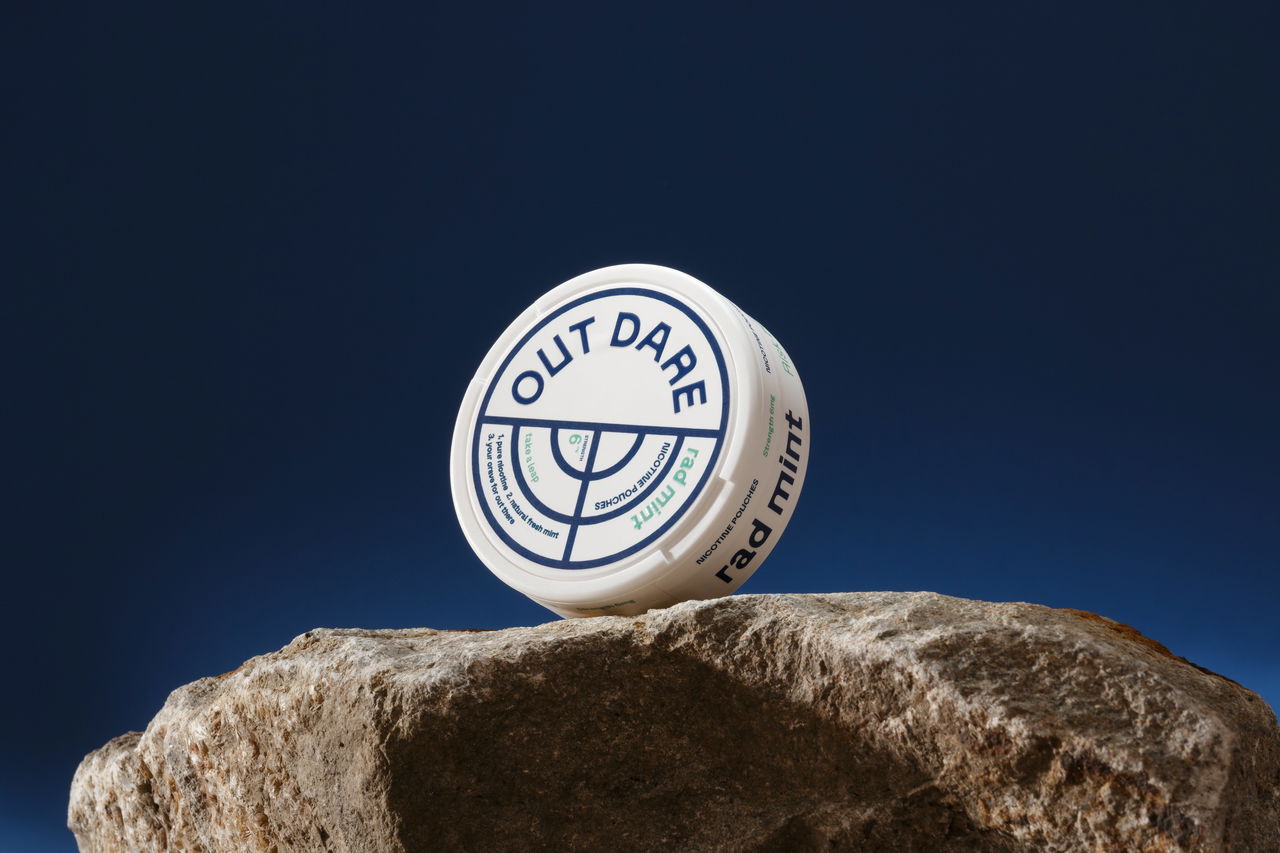
- Nicotine stability. The labelled strength holds inside the window. Our nicotine pouches are sold at 6 mg and 12 mg per pouch, and that figure is what you get while the can is in date.
- Moisture. The paper and the plant-fibre filling stay in the texture range the factory designed. Dry pouches release slower.
What the date does not tell you is a safety limit. There is no toxic threshold being crossed at midnight on the printed day. A can that is three months past date and has been kept cool and shut will behave very close to a fresh can. A can that sat on a car dashboard through a summer will be off well before the printed date.
Pro Tip: Write the batch date on the lid the first time you open a fresh can, then compare the kick on day one with the same strength six months later. One variable at a time is how you tell whether the pouch has drifted or whether you have.
So the short answer stays short: yes, they expire, the printed date is a freshness guarantee, and the way you store the can decides how close to that guarantee you actually stay.
Where does the belief that they do not expire come from?

The belief that pouches last forever comes from four honest misreadings, and once you line them up side by side it is obvious why so many buyers assume there is no clock running.
Four reasons the clock gets missed
- The format looks inert. A white, dry pouch inside a sealed plastic can looks closer to chewing gum or a tea bag than to anything perishable. If it does not look wet, buyers assume it does not age.
- There is no tobacco to go off. Traditional Swedish-style snus contains moist tobacco and smells different when it turns. A tobacco-free nicotine pouch has no leaf, no fermentation and no visible spoilage, so the usual sensory cue is simply gone.
- Forum folklore. Threads on Reddit and vaping boards routinely claim pouches "last forever" or that the date is "just a formality". That advice usually comes from someone who ran a can three months past date and did not notice much. It is anecdote, not storage science.
- The date is hidden. Some brands print the best-before on the bottom of the can, under the shrink band or inside the lid rim. Buyers who never flip the can over never meet it.
What the belief actually hides
Nicotine is a volatile alkaloid. Flavour oils evaporate. Moisture migrates out of the fibre and into the air inside the can. None of these processes stops because the pouch is sealed and dry-looking: they slow down, which is a different thing. A can of pouches is not a battery that holds charge indefinitely. It is a prepared product with a shelf life, closer to a sealed jar of mint tea than to a stick of gum.
The folklore is not malicious. It is a reasonable guess from an inert-looking format with no visible failure mode. The point is that "I did not notice" is not the same measurement as "nothing changed". Once you know where the date is printed and what it covers, the pouch stops being a mystery object and starts behaving like any other dated consumable: it has a window, the window closes gradually, and good storage decides where in the window the can you are holding actually sits.
Shipped from Denmark by PostNord Express · Trustpilot 4.6
What a named third-party source actually says
Two named frameworks sit behind the dates you see on a can: in the United States, FDA guidance on labelling for deemed tobacco products, which covers tobacco-derived nicotine pouches; across the European Union, Regulation 1169/2011 on Food Information to Consumers, which standardises how "best before" and "use by" are written on consumer goods held in the mouth.
How each framework treats the printed date
| Source | Scope | What the printed date means |
|---|---|---|
| FDA guidance on deemed tobacco product labelling (United States) | Tobacco-derived nicotine products, including pouches | The manufacturer sets and prints the shelf life. The date supports a quality and stability claim the maker is willing to stand behind. |
| EU Regulation 1169/2011 (Food Information to Consumers) | Date-marking framework widely followed for oral consumer goods | "Best before" is a minimum durability date, about quality. It is distinct from "use by", which is reserved for highly perishable products and is a safety date. |
What that means for the can in your hand
Both texts point at the same practical reading. The date on a pouch can is a manufacturer freshness guarantee, not a hard safety cliff. "Best before" tells you the maker guarantees the labelled strength, the flavour and the texture up to that day under decent storage. "Use by", the stricter wording held back for highly perishable food, is not the label this category uses, which is itself informative: pouches are not treated like fresh dairy.
Two caveats worth keeping in mind:
- A guarantee is a floor, not a ceiling. A can one day past date is not a different object from a can one day before. The window closes gradually, not at midnight.
- Storage overrides the printed date in both directions. Heat and humidity shorten it. Cool, dry and shut stretches it. The number was set assuming sensible conditions, not a glovebox in July or a bathroom shelf above a hot shower.
So the honest third-party reading is boring, and that is the point: the date is a quality date set by the manufacturer, framed by rules on how it must be written, and it describes freshness. It does not describe safety, and it does not describe forever.
What changes in a can after the date
After the printed date, a can starts to drift in ways you can feel in the lip before you can read on any label. Nicotine is a reactive molecule, mint oils are volatile, and the moisture inside a pouch does not stay put forever. The pouch does not go rotten. It goes quiet.
What you feel first
Open an old can and compare it to a fresh one, same strength, same mint, and the drift is obvious within a minute under the lip.
- Drier pouch: the fibre pad feels papery, with less give against the gum.
- Duller Rad Mint: the cold edge thins and the mint reads flatter, more like a background note than the top line.
- Slower burn: what should arrive in roughly a minute now creeps in over two or three, and the peak sits lower.
- Shorter hold: the tingle fades earlier, so a pouch that used to run 40 minutes may tap out around 25.
Why the strength drops too
Nicotine on a plant-fibre base degrades slowly through oxidation and loss of moisture. A 6 mg pouch does not stay 6 mg indefinitely, and a 12 mg pouch does not stay 12 mg: the label states what was in the pouch when it was packed, not what remains two years later in a glovebox. The number you feel is lower than the number you read. That is why 6 mg can start to feel closer to 3 mg, and a 12 mg morning pouch can feel like a 6 mg afternoon one. The ritual the can was built to carry simply does not land the way it did on day one, and the mint that should wake you up at the first bite now sits in the background from the start.
How to store a can so it stays fresh

Treat a can like coffee beans, not like a jar of pepper: the enemies are air, heat, light and time, in that order. Keep those four under control and a can holds its burn right up to the printed date, and often a little past it.
The four rules
- Sealed: click the lid shut after every use. A can left open on a bedside table for a week loses more mint than a sealed can loses in six months.
- Cool: room temperature is fine, warm is not. Keep cans off the dashboard, away from the radiator and out of a hot bag.
- Dark: direct sun on a windowsill cooks the pouches. A drawer, a cupboard, or the inside of a glove compartment that stays shaded will all do the job.
- Dry: no bathroom shelves. Steam from a shower swells the fibre and dulls the mint faster than the date on the base ever will.
Daily can versus stockpile
If you go through one can a week, the one in your pocket does not need to live in the fridge. Pocket heat and the odd ride in a jacket do not meaningfully shift a can you will finish in seven days. Stockpiles are different. If you have ordered a bulk pack and the cans at the back of the shelf will not be opened for months, the fridge is the right answer. Cold slows the oxidation of the nicotine and preserves the mint oils. This matters more for 12 mg cans than for 6 mg cans, because 12 mg is the one you rotate less often if 6 mg is your everyday strength, and it is the can most likely to sit sealed behind the others for half a year.
Pro Tip: write the opening date on the underside of the lid with a marker the first time you crack a new can. You stop guessing how long it has been breathing, and you learn, from your own cans, which spot in your flat kills a mint fastest.
Taking a cold can out of the fridge
Let a cold can sit out for ten minutes before you open it. A sudden warm-to-cold swap drops condensation onto the pouches, and wet-from-outside is not the same as moist-from-inside: it hits the lip too hard, burns off too fast, and leaves you with a soggy pouch you would not have reached for had you known.
Where OutDare fits
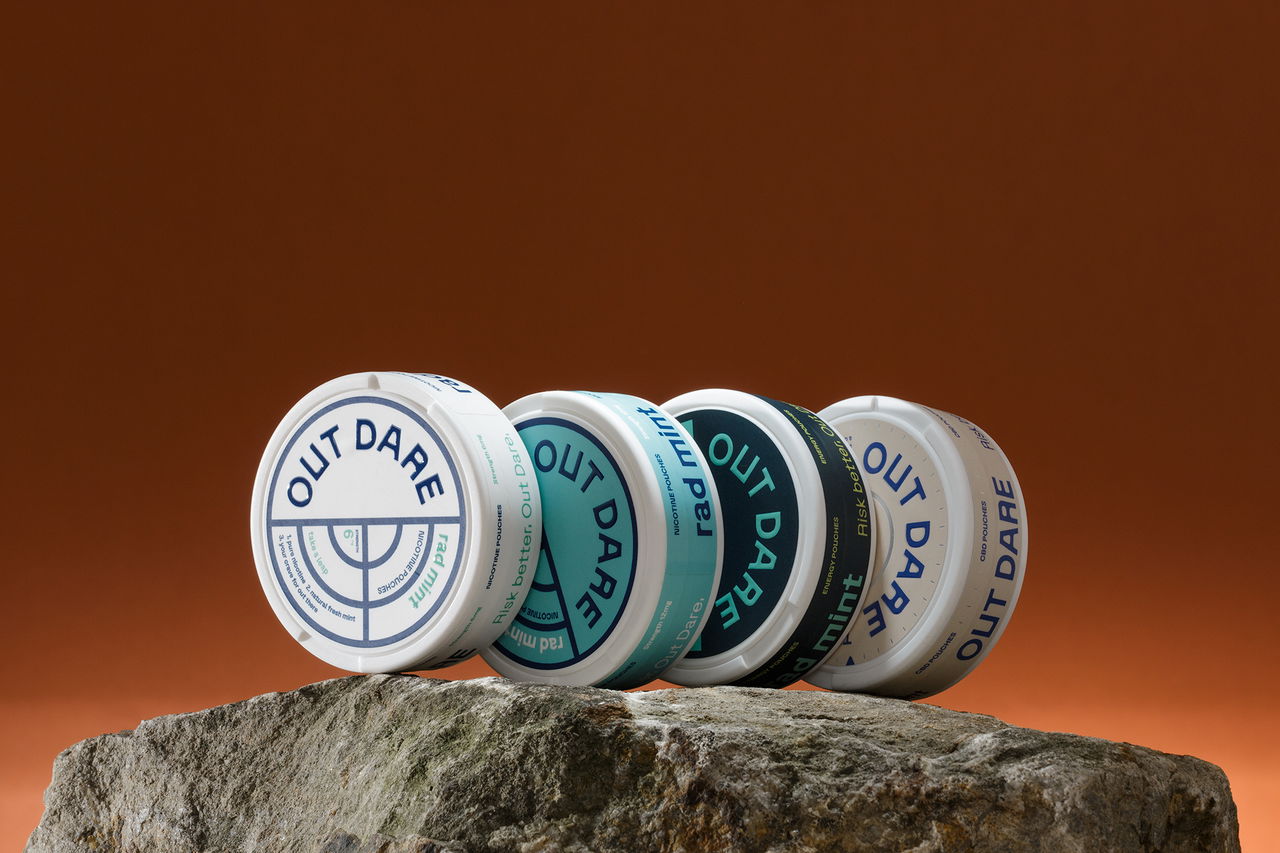
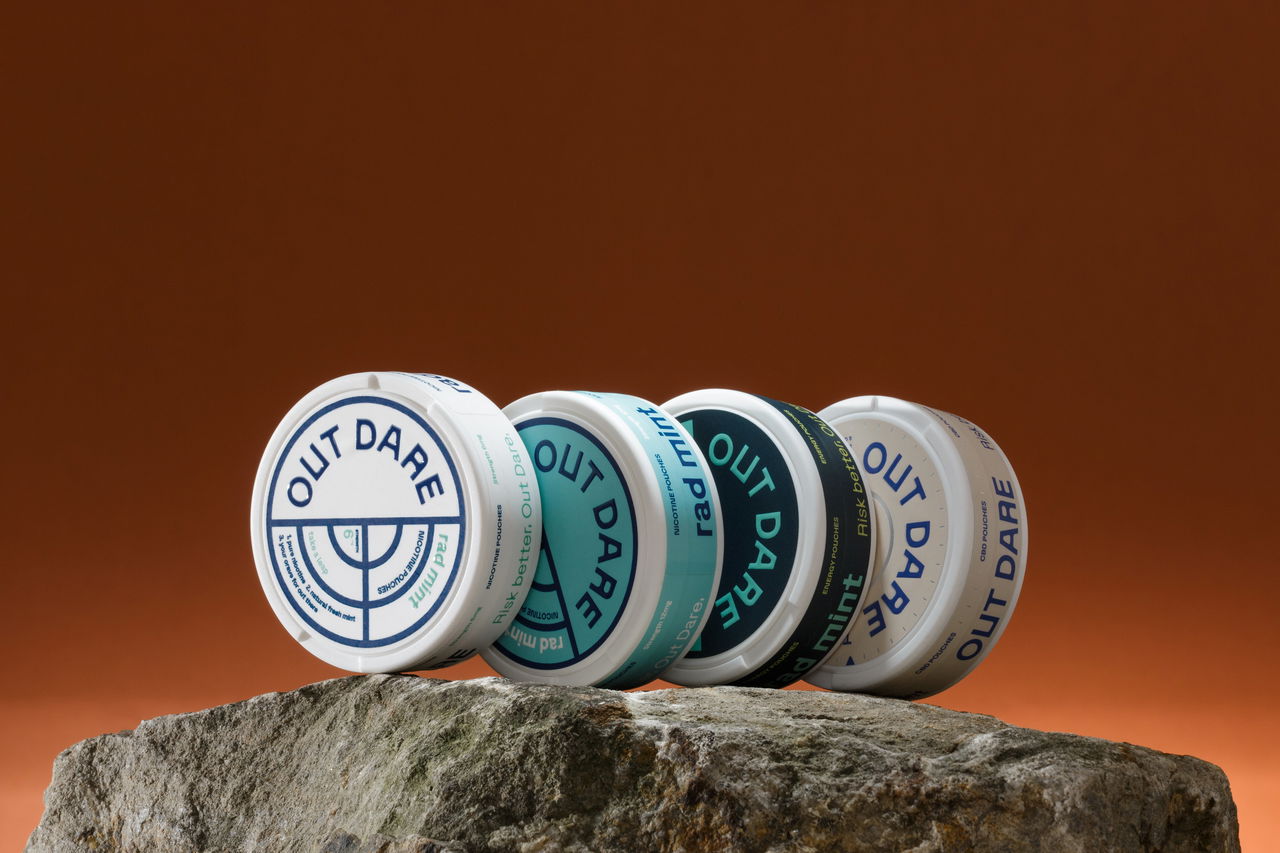
OutDare makes three pouches, and shelf life works the same way across all of them. We ship fresh from the warehouse, which means the can in your hand has usually left the factory weeks ago rather than months, and the date printed on the base is a real one, not a stamp picked a year back on an inventory the brand is still working through.
The three pouches, briefly
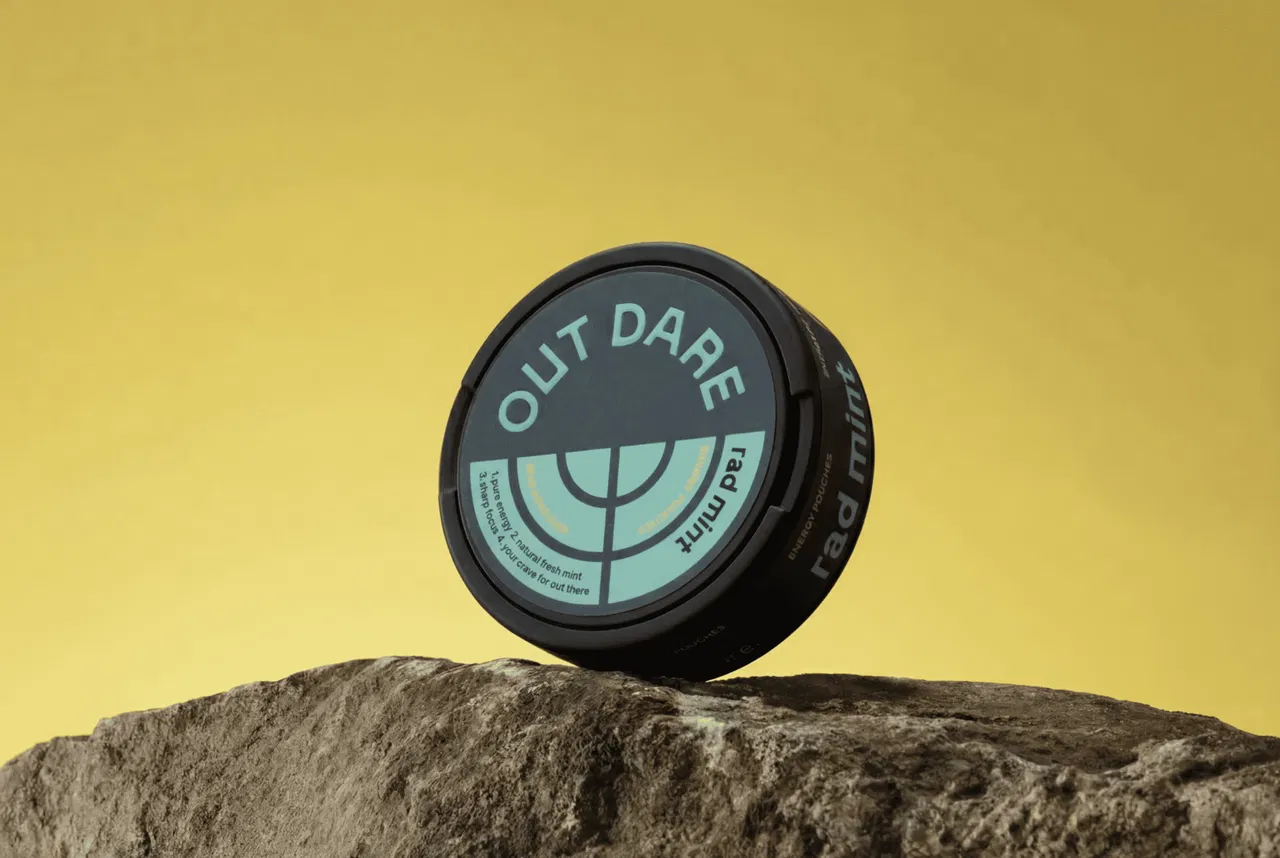
Nicotine for when you need control (6 mg and 12 mg), energy for daytime focus (75 mg of caffeine, zero nicotine), sleep for the last pouch of the day (20 mg of CBD, zero nicotine, zero caffeine). Same burn and same ritual under the lip across the three, each with its own mint. The storage rules above apply to all three, with one note worth knowing: the sleep can carries CBD and melatonin, and both prefer cool and dark more than nicotine does. A sleep can on a sunny shelf drifts faster than a nicotine can on the same shelf, so when you build your stockpile, the sleep cans go in first if the fridge is tight on room.
What a US buyer sees at checkout
Every order on this site is charged in EUR, regardless of where you live. If you pay with a US card, your bank converts at its own rate on the day the charge posts, which is why we do not print a dollar price next to the euro one: the figure would be out of date within a week. Your statement will show the euro amount and the dollar amount your bank settled on, side by side.
- Currency on the invoice: EUR, always.
- Rate applied: your card issuer's, on the day the payment clears.
- On arrival: import VAT or duty may apply, because the parcel enters outside the EU customs area.
If you have never had a pouch under the lip, order a single can first, see how 6 mg sits across a morning, and decide from there whether to come back for a bulk pack. The nicotine range is the right starting door.
Sources & References
- Nicotine pouches: product information and labelling · U.S. Food and Drug Administration (2024)
- Food Information to Consumers Regulation (EU) No 1169/2011, date marking · European Commission (2011)
- Date labelling on pre-packed food · UK Food Standards Agency (2023)
- Nicotine pouches: an emerging smokeless tobacco-free product · BMJ Tobacco Control (2022)
Frequently Asked Questions
How long do nicotine pouches last unopened?
Most manufacturers guarantee freshness for about a year to eighteen months from production, printed as a best-before date on the base of the can. After that the pouch is not dangerous, it is simply drier, the mint is duller and the labelled nicotine strength is no longer assured.
Can you use nicotine pouches after the expiry date?
Physically, yes, people do. What you lose is freshness: the pouch feels drier under the lip, the mint burn is softer and the nicotine release is lower than the number on the label. If a pouch smells off or looks discoloured, bin it and open a fresh can.
How long does an opened can stay good?
Once opened, a can of pouches is best used within about three months. The lid reseals, but every opening lets a little air in, so the pouches gradually dry out and the Rad Mint flavour fades faster than in a sealed can sitting in a cool drawer.
Should you keep nicotine pouches in the fridge?
The fridge is useful if you buy in bulk and want to slow the ageing of cans you will not open for months. For the can you are using daily, a cool drawer away from sunlight is enough. Avoid the freezer and avoid hot places like a car dashboard.
Do stronger pouches expire faster than weaker ones?
Not really. A 12 mg pouch and a 6 mg pouch age at a similar rate because the limiting factor is the same: moisture loss and slow nicotine evaporation. Storage conditions matter more than the labelled strength when you compare two cans of the same age.
Where is the date printed on the can?
On most tobacco-free pouch cans, including OutDare, the best-before date is stamped on the base of the can or on the underside of the lid. Flip the can over before you open it so you know how long the pouches inside have left in their freshness window.
Do pouches go off like food?
No. There is no tobacco leaf to ferment and no fresh ingredient to spoil. What ages is the nicotine itself and the flavour oils that give the Rad Mint burn. An expired pouch is a tired pouch, not a rotten one.
So: yes, nicotine pouches expire, in the sense that a can has a printed freshness window and the pouch inside drifts after it. The nicotine fades, the mint goes flat, nothing turns dangerous. Check the base of the can before you open it, keep your stash cool and sealed, and rotate through what you have rather than hoarding. When your current can is tired, open a fresh one from the OutDare nicotine pouches range in 6 mg or 12 mg Rad Mint.
Related guides
Published 12 October 2026 · Last updated 12 October 2026