





How Much Nicotine in Nicotine Pouches
By Thomas Agaraté · Daily pouch user since 2014 · About
Editorial note: written by OutDare, the brand that makes and ships the pouches on this page. Prices are our live prices in EUR.
How much nicotine in nicotine pouches? Between roughly 3 mg and 25 mg per pouch on the shelf today; OutDare makes two, 6 mg and 12 mg. I've used pouches daily for years, brown snus before that, and the label figure is where every honest answer starts. Here's what those milligrams mean, where the confusion comes from, and how OutDare's nicotine pouches sit on the ladder.
- We ship from our warehouse in Denmark
- Shipping from €6.75
- Prices are charged in euros.
- 18+ only. Age is verified at checkout.
- Rules on nicotine products vary by country and can change, check what applies where you live.
| Key Insight | Explanation |
|---|---|
| Range runs 3 mg to 25 mg | Most nicotine pouches on the market list between 3 mg and 25 mg of nicotine per pouch, with a handful of niche brands pushing higher. |
| Milligrams are per pouch, not per gram | The number printed on an all-white can is the nicotine content of a single pouch, while brown snus has historically labelled total content and grams per portion. |
| Label content differs from released dose | The milligram figure is what the pouch contains; how much a user actually gets out depends on how long the pouch stays under the lip and personal saliva flow. |
| OutDare stocks 6 mg and 12 mg | OutDare lists two strengths only: 6 mg for a steady daytime hold and 12 mg when 6 mg does not hold the morning. |
- How much nicotine is in a nicotine pouch?
- Where does the 'one standard strength' belief come from?
- What ASH UK actually says about pouch strengths
- How brown snus labels compare to all-white pouches
- What the milligram means when you pick a can
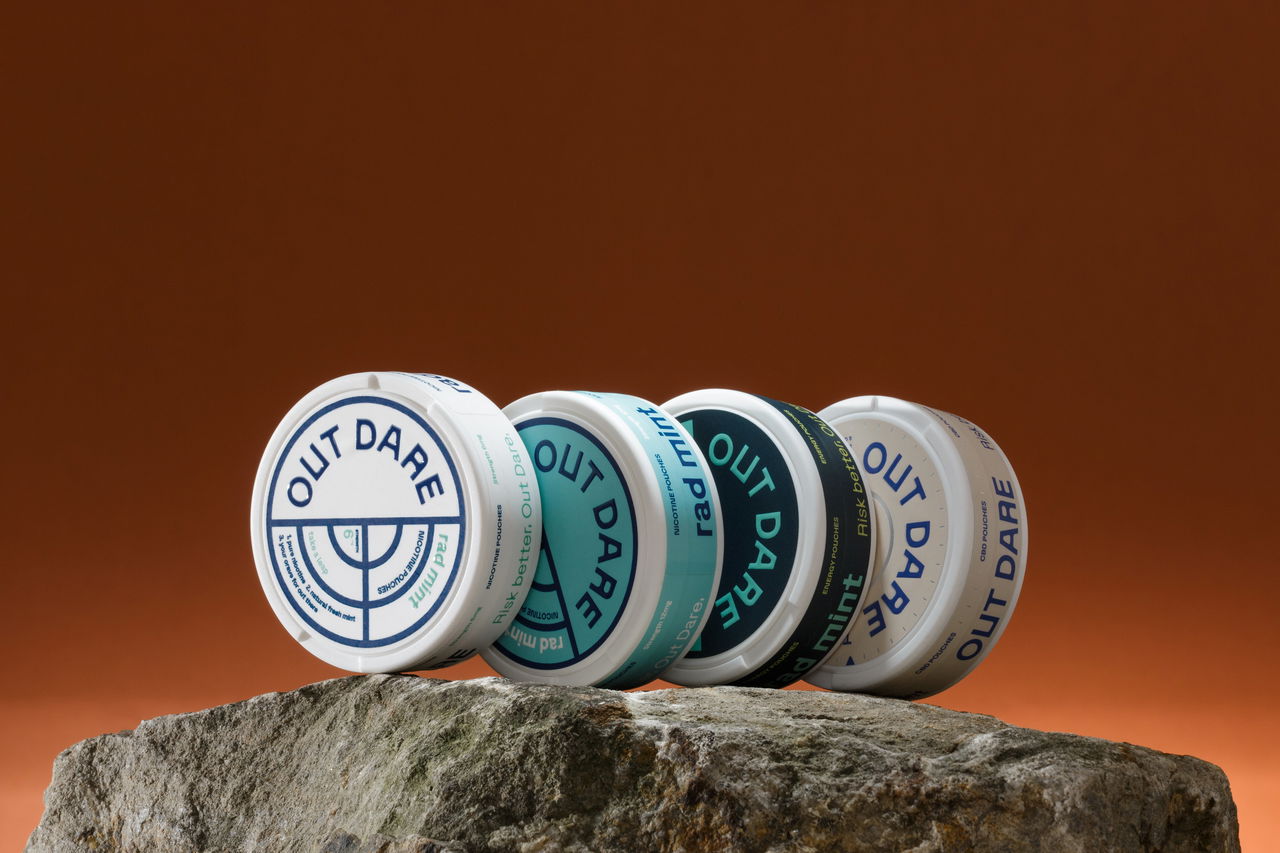
The range, same burn, same ritual, three chemistries
| Pouch | Strength | Best for | Flavour | Price | |
|---|---|---|---|---|---|
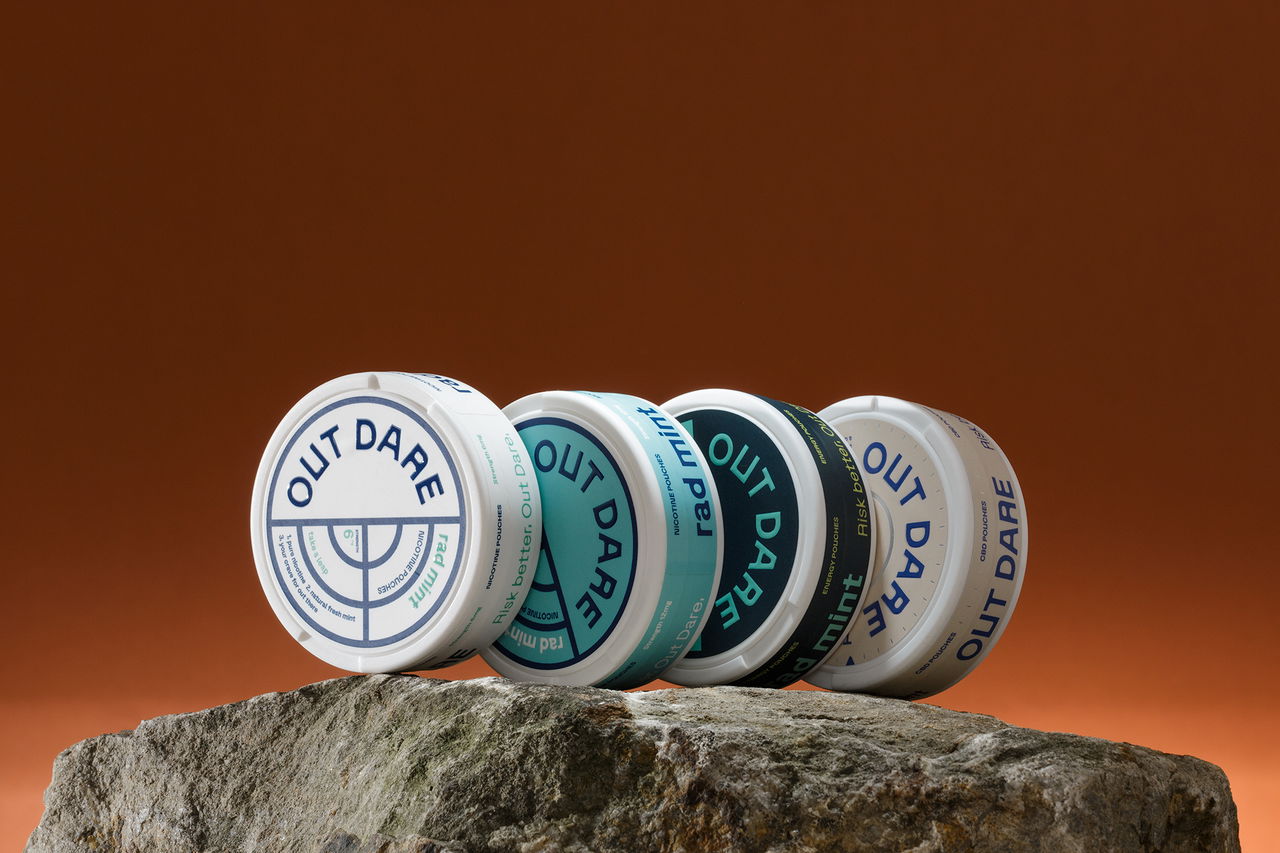
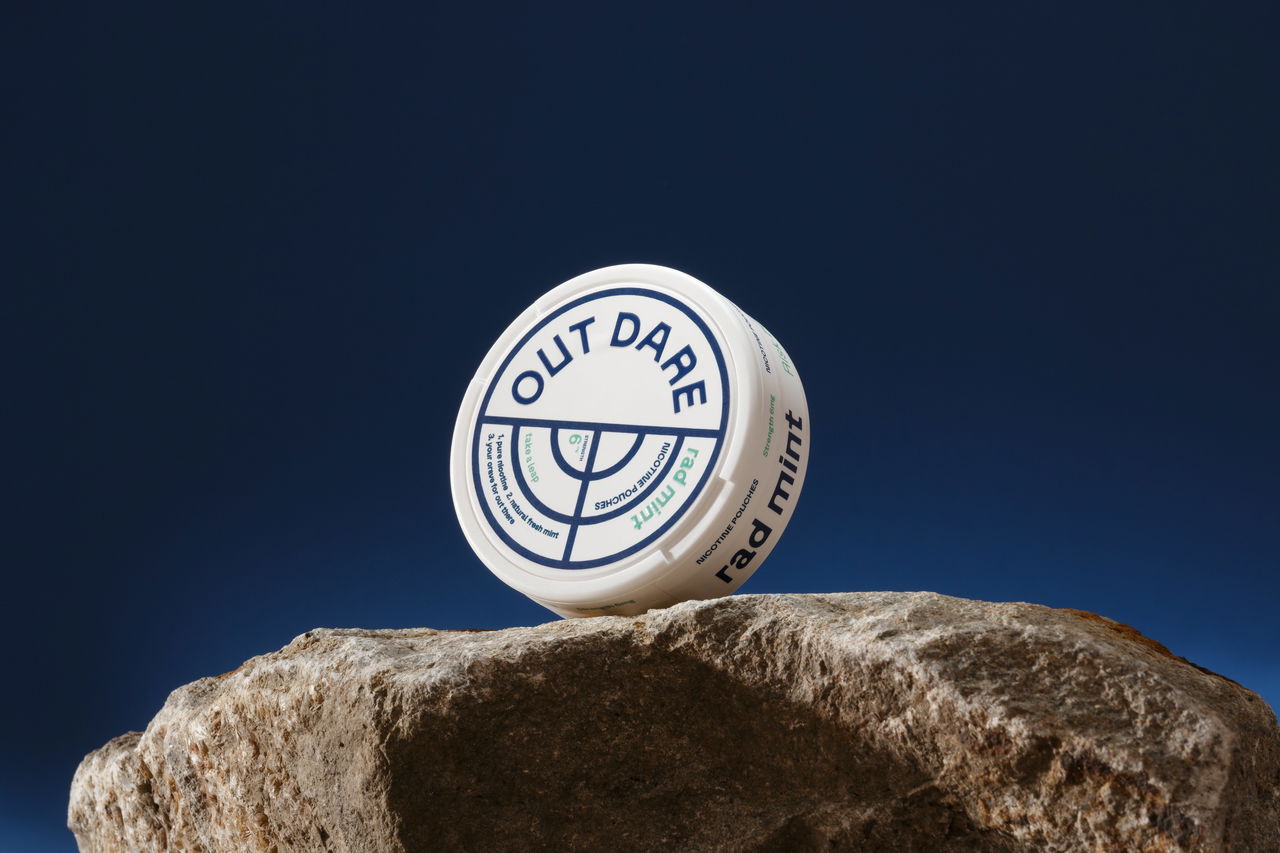
| Nicotine Pouches | 6 mg | when you need control (start here) | Rad Mint | €7.00 | |
| Nicotine Pouches | 12 mg | when you need control (when 6 mg does not hold the morning) | Rad Mint | €7.00 | |
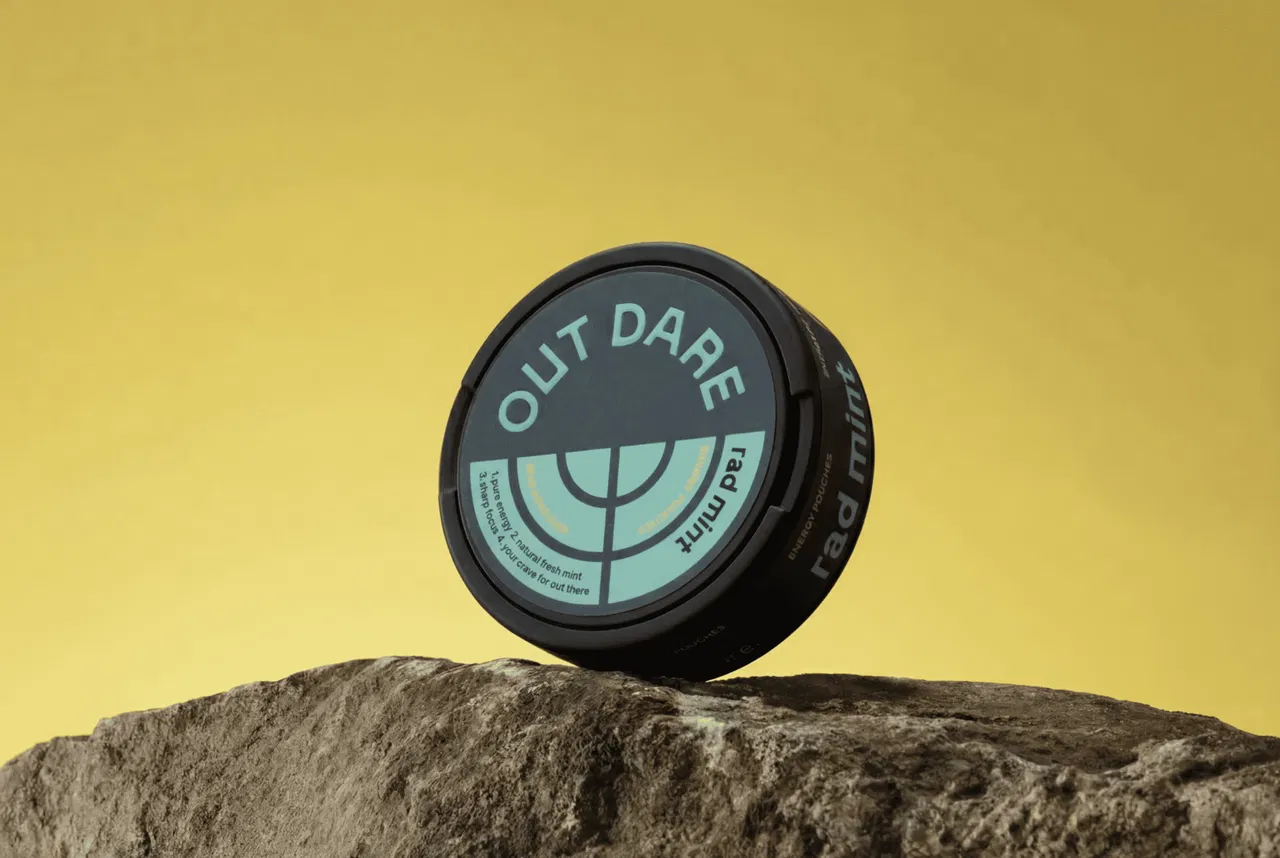
| Energy Pouches | 75 mg | for daytime focus | Rad Mint | €7.00 | |
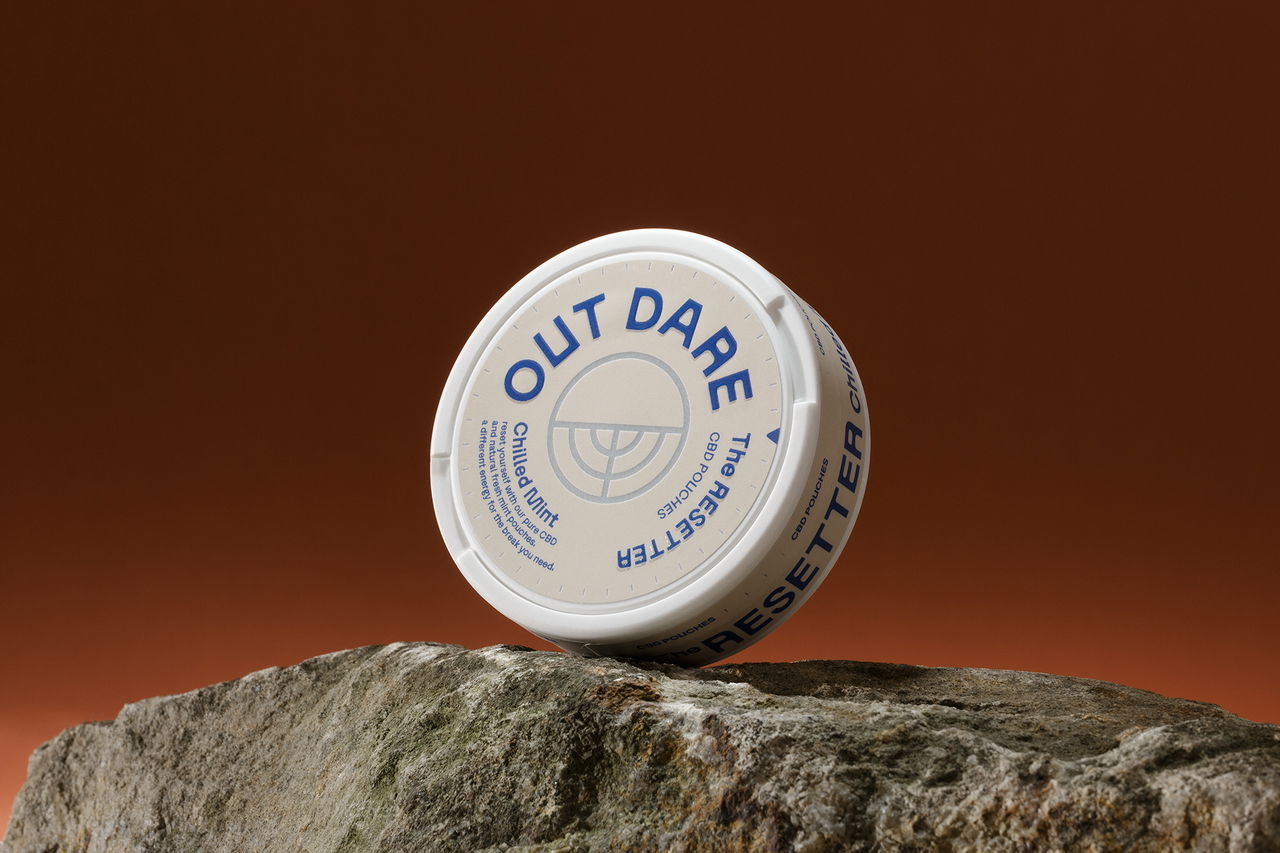
| Sleep Pouches | 20 mg CBD | for the evening, the last pouch of the day | Mint Terpene | €9.90 |


Shipped from Denmark by PostNord Express · Trustpilot 4.6
Three pouches, one ritual · Shipped from Denmark · 210+ countries · Trustpilot 4.6
How much nicotine is in a nicotine pouch?

Across the market, most nicotine pouches sit between about 3 mg and 25 mg of nicotine per pouch, and the figure on the can is measured per pouch, not per gram of filling.
That distinction matters more than most people realise. A 0.5 g pouch and a 0.7 g pouch carrying the same milligram number deliver the same nicotine load into your lip. The gram weight is filling and paper, not dose. So when you compare cans, the only number that speaks to the burn under your lip is mg per pouch.
The Light to Extra Strong ladder
Category leaders label their strengths with words, not numbers, and the words themselves vary. Roughly, the ladder looks like this:
- Light or Mini: around 3 mg to 4 mg. Sold by ZYN and Nordic Spirit for a soft entry point.
- Regular: around 6 mg. The classic ZYN and VELO anchor, and the everyday can for many users.
- Strong: around 8 mg to 10 mg. VELO and Nordic Spirit's mid-tier, popular with steady day-long users.
- Extra Strong: 12 mg and up, climbing to 15 mg, 20 mg and beyond on niche brands like KILLA and PABLO.
Where OutDare sits on that ladder
Our Nicotine Pouches come in two rungs. 6 mg sits on the Regular rung, in line with the ZYN and VELO anchor most switchers already know. 12 mg sits at the entry of Extra Strong, aimed at heavier users who found their Regular fading by lunchtime. We stop there on purpose. Above 12 mg, the burn on the gum starts to dominate the ritual, and the point of an all-white pouch is the cushion under the lip, not the sting.
Pro Tip: Do not read the gram weight on the can as a dose. Two cans marked 0.5 g and 0.7 g can carry the same 6 mg per pouch. Read the milligram figure, every time.
Where does the 'one standard strength' belief come from?
The "one standard strength" idea comes from the shape of the shelf a decade ago, when ZYN and VELO owned most of the visible range and their Regular can printed 6 mg or 8 mg on the front.
If you started on pouches between 2016 and 2022, odds are your first can was a ZYN Cool Mint 6 mg or a VELO Ice Cool 6 mg. That was Regular. That was the default. You bought Regular because Regular is what shops stocked at eye level, and Regular is what your mate handed you in the car park. Repeat that a few million times and 6 mg becomes the mental picture of "a nicotine pouch", the way "a cup of coffee" quietly means an espresso in Italy and a filter in Sweden.
Two other reasons the belief stuck
- Colour-coded marketing. ZYN, VELO and Nordic Spirit sell strength as a word and a colour: Light, Regular, Strong. Words feel like a scale of hot sauces, and most buyers pick the middle rung without checking the milligram.
- Brown snus figures on the same shelf. Traditional Swedish cans print nicotine as mg per gram, not mg per pouch. A brown portion showing "8 mg/g" is a very different animal from an all-white pouch marked "8 mg per pouch". Someone switching from brown to all-white reads the two figures as if they meant the same thing, and lands on a strength that either does nothing or floors them.
- Newer arrivals push both ends. KILLA, PABLO, White Fox and Iceberg have widened the visible range at the top, but the everyday shop default trails behind, so the mental anchor stays where ZYN and VELO drew it.
Why the anchor matters when you switch
If the pouch in your hand right now is a Regular from a big brand and it stopped holding you around eleven in the morning, you are not "resistant to nicotine". You have crossed the tolerance line that Regular was drawn around, and the honest next rung is Strong or Extra Strong. Read the milligram, not the colour, and let the number on the can decide, not the badge.
Shipped from Denmark by PostNord Express · Trustpilot 4.6
What ASH UK actually says about pouch strengths
Action on Smoking and Health, better known as ASH UK, publishes a public factsheet on nicotine pouches, and its consistent line on strength is that the figure varies widely between brands and that milligrams per pouch is the number worth comparing.
ASH is a UK public health charity, not a regulator and not a retailer. Its factsheets read like reference documents rather than product reviews, aimed at policy readers, journalists, health workers and curious consumers. When strength comes up, the factsheet's point is a category observation, not a verdict on any single can: pouches on the market run from a few milligrams to well above twenty per pouch, and the descriptor on the front is not standardised across the industry.
What the factsheet flags for the category
- Nicotine content varies substantially between brands, and between products within the same brand.
- Labelling practice is not uniform: some brands print per pouch, some print per gram, some do both, some print neither clearly.
- Marketing descriptors like "Regular" or "Strong" are not standardised, so one brand's Strong can be another brand's Regular.
What ASH does not do
The factsheet does not rank brands, does not set a "correct" strength, and does not tell you which can to buy. It is an information sheet, not a shopping guide. Anyone thinking about stopping nicotine altogether should speak to a pharmacist or a doctor, who can point them to the licensed cessation medicines that exist for that job.
How to use it as a buyer
Turn the factsheet's point into a habit. When you pick up any can, look for the milligram figure per pouch. If only mg per gram is printed, you are being asked to work out your own dose in the shop. On an all-white pouch, the number on the front should be mg per pouch, and it should match what your lip tells you within a few minutes of putting one in.
How brown snus labels compare to all-white pouches
Same word, different reference point. Brown snus historically prints two numbers on the can: the total nicotine content and the weight of each portion in grams. To know what actually lands under your lip you divide one by the other. All-white tobacco-free pouches print one number, milligrams of nicotine per pouch, and the maths is gone.
What each label is really telling you
On brown snus the fill is the product. A heavier portion carries more moisture, more tobacco, more of everything, so the nicotine figure on the back of the can is total content across the whole can and portion weight is the divisor you need to make sense of it. That is why a reader coming from brown snus often asks how strong 8 mg per gram is, rather than how strong one pouch is. The vocabulary follows the format.
All-white flips that logic. The fibre is a carrier, not the ingredient. Plant-fibre fill (microcrystalline cellulose) is inert cushioning under the lip, and the figure that matters is what has been dosed onto it. So the can states mg per pouch, one number, no arithmetic.
| Label reads | Brown snus can | All-white pouch can |
|---|---|---|
| Headline nicotine figure | Total mg per can, or mg per gram | mg per pouch |
| Portion weight | Printed in grams, and you need it | Rarely the number you read first |
| Maths at the counter | Yes, to reach per portion | No, the number is already per pouch |
| What fills the pouch | Tobacco | Plant fibre carrier |
Why the confusion travels across
A brown snus user reads a low-looking number on an all-white can and pictures the old sum: six of what, per how many grams? The answer is simpler than the reflex expects. 6 means 6 mg per pouch. 12 means 12 mg per pouch. Our own 6 mg and 12 mg cans follow the same convention every all-white maker uses, so once you have retrained the eye, every label in the category reads the same way.
What the milligram means when you pick a can

Match the milligram to what you use today, not to what you wish you used. That is the whole practical rule.
Start at 6 mg, step up to 12 mg only if 6 does not hold
For most readers moving across from another oral format, 6 mg is the everyday can. It gives you the cushion, the burn and the mint without shouting. If you find yourself reaching for a second pouch inside twenty minutes, or the morning flattens a 6 mg before the coffee is finished, the 12 mg exists for that. Not because stronger is better (it is not), but because a pouch that does not hold is a pouch you replace with another one, and the daily count creeps up while you are not looking.
- Light or occasional use: 6 mg is the ceiling you need.
- Steady daily use, coming from mid-strength brown snus: start at 6 mg and see how it lands before you move.
- Coming off a very strong extra-strong pouch: 12 mg is closer to what your lip is used to, then step down when you are ready.
Pro Tip: Give any new can three or four sessions before you judge the strength. The first pouch of a new brand tells you about the mint, not about the mg. By the fourth pouch you know whether it holds.
Why the label figure is the figure you actually get
A milligram printed on a can only means something if the pouch delivers it. Two things decide that. First, the paper. High-grade pouch paper stays sealed under the lip, so the fill does not open into the mouth and the active releases through the paper the way it was designed to. Cheap paper splits, and once it splits the dose is uneven, the taste turns and the arithmetic on the can becomes fiction. Second, the fill itself. A plant-fibre carrier is neutral: it does not compete with the flavour, it does not trap the active, and what has been dosed onto it is what your gum meets. If you want to see how the range is put together, ingredient by ingredient, the Nicotine Pouches page lists the nine on the label openly.
So is a 6 mg nicotine pouch a lot? Here's where it actually sits
Short answer: 6 mg is middle of the pack, not high. On a shelf that runs from roughly 3 mg at the bottom to 20 mg plus at the top, 6 mg sits comfortably in the moderate zone. It is enough for most users to notice, not enough to floor someone already used to a stronger can.
Think of pouch strengths like coffee. A 3 mg can is a decaf, 6 mg is a flat white, 10 mg is a double espresso, and anything 15 mg and above is cold brew for people who already drink a lot of cold brew. 6 mg lands where plenty of regular users land after a few weeks: enough buzz to feel it, not so much that the pouch runs the show.
How 6 mg compares across common strengths
| Strength | Where it sits | Typical user |
|---|---|---|
| 3 mg | Light | First can, or stepping down a rung |
| 6 mg | Moderate | Regular user who does not want to be floored |
| 10 mg | Strong | Daily user with a few months in |
| 15 mg and above | Extra strong | Long-term heavy user |
Context matters more than the number on the lid. A 6 mg pouch feels different depending on the pH of the pouch, how moist it is, where you park it in the lip and how long you keep it there. Two different 6 mg cans from two different brands will not deliver the same hit at the same pace. Our OutDare Nicotine pouches sit in the moderate to strong range, with each can priced at €5.90, so you can test where you actually land rather than guessing from a label.
Signs 6 mg is too much, too little or about right for you
- Too much: head rush that will not settle, the buzz turns uncomfortable, you want to bin the pouch.
- Too little: you forget it is in within five minutes and reach for a second.
- About right: steady tingle, clear head, no urge to double up.
If you have only used VELO 4 mg or ZYN 3 mg, a 6 mg jump will feel like a real step up. If you are coming off 10 mg cans, 6 mg will feel like a gentle landing. The milligram is a starting point, not a verdict. Try a can, see how it sits, then move up or down from there. Browse the full strength ladder on our Nicotine pouches page.
Sources & References
- Nicotine pouches factsheet · Action on Smoking and Health (ASH UK) (2024)
- Nicotine content and labelling of oral nicotine pouch products · Tobacco Control, BMJ (2022)
- WHO report on the global tobacco epidemic · World Health Organization (2023)
- Nicotine and related products · European Commission, Public Health (2024)
Frequently Asked Questions
What is the strongest nicotine pouch you can buy?
Mainstream all-white brands top out around 20 mg to 25 mg per pouch, with niche labels like KILLA and PABLO pushing higher on the shelf. OutDare stops at 12 mg because two strengths cover the useful range without turning a can into a stunt.
Is 6 mg a lot of nicotine for one pouch?
6 mg per pouch sits in the middle of what most brands sell as Regular or Medium. For someone coming from brown snus or an 8 mg competitor pouch it usually reads as steady rather than intense, which is why OutDare uses it as the everyday can.
How much nicotine do you actually absorb from a pouch?
The mg on the label is what the pouch contains, not what enters the bloodstream. Release depends on how long the pouch stays under the lip, saliva flow and the individual, so two people using the same 6 mg can will not extract the same amount.
Do OutDare pouches contain tobacco?
No. OutDare nicotine pouches are all-white and tobacco-free: nicotine sits on a plant-fibre base of microcrystalline cellulose, with natural flavours, xylitol and a short ingredient list. That is why calling them snus is inaccurate: snus contains tobacco by definition.
How does a nicotine pouch compare with a cigarette?
A cigarette delivers nicotine through smoke in minutes; a pouch releases it gradually under the lip over 20 to 40 minutes. The label mg and the delivered dose are different numbers, so direct milligram-to-cigarette maths overstates or understates depending on the user.
Is brown snus stronger than a nicotine pouch?
It depends on the product. Brown snus portions typically list 8 mg to 22 mg of nicotine per gram, and portions weigh around 1 g, so a strong snus can carry more than a mid-strength pouch. Reading the actual number on each can is the only fair comparison.
Which OutDare strength should someone new start on?
6 mg Rad Mint is the sensible start: enough hold for most days without the harsh finish. Move to 12 mg only if 6 mg does not hold the morning. Both come in 20-pouch cans at €7.00, charged in EUR.
Why do different brands print strength differently?
Some print mg per pouch, some print mg per gram, and older brown snus cans print total content per can. There is no universal format, which is why comparing a 'strong' label across brands means reading the small print, not the front of the can.
The milligram on the can is the milligram per pouch, nothing more, nothing less. Different brands print the same number on very different products, and brown snus reports it a third way. OutDare keeps it plain: 6 mg when you need control, 12 mg when 6 mg does not hold the morning. Same paper, same fill, same burn, one variable moves. Start where you actually are today, not where a chart says you should be. Pick your can on the nicotine pouches page and read the label first.
Related guides
Published 16 September 2026 · Last updated 01 October 2026