

What Are Nicotine Pouches Made Of? Ingredients
By Thomas Agaraté · Daily pouch user since 2014 · About
Editorial note: written by OutDare, the brand that makes and ships the pouches on this page. Prices are our live prices in EUR.
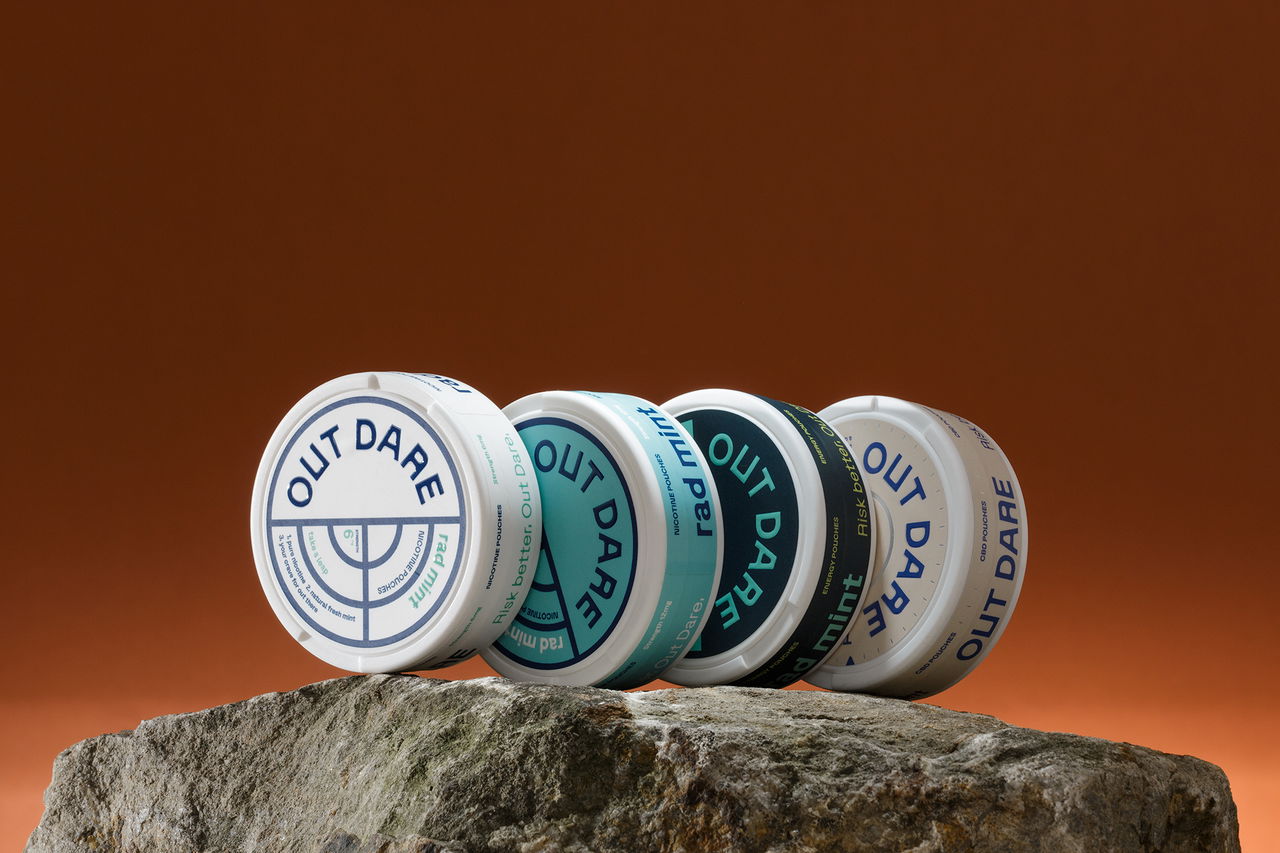
Nicotine pouches are made of plant fibre, food-grade nicotine, natural mint flavour, sweeteners and high-grade pouch paper: no tobacco leaf, no smoke, no spit. I spent years with a can under the lip before I built OutDare, so what follows is the label I actually sell, not a summary I copied off a deck. See the current range of nicotine pouches to put a can against these lines.
- We ship from our warehouse in Denmark
- Shipping from €9.45
- Prices are charged in euros.
- 18+ only. Age is verified at checkout.
- Rules on nicotine products vary by country and can change, check what applies where you live.
| Key Insight | Explanation |
|---|---|
| Plant fibre, not tobacco | The filling is microcrystalline cellulose, a plant-fibre base, so there is no tobacco leaf inside the pouch. |
| Nine ingredients on the label | OutDare lists nine components in total: fibre, food-grade nicotine, natural flavours, sweeteners, salts, water and pouch paper. |
| White pouch under the lip | A small white sachet sits between the lip and the gum, releasing nicotine and mint through the paper for around thirty to forty minutes. |
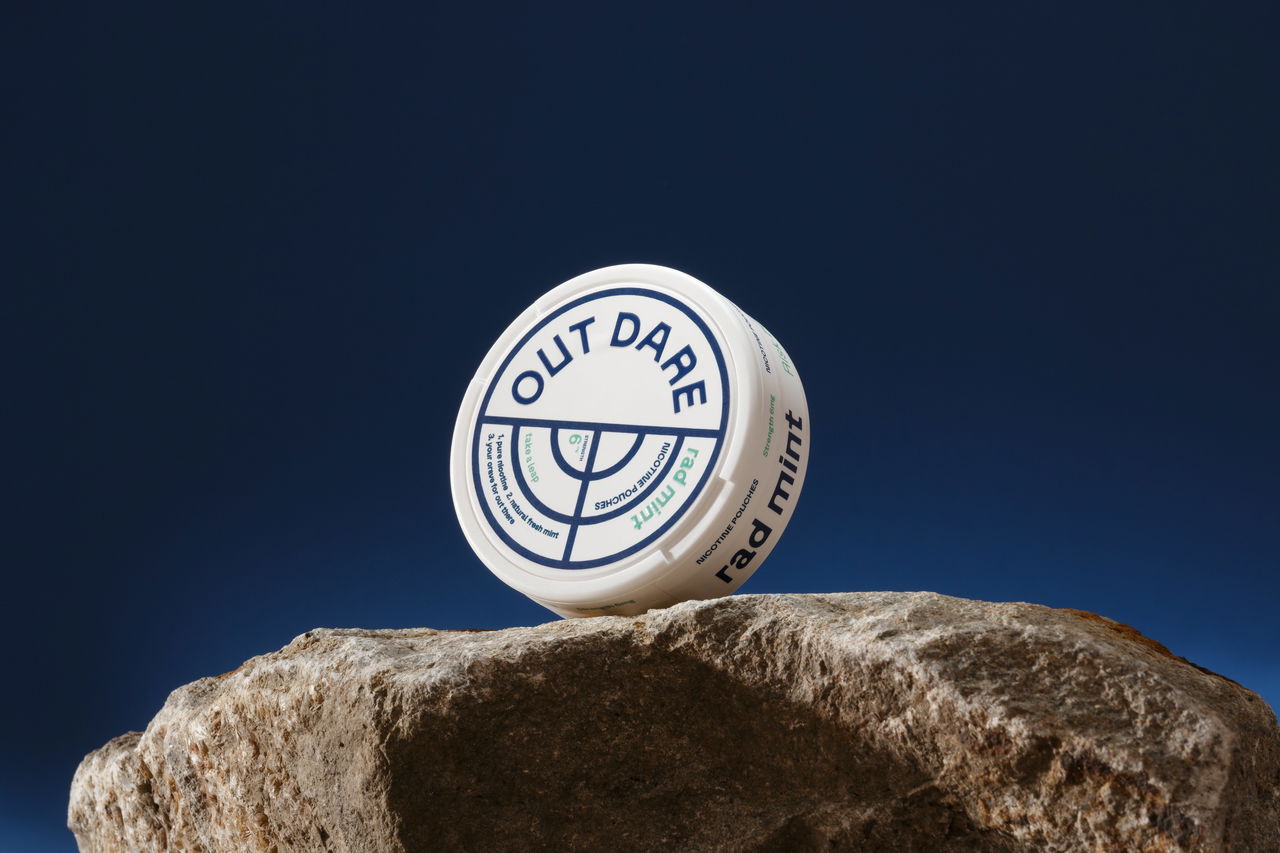
| Two strengths, one flavour | OutDare sells the pouch in 6 mg and 12 mg per unit, both in the Rad Mint profile, made in a European factory. |
- What are nicotine pouches made of?
- Why each ingredient is in the pouch
- 6 mg or 12 mg: which strength suits whom?
- How do these differ from cigarettes, vapes or traditional snus?
- What it costs and how the cans come
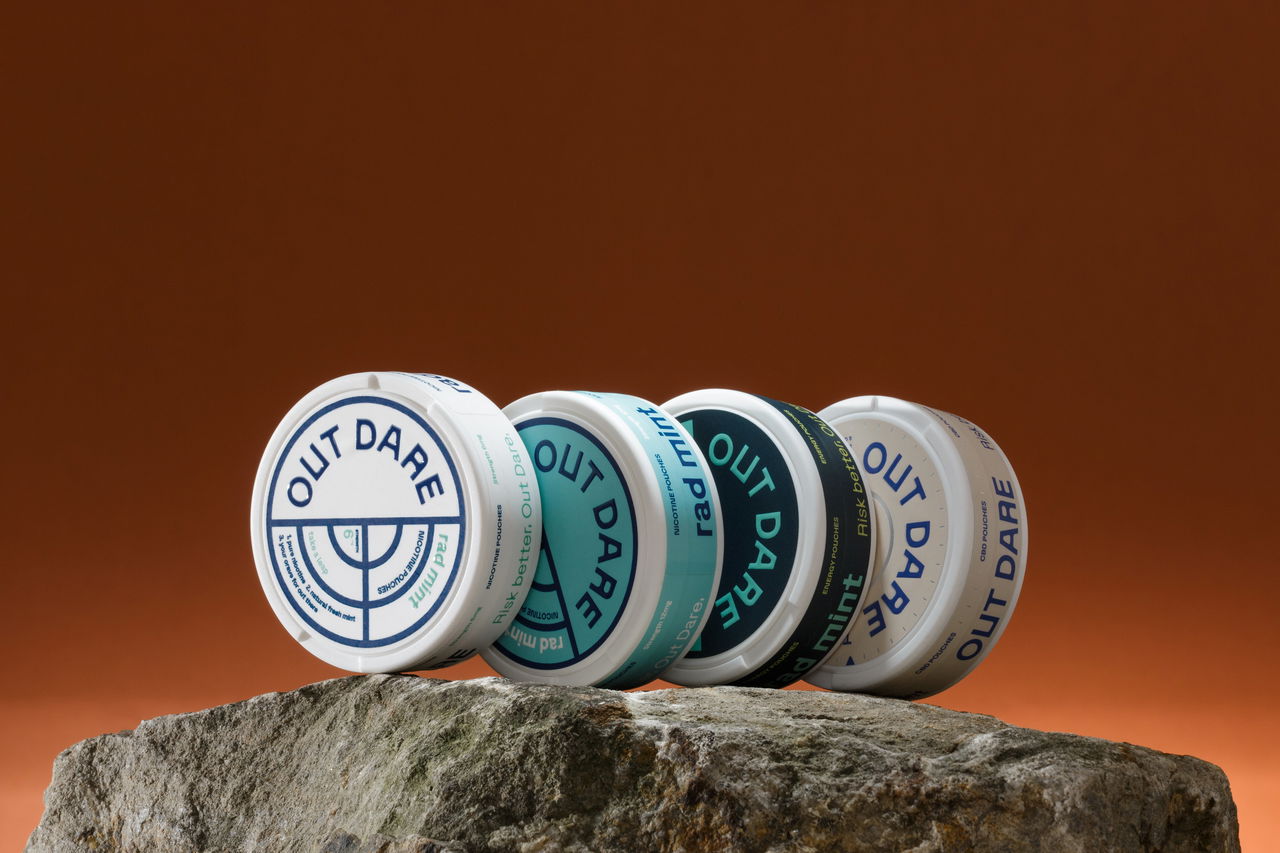
The range, same burn, same ritual, three chemistries
| Pouch | Strength | Best for | Flavour | Price | |
|---|---|---|---|---|---|
| Nicotine Pouches | 6 mg | when you need control (start here) | Rad Mint | €7.00 | |
| Nicotine Pouches | 12 mg | when you need control (when 6 mg does not hold the morning) | Rad Mint | €7.00 | |
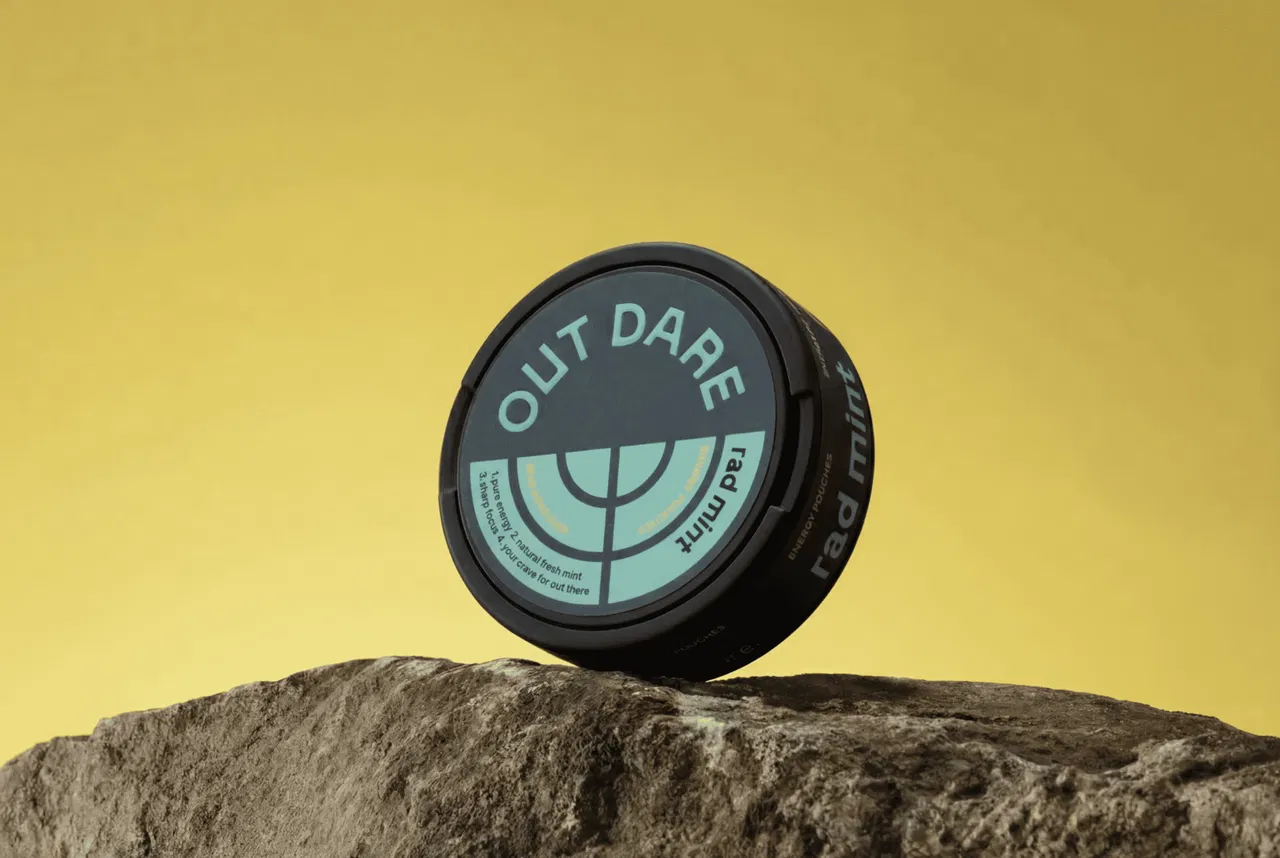
| Energy Pouches | 75 mg | for daytime focus | Rad Mint | €7.00 | |
| Sleep Pouches | 20 mg CBD | for the evening, the last pouch of the day | Mint Terpene | €9.90 |


Shipped from Denmark by PostNord Express · Trustpilot 4.6
Three pouches, one ritual · Shipped from Denmark · 210+ countries · Trustpilot 4.6
What are nicotine pouches made of?
A nicotine pouch is a small white sachet you park between the upper lip and the gum, and inside it there is no tobacco leaf, no smoke and nothing to spit. The OutDare 6 mg and 12 mg Rad Mint cans carry nine items on the label: a plant fibre base, food-grade nicotine, natural mint flavour, two sweeteners, pH salts, a trace of salt, water, and the pouch paper itself.
What is inside, item by item
- Microcrystalline cellulose: a plant fibre, the physical bulk that holds the rest of the load.
- Food-grade nicotine: the active, produced for consumer use, not derived from cured tobacco leaf.
- Natural mint flavour: the Rad Mint aromatic, built in Europe from natural mint oils.
- Xylitol: a plant-derived sugar alcohol, the main sweetener in the mix.
- Sucralose: present in a smaller amount, kept for balance rather than removed.
- pH salts: the alkaline agent that lets the nicotine release into the saliva at the right rate.
- Salt: a trace, for flavour balance.
- Water: the carrier that binds the mix into the fleece.
- Pouch paper: a food-grade, porous, non-woven fleece. No fibreglass.
That is the full recipe. If a data sheet lists something extra, it is not this pouch. What is not on the list matters as much as what is: no tobacco leaf, no combustion by-product, no colourants, no menthol crystals painted on the outside of the sachet, no fibreglass in the paper. The sachet you feel between the lip and the gum is one piece of fleece, one moist mix, and no more. Nine items, one job each, and the whole point of writing them out is that a reader who buys a can can read the label and recognise every line.
Why each ingredient is in the pouch

Every item on that label earns its place: one holds the shape, one supplies the nicotine, one carries the cold, two run the sweetness, one opens the pouch chemistry, one governs the burn. Take one out and something you can feel under the lip goes missing.
The job of each ingredient
- Microcrystalline cellulose is what makes the pouch feel like a pouch. It absorbs the wet mix and gives the sachet its cushion, so the fleece sits soft against the gum for the whole hold and does not collapse into a wet knot on minute two. Plant fibre, not tobacco stem.
- Nicotine is the active. It is dosed to the pouch in milligrams and released as the saliva does its work. The number on the can is the ceiling of what the pouch carries: what actually reaches you depends on the pH, on the paper and on how you keep the pouch in place.
- Natural mint flavour is the character. Rad Mint was built by a former mixologist, not lifted from a factory stock profile. It reads cold on the front, green in the middle and long on the finish, and it is designed to hold its shape through the whole pouch rather than blow off in the first two minutes.
- Xylitol and sucralose run the sweetness as a pair. Xylitol carries the bulk and pulled the sucralose down to a support role; the sucralose that stayed keeps the top note clean. A mint made only of sucralose reads chemical, a mint made only of xylitol reads flat. Two sweeteners, one mouthfeel.
- pH salts are the switch. They lift the pouch into the alkaline range where the nicotine can leave the fibre and cross into the saliva. Without them, the milligrams would just sit inside the fleece and never arrive.
- High-grade pouch paper controls the burn. The fleece is porous enough to let the mix work, dense enough to keep the load in place, and thin enough that the tingle on the gum arrives inside a minute. Pouch paper is not neutral: a cheap fleece leaks fast and stops early, a good one carries the whole hold.
That is why the recipe holds together. It is not nine items thrown at a wall; it is one active, one carrier, one flavour, one sweet system, one chemistry and one wrapper, each doing one job for the full time the pouch is in.
Shipped from Denmark by PostNord Express · Trustpilot 4.6
6 mg or 12 mg: which strength suits whom?
If you are new to pouches, start on 6 mg and move to 12 mg only if 6 mg does not hold the morning. Both cans carry the same Rad Mint character and the same burn under the lip, so the only thing that changes when you step up is how much nicotine the pouch is asked to release.
How to pick
| Where you are | Where to start |
|---|---|
| Never used a pouch before | 6 mg, one at a time, ideally not on an empty stomach |
| Switching from a light cigarette or a low-mg vape | 6 mg |
| Switching from a heavy cigarette day or a high-mg vape | 6 mg first; step to 12 mg only if 6 mg does not hold |
| Already on a 6 mg pouch and reaching for a second inside half an hour | 12 mg |
| Sensitive on the first try (dizzy, hiccups, a bit queasy) | Stay on 6 mg, cut the hold shorter, keep water nearby |
Pro Tip: the honest test for stepping up is not the first ten minutes of a pouch, it is the last five. If a 6 mg pouch is still giving you a clean burn at the fifteen-minute mark and you feel settled, 6 mg is your can. If it faded at minute five and you were already thinking about the next one, 12 mg is the answer, and one 12 mg pouch will usually do the work of two 6 mg ones.
What each strength feels like
A 6 mg pouch has a mild, level release. The mint arrives first, the tingle follows, the nicotine sits underneath rather than on top. It is the everyday can and the one to keep in the drawer at work.
A 12 mg pouch lands harder in the first two minutes and holds longer at the back of the hour. It is not simply twice as much of the same thing: the paper and the salts are calibrated for the bigger load, so the arrival is sharper and the finish is denser. It is the can for the morning coffee, the long drive, the meeting that ate the last one.
Both live on the same nicotine pouches page at €7.00 per can. Order the strength you actually need. If you are unsure, order 6 mg first: a can that turns out too mild becomes the evening can, a can that turns out too strong ends up in a drawer waiting for a morning that never comes.
How do these differ from cigarettes, vapes or traditional snus?

Different tools, different rituals. A cigarette burns tobacco leaf and pushes smoke into your lungs. A vape heats an e-liquid and puts vapour there instead. Traditional Scandinavian snus is moist, ground tobacco tucked under the lip, and it releases juice you eventually spit. An OutDare pouch is a small white cushion of plant fibre carrying tobacco-free nicotine, sitting between the lip and the gum with no flame, no cloud and no spit cup.
Format at a glance
| What it is | What burns | Where it lands | Typical duration |
|---|---|---|---|
| Cigarette | Tobacco leaf, combusted | Lungs, via smoke | 5 to 8 minutes |
| Vape | Heated e-liquid, no flame | Lungs, via vapour | As long as you draw |
| Traditional snus | Moist tobacco, no combustion | Under the upper lip | 30 to 60 minutes |
| OutDare pouch | Nothing: no combustion, no leaf | Under the upper lip | Around 30 to 45 minutes |
Ritual, and the word "snus"
Cigarettes and vapes need your hands, your mouth and, in a lot of buildings, a step outside. A pouch sits under the lip, quiet, no exhale, so the ritual fits a meeting, a drive or a training set. That is the mechanical difference before you even talk about what is inside.
The word "snus" travels further than the product it names. From Stockholm to Sydney to Brisbane, people call any small white pouch a snus out of habit. Strictly, snus is Scandinavian and it contains tobacco: ground leaf, moist, sold in cans that look almost identical to ours. An OutDare nicotine pouch is not snus. Same posture under the lip, different content: plant fibre and tobacco-free nicotine at 6 mg or 12 mg, no leaf in the mix. If you have been on tobacco snus and you want a nicotine pouch built to sit in the same spot, that is what the range is designed for.
OutDare ships internationally, direct to your door, adults only. Rules around nicotine products differ from country to country and they change: check what applies where you live before you order. Anyone who wants to stop nicotine altogether should talk to a pharmacist or doctor.
What it costs and how the cans come
One can holds 20 pouches, and both the 6 mg and the 12 mg Rad Mint sit at the same shelf price, so the strength you choose does not move what leaves your account. Where the price actually moves is bulk, and the ladder is worth reading before you tap a tier at random.
The bulk ladder, honestly written
- 1 can: €7.00 total, €7.00 per can. The first-try move, to test the burn under the lip.
- 5 cans: €28.00 total, €5.60 per can. €7.00 off the single-can rate.
- 15 cans (buy 10, get 5): €70.35 total, €4.69 per can. €34.65 saved against a €105.00 shelf, and this is where the per-can price drops sharpest.
- 30 cans (buy 20, get 10): €140.70 total, €4.69 per can. Same per-can floor as the 15-can tier, and it is the tier that clears the €100 threshold, so delivery is offered on that order.
Pro Tip: If your daily count is settled, treat the 15-can tier as the sharp discount and the 30-can tier as the same per-can price with delivery offered on top. Anything smaller belongs to the reader still deciding between 6 mg and 12 mg.
Paying from the US
Every order at checkout is charged in euros, on every market, the United States included. Your card issuer converts to dollars on the day at whatever rate they run, and adds any fee they charge for a foreign transaction. That is why I will not paste a dollar figure next to the euro one: the rate moves daily, and a hard-coded number would be wrong by the weekend. Take the euro tier that fits your rhythm, and let your card do the arithmetic.
The parcel crosses a customs border to reach a US address, so import VAT or duty may apply on arrival. That is a genuine "may", not a promise either way: any amount, and whether there is one at all, is decided by your local customs, not by us. Size your order accordingly: a single can to test the ritual, or the 30-can order that lands the per-can floor and clears the delivery threshold in one go.
Sources & References
- Nicotine pouches: what the science says · Rutgers Center for Tobacco Studies (2024)
- Tobacco fact sheet · World Health Organization (2024)
- Nicotine pouches briefing · Action on Smoking and Health (ASH) (2024)
- Nicotine and tobacco products information · U.S. Food and Drug Administration (2024)
Frequently Asked Questions
What are nicotine pouches made of?
A plant-fibre base (microcrystalline cellulose) carrying food-grade nicotine, natural mint flavour, sweeteners (xylitol and a smaller amount of sucralose), pH salts and water, all held inside a small high-grade paper pouch. No tobacco leaf, no smoke, no spit.
Do OutDare nicotine pouches contain tobacco?
No. The filling is plant fibre, not shredded tobacco leaf. That is the line between an OutDare pouch and traditional Scandinavian snus, which is a tobacco product. The nicotine itself is food-grade and dosed at 6 mg or 12 mg per pouch.
What is the plant fibre for?
The microcrystalline cellulose gives the pouch its body: it holds the nicotine and the flavour, creates the cushion under the lip, and releases both slowly through the paper as saliva passes through. Without it there is nothing to hold the load.
Is 6 mg or 12 mg the stronger pouch?
12 mg is stronger. OutDare sells 6 mg as the everyday can and 12 mg for the mornings 6 mg does not hold. Both come in Rad Mint. If you are new to the format, start on 6 mg and move up only if you need to.
Are these the same as snus?
No. Snus is a Scandinavian tobacco product: shredded leaf inside the pouch. An OutDare nicotine pouch is tobacco-free: the leaf is replaced by a plant-fibre base and the nicotine is added separately. Same ritual under the lip, different contents.
How long does one pouch last?
Around thirty to forty minutes for most people, depending on how hard you park it under the lip and how much saliva you produce. You feel the burn early and it fades toward the end. One can holds 20 pouches.
What does Rad Mint taste like?
A cold, direct fresh mint with a clean finish, developed by a former mixologist rather than pulled off a flavour-house shelf. It sits over the nicotine burn without masking it. Every OutDare nicotine pouch, 6 mg or 12 mg, carries the same Rad Mint profile.
Are these sold in shops in the US?
OutDare sells online only and ships from our warehouse in Denmark, charged in EUR, delivered to your door, adults only. Rules around nicotine products differ from country to country and they change: check what applies where you live before you order.
Nicotine pouches, on the OutDare label, are plant fibre, food-grade nicotine, natural Rad Mint, sweeteners and pouch paper. Nine ingredients, no tobacco leaf, no smoke, no spit. Two strengths do the whole job: 6 mg for the everyday can, 12 mg for the mornings 6 mg does not hold. One flavour, made in Europe, shipped from Denmark in cans of 20, charged in EUR. When you have read the label and want to try one, open the OutDare nicotine pouches page and start on 6 mg.
Related guides
Published 25 September 2026 · Last updated 25 September 2026