









Nicotine Pouch Withdrawal Timeline: What to Expect Daily
Understanding nicotine pouch withdrawal timeline is essential. Nicotine pouch withdrawal typically peaks within 24–72 hours of your last pouch and largely resolves within 2–4 weeks. The first three days bring the sharpest cravings, irritability, and difficulty concentrating. By week two, most physical symptoms ease significantly, though psychological cravings can linger for a month or longer, especially if you were using high-strength pouches daily. Individual factors like dosage, duration of use, and metabolism determine how hard and how long your withdrawal hits.

The Nicotine Pouch Withdrawal Timeline: Hour by Hour, Week by Week
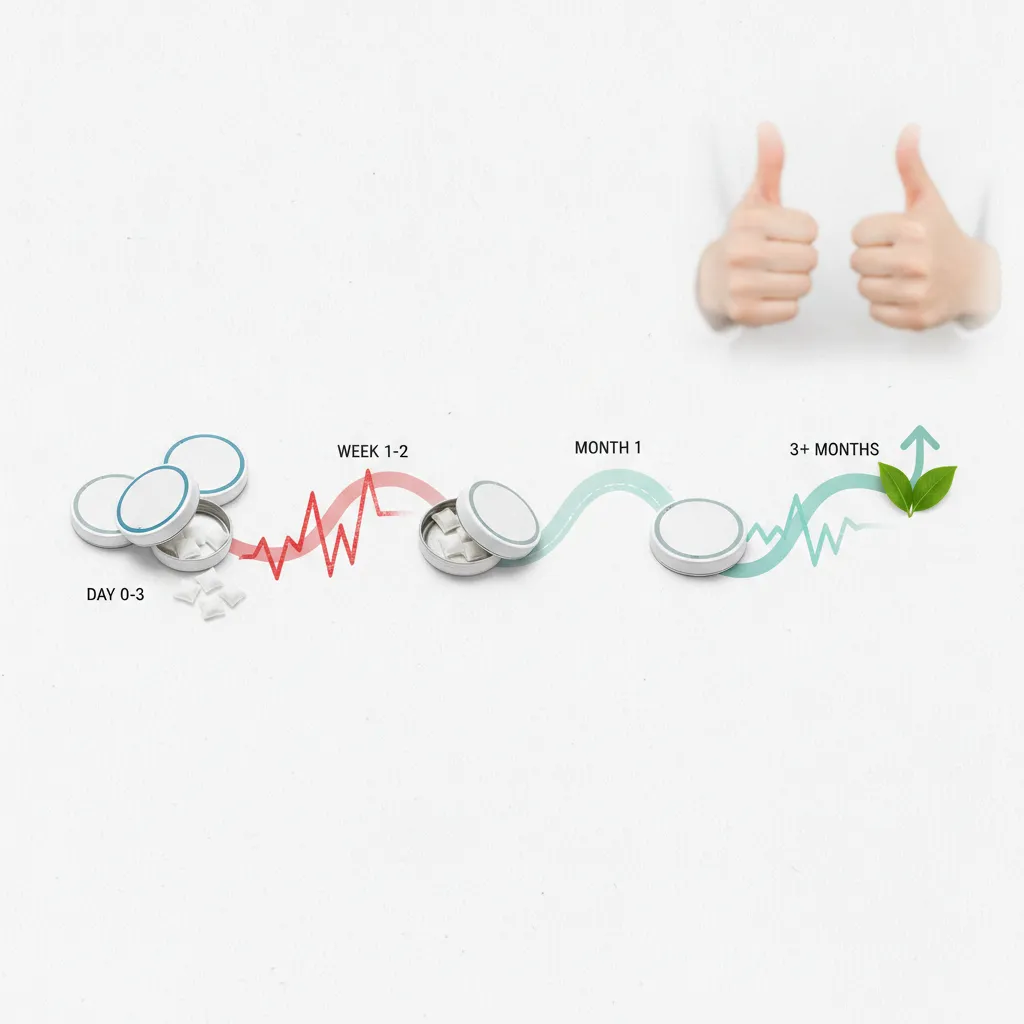
Nicotine pouch withdrawal follows a predictable arc: symptoms emerge within hours, peak at days 2–3, and physically resolve for most users by day 21. According to the EX Program's nicotine withdrawal timeline, most people experience the sharpest symptoms in the first three days before a gradual easing begins.
What Happens in the First 24 Hours of Nicotine Pouch Withdrawal
Within 30–60 minutes of your last pouch, blood nicotine levels start falling. By the 1–2 hour mark, your acetylcholine receptors begin signalling deprivation, that's when the first craving hits, and it hits hard.
Nicotine's half-life is roughly 2 hours [2], which means plasma levels are near zero by hour 8. That biochemical drop is why the first 24 hours concentrate the worst of it: acute anxiety, irritability, and cravings that feel relentless rather than situational.
Days 2 and 3 are the window most users describe as the hardest. Headaches, broken sleep, difficulty concentrating, and mood swings are all clinically documented during this phase [1]. Your brain, accustomed to a dopamine signal arriving every 45–60 minutes, is running without its usual reward cue.
By days 4–7, the physical symptoms begin to plateau. Appetite increases noticeably, nicotine suppresses hunger, and once it clears, many users report weight concerns as the appetite-suppressing effect lifts [1]. This is normal and expected, not a sign something has gone wrong.
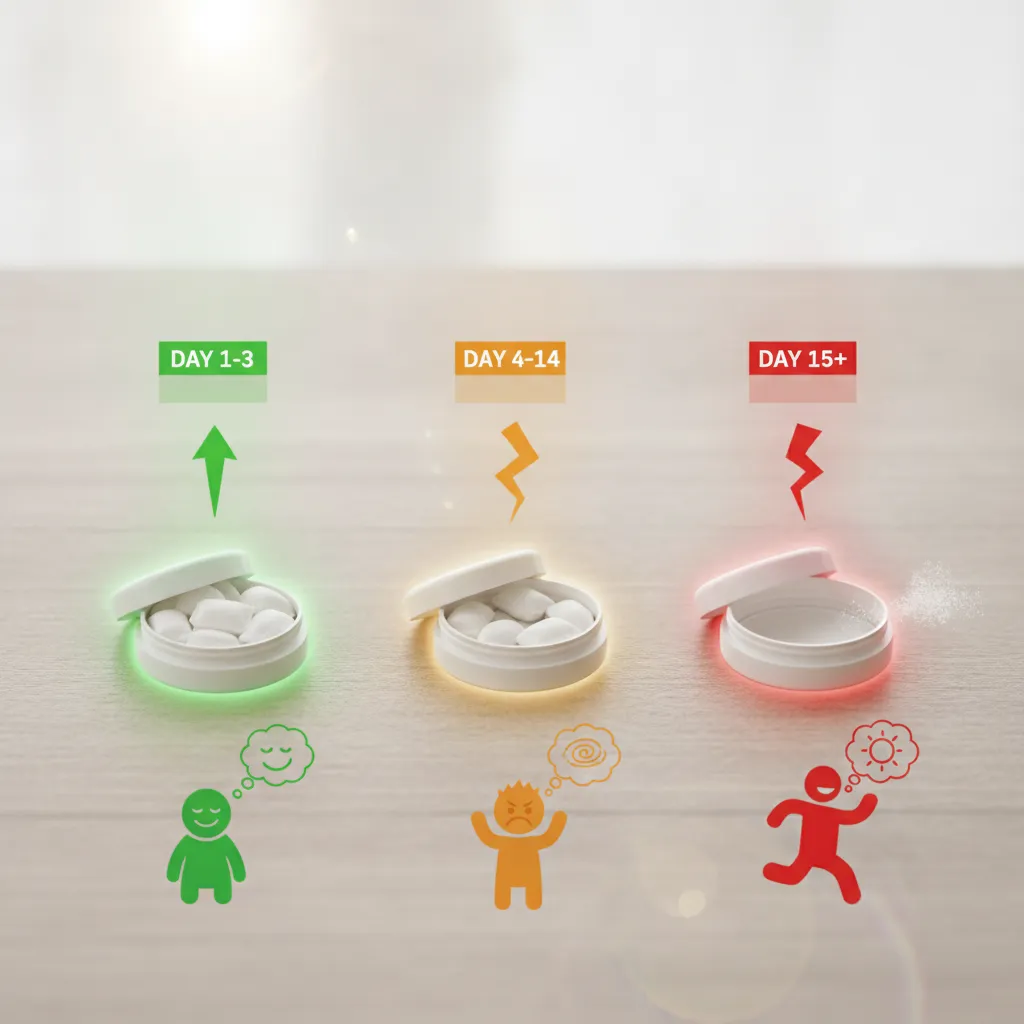
Weeks 2–4 shift the challenge from physical to psychological. Cravings become situational, triggered by stress, a work deadline, or a social setting where you'd normally reach for a pouch, rather than constant. Each craving typically lasts under 5 minutes [1]. Most physical symptoms are resolved by day 21 for average users, though the habit loop can outlast the chemistry by weeks.
This is exactly the gap that the nicotine pouch withdrawal timeline exposes: the chemical dependency clears in three weeks, but the ritual, the reach, the burn, the sensory cue, stays active far longer.
"The physical symptoms of nicotine withdrawal are real, but they are temporary. Most people find that cravings become shorter and less intense with each passing day, and by the end of the first month, the majority report feeling significantly better." — Dr. Maher Karam-Hage, Medical Director of the Tobacco Treatment Program at UT MD Anderson Cancer Center
How Does Withdrawal Differ Between Zyn, On!, and Velo Brands?
Brand matters less than strength and frequency. Withdrawal severity scales with how much nicotine your receptors have adapted to, not which label was on the can.
That said, there are real differences in nicotine delivery across product formats. Higher-strength pouches, 15mg or above, produce faster receptor adaptation and sharper withdrawal when stopped [2]. A user running through a full can of 15mg pouches daily will experience a steeper drop than someone using 6mg pouches intermittently.
Moisture content and pH also affect absorption rate. Brands formulated for faster release deliver nicotine more quickly, which can reinforce the habit loop more aggressively and make the deprivation signal feel more acute when you stop. The withdrawal symptoms themselves, anxiety, cravings, disrupted sleep, are identical across brands; only the intensity varies.
How Nicotine Addiction and Withdrawal Actually Work in the Body
Nicotine binds to brain receptors, triggers a dopamine flood, and rewires your neural chemistry, that rewiring is what drives every symptom on the withdrawal timeline.
The Neurochemistry Behind Pouch Dependence
When nicotine enters your bloodstream from a pouch, it binds to nicotinic acetylcholine receptors (nAChRs) in the brain. That binding triggers a dopamine release in the nucleus accumbens, the same reward circuit activated by alcohol, opioids, and other addictive substances [2].
With chronic pouch use, your brain responds by growing more nAChRs, a process called upregulation. More receptors means you need more nicotine to feel baseline-normal. When you stop, those receptors sit empty and your dopamine output drops sharply. That deficit state is the biological root of withdrawal: irritability, low mood, difficulty concentrating, and intense cravings [1]. Research indicates that approximately 50% of people who use nicotine products daily will experience clinically significant withdrawal symptoms when they attempt to quit.
"Nicotine withdrawal is driven by the brain's attempt to restore chemical balance after prolonged exposure. The upregulation of nicotinic receptors means that when nicotine is removed, the brain is temporarily flooded with signals it cannot adequately process without its usual chemical support." — Dr. Damon Vidrine, Professor of Health Disparities Research, University of Texas MD Anderson Cancer Center
How Does Nicotine Pouch Addiction Differ from Smoking or Vaping
Tobacco smoke contains monoamine oxidase inhibitors (MAOIs), compounds that slow the breakdown of dopamine and amplify nicotine's reward signal [1]. Pouches produce no combustion, so there is no MAOI effect. Pouch dependence is more purely nicotinic.
Some researchers suggest this makes the physical component of nicotine pouch withdrawal slightly shorter than cigarette withdrawal. The habit loop, however, is equally strong, the oral ritual, the gum burn, the timed break, and those conditioned behaviors don't disappear when the chemistry resolves. This is why brain fog and cognitive withdrawal symptoms can persist long after the acute physical phase ends.
Why Do Nicotine Cravings Happen After Quitting Nicotine Pouches
Cravings are not purely chemical. After the first week, most physical symptoms ease, but cravings return hard when you hit a conditioned cue: a work break, a stressful meeting, the end of a meal [1].
Your brain has paired those moments with the pouch ritual hundreds of times. The cue fires the expectation, and the expectation fires the craving, regardless of nicotine levels in your blood. This is why psychological symptoms outlast physical ones on the nicotine pouch withdrawal timeline, and why addressing the habit loop matters as much as managing the chemistry.
How Long Nicotine Pouch Withdrawal Lasts, and What Makes It Longer for You
Most people clear the acute phase in 3–14 days, but your personal nicotine pouch withdrawal timeline depends on four variables that most quit guides ignore.
What Factors Affect How Long Your Withdrawal Lasts
Nicotine strength is the most direct lever. A user stepping off 3mg pouches faces a different neurochemical deficit than someone quitting 11mg+ formats daily. The higher the strength, the more aggressively your brain's dopamine system has been conditioned to expect a top-up [2].
Daily volume compounds that. Heavy users averaging 10 or more pouches per day have flooded their nicotine receptors consistently enough that the brain treats nicotine as baseline, not a bonus. Withdrawal isn't just discomfort at that point; it's a genuine neurochemical correction.
Total duration of use matters too. Months of use versus years of use produces a meaningfully different receptor adaptation. A user who started with pouches two years ago and escalated strength over time will typically run a longer acute phase than someone who picked up the habit six months ago.
Metabolism speed adds a counterintuitive wrinkle. Faster metabolizers clear nicotine quickly, cotinine, the primary metabolite, has an average half-life of around 16 hours, but this can extend to 20+ hours in older or slower-metabolizing users [2]. Faster clearance can mean more intense acute symptoms early; slower clearance may drag the timeline out. Age plays into this directly: older users tend to experience a longer acute phase because nicotine lingers in the system longer.
Brand-specific delivery also shifts the curve. Higher-bioavailability formats, those engineered for faster mucosal absorption, condition the brain to expect a sharper nicotine spike. Stepping off those formats can produce a steeper initial drop than switching from a slower-release product.
A practical benchmark: if you were using more than 8 pouches per day at 6mg or above, plan for an acute phase closer to 10–14 days, not the 3–5 days often cited for lighter users.
Can Post-Acute Withdrawal Syndrome Extend Beyond the First Month
Yes, and this is the part of the nicotine pouch withdrawal timeline that almost no brand-facing content addresses honestly.
A subset of heavy, long-term pouch users report persistent low-grade symptoms well after the acute phase resolves. This is post-acute withdrawal syndrome (PAWS): irritability, difficulty concentrating, flat mood, and a dull craving that surfaces under stress. These symptoms can persist for 4–12 weeks beyond the acute window [1].
PAWS doesn't mean you're failing. It reflects the time your brain needs to rebuild its baseline dopamine sensitivity after years of external stimulation. The symptoms are real, but they are not permanent.
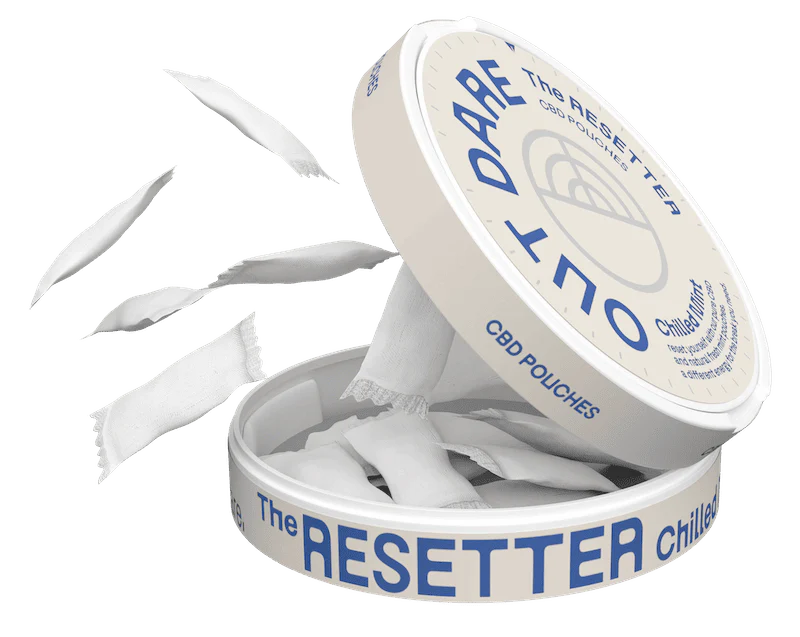
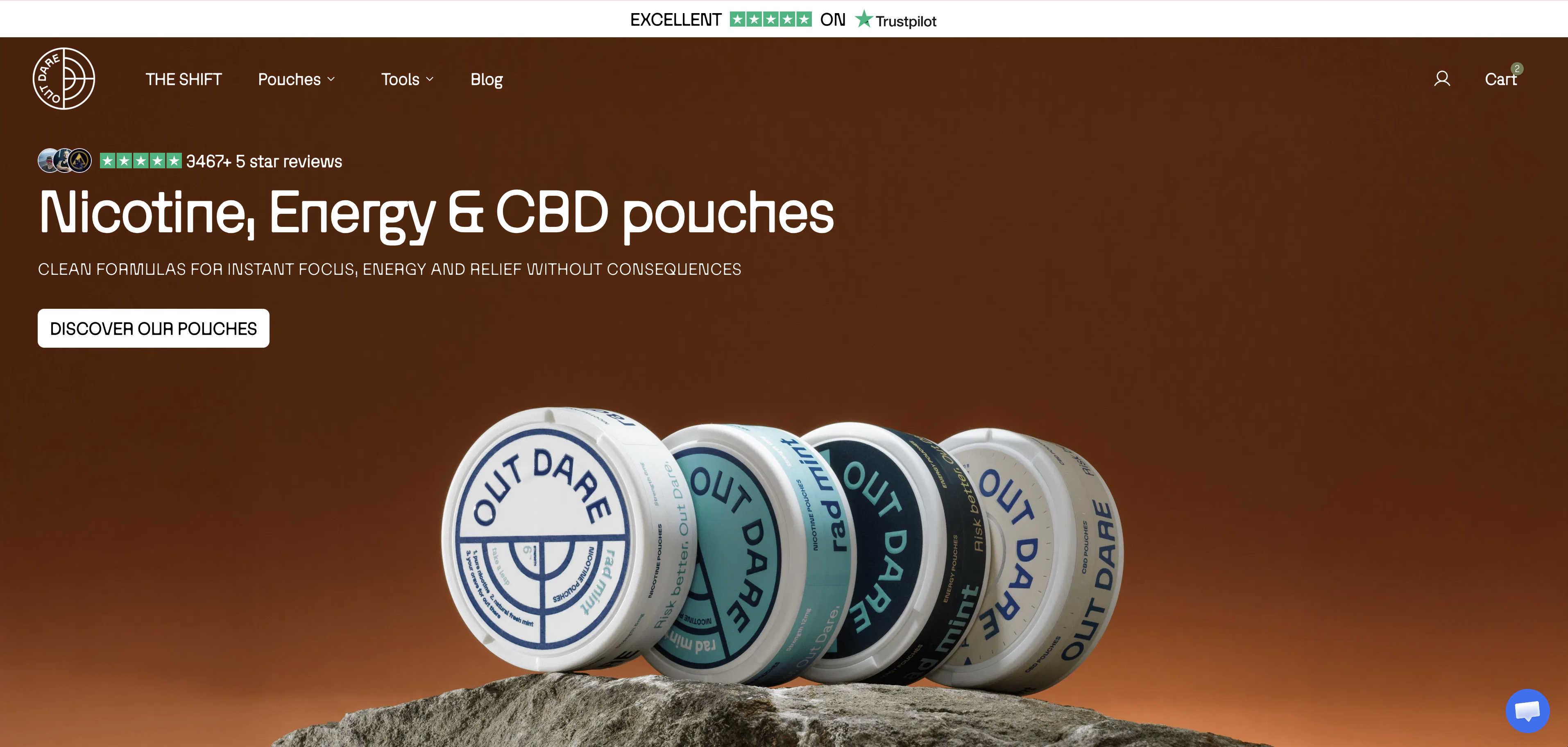
One practical response is to replace the sensory ritual without reintroducing nicotine. Outdare's Energy and CBD pouches are built for exactly this gap, they share the same mint flavor, gum burn, and physical mouthfeel as a nicotine pouch, which means the habit loop stays intact while the chemical stimulus is removed. That sensory continuity can reduce the psychological pressure that drives PAWS-related relapse.
The Most Effective Strategies for Managing Nicotine Pouch Withdrawal
NRT, varenicline, cue disruption, and stepped reduction are the four evidence-backed tools that meaningfully shorten and soften the nicotine pouch withdrawal timeline. According to addiction specialists at UT MD Anderson Cancer Center, combining behavioral strategies with pharmacological support produces the best outcomes for people quitting nicotine products.
What FDA-Approved Cessation Aids Work for Nicotine Pouch Users
The nicotine patch is the most practical NRT option for heavy pouch users because it delivers a steady low-level dose that blunts acute withdrawal without reinforcing the oral habit loop. That separation matters, the patch handles the chemical side while you work on the behavioral side separately.
Varenicline (sold as Champix in Europe, Chantix in the US) is the strongest single pharmacological option available. Clinical trials show a 33% abstinence rate at six months [2], roughly double what most NRT options achieve alone. It works by partially activating nicotine receptors, which reduces both cravings and the reward you get if you do slip.
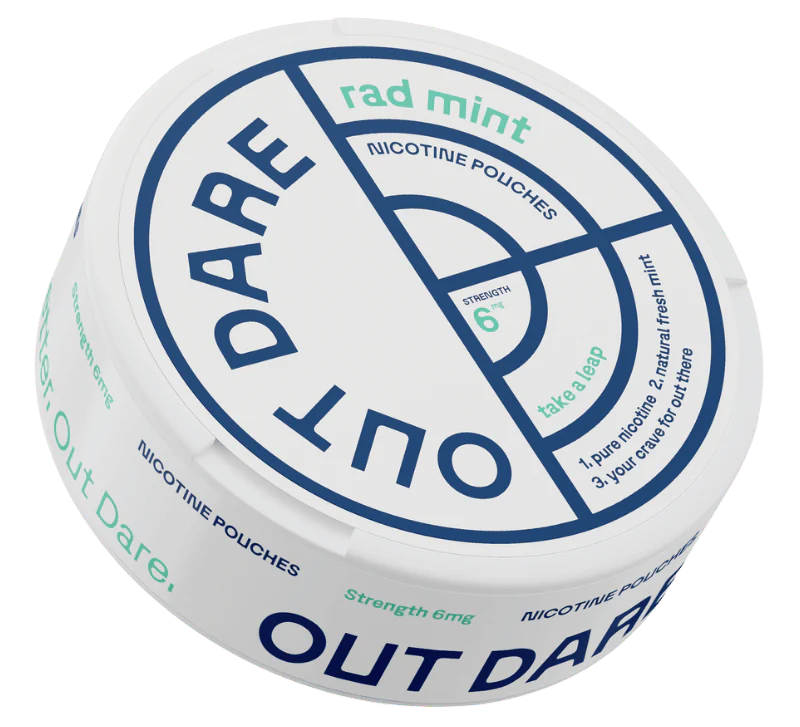
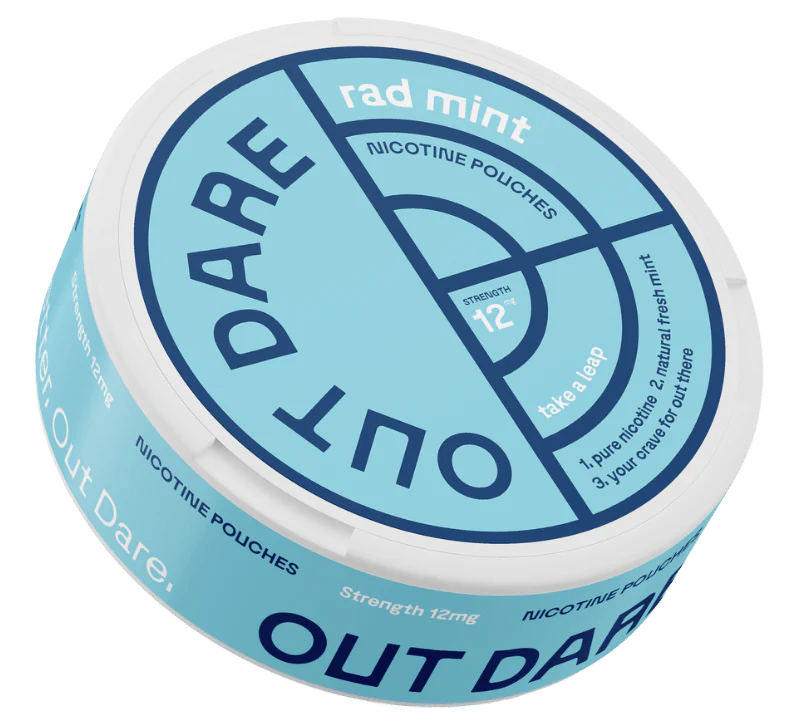
Stepped reduction is a clinically supported alternative to cold turkey. Dropping from 11mg to 6mg to 3mg pouches across 4–6 weeks mirrors the patch step-down protocol and reduces peak withdrawal severity compared to stopping abruptly. Outdare's 4-Week Reduction Method follows exactly this logic, using 6mg, 12mg, and 15mg nicotine pouches alongside zero-nicotine Energy and CBD variants so you lower chemical exposure gradually while keeping the ritual intact. For readers weighing a different harm-reduction bridge, our nicotine pouches vs vaping guide covers the trade-offs, and our tobacco-free alternatives article maps the non-nicotine options.
Which Behavioral Techniques Are Most Effective for Pouch Withdrawal
Cue disruption outperforms willpower for pouch users because the habit is tightly conditioned, post-meal, at the desk, during a commute. Physically changing the environment during those windows (walking a different route, keeping hands occupied with a stress ball or gum) weakens the conditioned craving response faster than white-knuckling through it.
Two acute techniques are worth adding to that toolkit. The 4-7-8 breathing method, inhale for 4 seconds, hold for 7, exhale for 8, and 30-second cold exposure (a cold shower burst) are both documented to lower cortisol acutely [2], which directly reduces craving intensity in the moment. These are specific, free, and available anywhere, far more actionable than generic advice to "exercise more."
"Behavioral strategies are not optional add-ons to nicotine cessation — they are essential. Identifying your personal triggers and systematically disrupting the cue-routine-reward loop is what separates people who succeed long-term from those who relapse after the acute phase ends." — Dr. Ellen Gritz, Chair Emerita, Department of Behavioral Science, MD Anderson Cancer Center
When You Actually Start Feeling Better After Quitting Nicotine Pouches
Most people feel measurably better within 3–5 days of quitting nicotine pouches, and by the end of week four, the majority report a stable new baseline.
The nicotine pouch withdrawal timeline isn't a flat line of misery. It's a recovery arc with clear, predictable milestones, and knowing where you are on that arc makes the difference between pushing through and reaching for a pouch at 3pm.
What Does the Recovery Process Look Like Week by Week
Here's what the research and user reports consistently show, milestone by milestone:
- Day 1: Cravings hit hardest within the first few hours. Your brain is already signaling for the dopamine hit it expects [2].
- Day 3 (peak symptoms): Physical withdrawal peaks, irritability, difficulty concentrating, restlessness. This is the wall most people quit at. Push through it.
- Day 3–5 (the lift): The acute dopamine deficit begins to self-correct as the brain starts downregulating excess nicotinic acetylcholine receptors. Most users report a noticeable improvement in baseline mood here [1].
- Day 7 (physical plateau): The worst physical symptoms have passed. Cravings are still present but shorter and less intense.
- Week 2 (sleep rebounds): Nicotine is a stimulant that suppresses REM sleep [2]. By week two, most users report measurably deeper sleep, and vivid dreams as REM rebounds. That's normal, and it fades.
- Week 3–4 (cognitive clarity returns): Concentration, working memory, and stress tolerance normalize as receptor density recalibrates. If you're still experiencing brain fog from nicotine, that article covers the mechanism in detail.
- Month 1 (new baseline): The brain has largely reset. Most users describe this as the first point where not using a pouch feels like the default, not the effort.
The financial recovery is just as concrete. At €5–7 per can and one can per day, quitting saves roughly €150–210 per month, over €1,800 per year back in your pocket.
If cold-turkey feels too steep, Outdare's 4-week reduction method uses sensorially identical Energy and CBD pouches to keep the ritual intact while you step down the nicotine, so you're not white-knuckling every one of those milestones from day one.
Frequently Asked Questions
How many nicotine pouches a day is too many before withdrawal becomes severe?
Using more than 10–15 pouches per day significantly raises your risk of severe withdrawal when you stop. Most clinical guidance treats 10+ pouches daily as heavy use, comparable to a pack-a-day smoking habit in terms of nicotine load. At that level, your nicotine receptors have adapted deeply to constant stimulation, so the drop-off when you quit is steeper. Symptoms like intense cravings, irritability, and concentration problems tend to be worse and last longer the higher your daily intake was before stopping.
Is nicotine pouch withdrawal dangerous or just uncomfortable?
Nicotine pouch withdrawal is uncomfortable but not medically dangerous for most people [2]. Unlike alcohol or benzodiazepine withdrawal, it carries no risk of seizures or life-threatening complications. The symptoms, cravings, irritability, headaches, disrupted sleep, are real and can feel intense, but they are temporary and manageable. People with underlying cardiovascular conditions or severe anxiety should speak to a doctor before quitting abruptly, since stress responses during withdrawal can briefly improve heart rate and blood pressure.
Can you use nicotine patches to quit nicotine pouches?
Yes, nicotine patches are a clinically supported option for managing withdrawal from any nicotine product, including pouches [2]. They deliver a steady, low-level dose of nicotine through the skin, which blunts cravings without the peaks and troughs that pouches create. The limitation is that patches don't replicate the oral ritual, which is a major driver of pouch dependency. Many users find they still reach for something to put under their lip even when the chemical craving is covered, which is exactly the gap a substitution system addresses.
Do nicotine pouch withdrawals feel different from cigarette withdrawal?
The core withdrawal symptoms are largely the same, cravings, mood changes, difficulty concentrating, and sleep disruption, because the underlying mechanism is identical: nicotine receptors deprived of their usual input [1]. The key difference is the oral habit component. Cigarette smokers lose both the nicotine and the hand-to-mouth ritual when they quit; pouch users lose the under-lip sensation and the gum burn. That sensory gap often feels more acute for pouch users because the ritual is more frequent, many users place a pouch every 45–60 minutes throughout the day.
How soon after quitting nicotine pouches does concentration improve?
Most people notice meaningful improvement in concentration and mental clarity between days 5 and 14 of their nicotine pouch withdrawal timeline. The initial fog is caused by dopamine and acetylcholine disruption in the prefrontal cortex. As receptor density recalibrates, cognitive function gradually returns. By the end of week three, the majority of users report that focus and working memory have returned to or exceeded pre-pouch baseline levels, particularly once sleep quality improves in week two.


Conclusion
The nicotine pouch withdrawal timeline is predictable: the sharpest symptoms hit within the first 72 hours, ease significantly by week two, and resolve for most people within four weeks. What catches people off guard isn't the chemical withdrawal, it's the oral habit that outlasts it.
Three things matter most: expect the peak early and plan around it, don't mistake a lingering craving for the pouch ritual as a sign of failure, and have a sensory substitute ready before you start reducing. Outdare's 4-week reduction method addresses exactly that gap, replacing nicotine pouches progressively with sensorially identical Energy or CBD pouches so the ritual stays intact while the chemical dependency drops. Start with the Discovery Pack to find which substitution ratio works for you.
Sources & References
Recommended Articles
Explore more from our content library: