






Vaping Withdrawal Symptoms: What to Expect
| Key Insight | Explanation |
|---|---|
| Withdrawal starts fast | Vaping withdrawal symptoms typically begin within 4–24 hours of your last vape and peak around days 2–3. |
| Nicotine is only 30% of the problem | The 30/30/30 Addiction Rule shows that 60% of pouch and vape addiction is habit and sensory cue — not chemistry. |
| Cold turkey has a high failure rate | Abrupt cessation removes the ritual entirely, which is why most quit attempts fail within the first week. |
| Physical symptoms resolve within 2–4 weeks | Most acute physical symptoms like headaches, nausea, and dizziness clear within 2–4 weeks for most people. |
| Ritual substitution outperforms willpower | Replacing the sensory habit with a non-nicotine alternative that mimics the same feel dramatically reduces relapse risk. |
| 60–90% nicotine reduction is achievable in 30 days | A structured 4-week substitution method can reduce nicotine intake by 60–90% without eliminating the oral ritual. |
Vaping withdrawal symptoms are real, measurable, and often more intense than people expect. They typically begin within hours of your last vape, peak in the first 72 hours, and include cravings, irritability, headaches, difficulty concentrating, and disrupted sleep. Most physical symptoms resolve within two to four weeks, but the behavioral pull — the ritual of reaching for something — can last much longer. According to Smokefree.gov, the urge to vape is one of the most persistent withdrawal challenges, driven by both chemical dependency and deeply ingrained habit loops [1].
This article covers exactly what vaping withdrawal symptoms feel like at each stage, why they're so hard to push through alone, and what actually works — including why willpower-only approaches keep failing.

What Are Vaping Withdrawal Symptoms?
Vaping withdrawal symptoms are the physical and psychological reactions your body produces when nicotine levels drop after stopping or reducing vaping. They're driven by nicotine dependence — the brain's adaptation to regular nicotine exposure — and they affect mood, cognition, and physical comfort simultaneously.
The Physical Symptoms
The Cleveland Clinic lists the most common physical vaping withdrawal symptoms as [2]:
- Headaches and dizziness
- Nausea and stomach discomfort
- Dry mouth and sore throat
- Coughing as the airways begin to clear
- Constipation or changes in digestion
- Increased appetite and weight gain
- Nightmares and disrupted sleep
These symptoms are directly caused by nicotine leaving the bloodstream and the brain recalibrating its dopamine and acetylcholine systems. Nicotine artificially elevates these neurotransmitters, and when the supply stops, the brain takes time to restore its own baseline.
The Psychological Symptoms
Psychological vaping withdrawal symptoms are often harder to manage than the physical ones. The CDC identifies these as the most disruptive [3]:
- Intense cravings to vape (the most commonly reported symptom)
- Irritability, grouchiness, and a short fuse
- Anxiety and restlessness
- Low mood or mild depression
- Difficulty concentrating — the classic "brain fog"
- Feeling jumpy or unable to sit still
Research published in PMC (National Institutes of Health) found that e-cigarette abstinence produces a "prototypical inverted U time pattern" of withdrawal — symptoms rise sharply, peak, then gradually decline — consistent with the pattern seen in cigarette smokers [4]. The magnitude varies depending on how heavily you vaped and the nicotine concentration of your device.
Pro Tip: Track your symptoms by day using a simple notes app. Knowing that day 3 is typically the worst — and that it passes — gives you a psychological anchor when cravings feel unbearable.
The Vaping Withdrawal Timeline
The vaping withdrawal timeline follows a predictable arc: symptoms start within hours, peak in the first few days, and gradually ease over two to four weeks, though behavioral cravings can persist for months.
Hour-by-Hour and Day-by-Day Breakdown
According to Charlie Health, the withdrawal timeline for most vapers looks like this [5]:
| Timeframe | What's Happening | Common Symptoms |
|---|---|---|
| 4–24 hours | Nicotine clears from bloodstream | First cravings, mild irritability, restlessness |
| Days 1–3 | Peak withdrawal intensity | Intense cravings, headaches, anxiety, poor sleep, brain fog |
| Days 4–7 | Acute symptoms begin to ease | Cravings still present but shorter; mood starts stabilizing |
| Weeks 2–4 | Brain chemistry recalibrating | Reduced physical symptoms; behavioral triggers remain strong |
| Month 2+ | Habit loops persist without chemical driver | Situational cravings (stress, boredom, social settings) |
Why the Timeline Varies Between People
Not everyone experiences the same timeline. Several factors influence severity and duration:
- Nicotine concentration: High-strength vape liquids (25mg–50mg salt nicotine) produce more intense withdrawal than lower concentrations.
- Duration of use: Someone who's vaped for five years has deeper neurological adaptation than someone who started six months ago.
- Frequency: Constant all-day vaping creates a higher baseline nicotine level, meaning the drop is steeper.
- Co-occurring stress: Life stressors during the quit attempt amplify anxiety and irritability symptoms.
The Australian Department of Health notes that while most physical symptoms resolve within a month, psychological cravings triggered by specific environments, emotions, or social situations can persist for considerably longer [6]. This is the part willpower alone rarely handles.
Why Vaping Withdrawal Symptoms Are So Hard to Beat
Vaping withdrawal symptoms are hard to beat because nicotine dependency isn't just chemical — it's behavioral and sensory, meaning three separate systems are fighting against you at once.
The 30/30/30 Addiction Rule
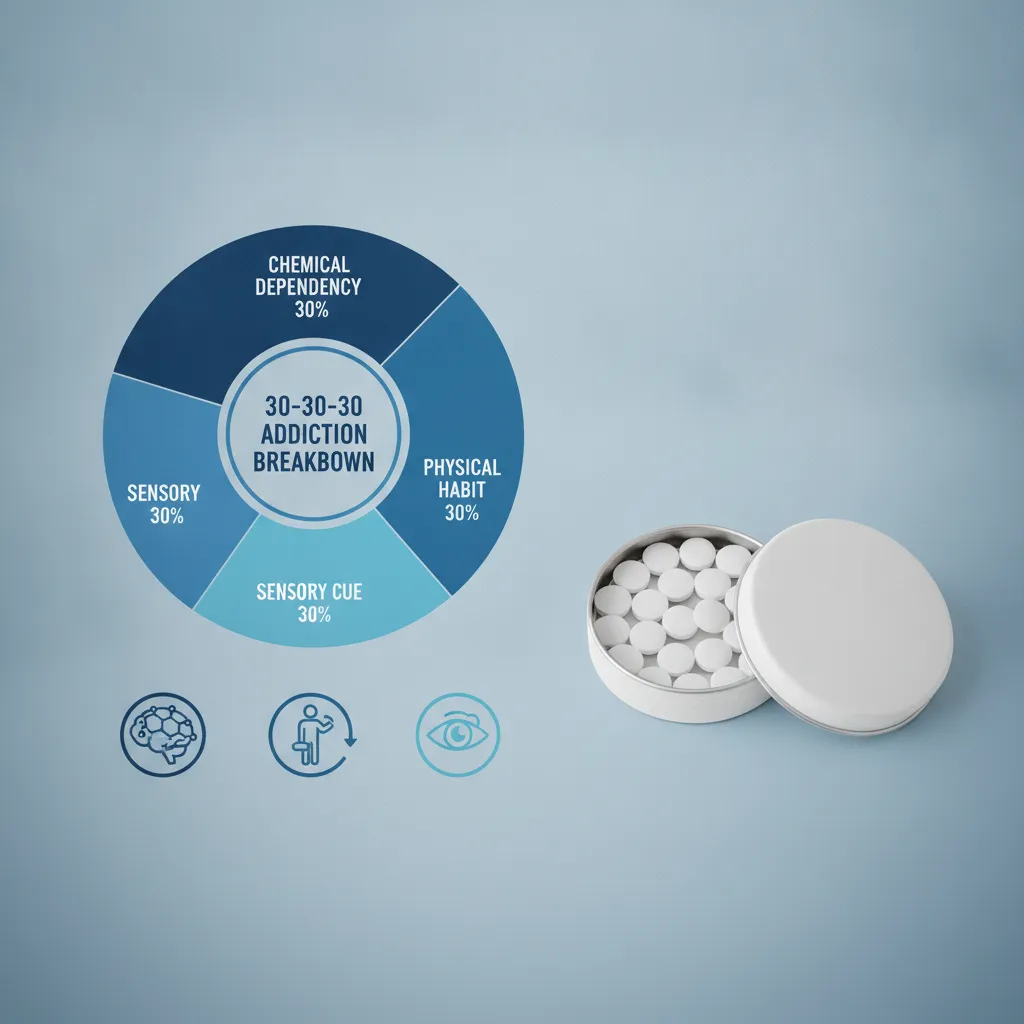
Here's what most quit resources don't tell you. Nicotine is only 30% of the addiction. The other 60% breaks down like this:
- 30% is the physical habit: The oral fixation, the hand-to-mouth motion, the "pillow" sensation of something under the lip or between the teeth. Your body has done this thousands of times. It expects it.
- 30% is the sensory cue: The throat hit, the burn, the specific taste. These are conditioned stimuli — your brain has linked them to dopamine release, so the absence of them triggers craving signals independent of nicotine levels.
- 30% is chemical dependency: The actual nicotine binding to acetylcholine receptors and the dopaminergic reward cascade that follows.
Cold turkey attacks only the chemical 30%. It leaves the other 60% completely unaddressed, which is why cravings feel so irrational and so overwhelming even days after nicotine has cleared the system.
The Ritual Is the Real Addiction Driver
Industry analysts and harm-reduction researchers increasingly emphasize this point. The Truth Initiative notes that nicotine withdrawal cravings are acute and span both emotional and physical dimensions — a dual-system problem that single-intervention approaches consistently underestimate [7].
In practice, what this means is that you can clear nicotine from your body in 72 hours. But you'll still reach for your vape at 10am because that's what you do at 10am. You'll reach for it when you're stressed, when you're bored, when you finish a task. The ritual is wired in. Removing the chemical doesn't remove the wiring.
At Outdare LTD, we've found that users who try to quit cold turkey and fail aren't weak — they're using the wrong framework. They're fighting 100% of their addiction with a tool that only addresses 30% of it.
Pro Tip: Identify your top three trigger moments — the specific times of day or situations where you automatically reach for your vape. Those aren't nicotine cravings. They're habit loops. Addressing them separately from the chemical dependency dramatically improves quit success rates.
Managing Vaping Withdrawal Symptoms: Best Practices for 2026
Managing vaping withdrawal symptoms effectively requires a multi-pronged approach that addresses chemical dependency, behavioral habit, and sensory cues simultaneously — not just one at a time.
Evidence-Based Strategies That Work
The NHS recommends a combination of behavioral support and nicotine replacement therapy (NRT) as the most effective approach for managing withdrawal [8]. As of 2026, the evidence base has expanded to include several well-supported strategies:
- Gradual reduction over abrupt cessation: Tapering nicotine intake reduces the severity of withdrawal symptoms compared to stopping suddenly. Step-down dosing — moving from high-strength to low-strength nicotine formats — lets the brain adapt incrementally.
- Oral replacement for the habit component: Substituting the physical ritual with a non-nicotine oral format (pouches, gum, lozenges) addresses the 30% habit driver that cold turkey ignores entirely.
- Behavioral trigger mapping: Identifying the specific situations that trigger cravings — stress, boredom, post-meal, social settings — and pre-planning a substitute behavior for each one.
- Exercise as a craving interrupter: Massey Cancer Center notes that even short bouts of physical activity reduce the intensity of nicotine cravings and improve mood during withdrawal [9].
- Sleep hygiene: Disrupted sleep is a major vaping withdrawal symptom and also a relapse trigger. Consistent sleep schedules, reduced screen time, and avoiding caffeine after 2pm all support better recovery.
- Hydration: Increased water intake helps flush metabolites and reduces the severity of headaches and dry mouth symptoms.
The Ritual Substitution Method
The most effective long-term strategy isn't about fighting cravings harder. It's about replacing what the ritual delivers.
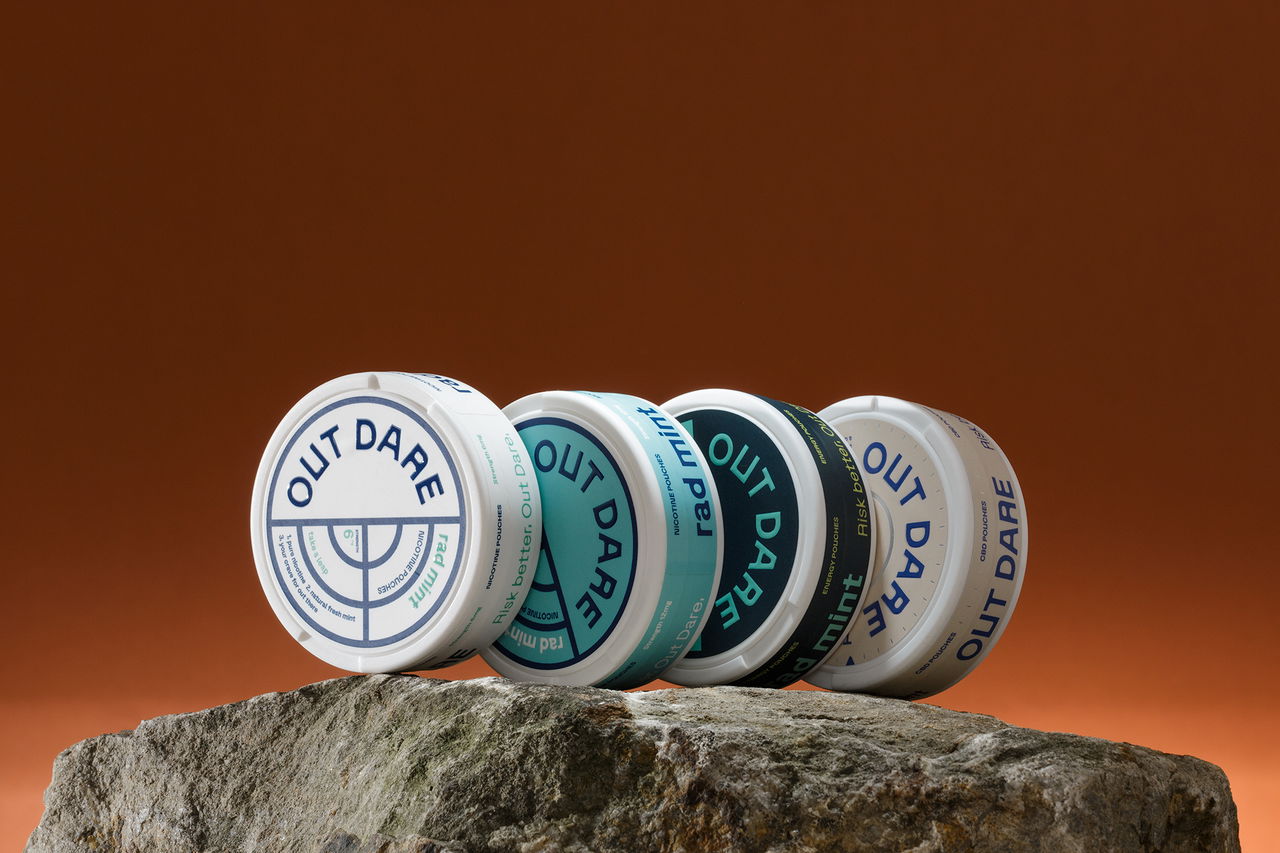
This is the principle behind Outdare's 4-Week Method. Instead of removing the pouch ritual entirely, you substitute nicotine pouches with sensorially identical alternatives — same mint taste, same gum burn, same physical mouthfeel — but without the chemical dependency driver. Your brain can't tell the difference. The ritual stays intact. The nicotine gradually doesn't.
Most users following this structured approach reduce their nicotine intake by 60–90% within the first month. That's not a willpower story. That's a systems story.
| Approach | Addresses Chemical (30%) | Addresses Habit (30%) | Addresses Sensory Cue (30%) |
|---|---|---|---|
| Cold turkey | ✓ Yes | ✗ No | ✗ No |
| NRT patches | ✓ Partial | ✗ No | ✗ No |
| NRT gum/lozenge | ✓ Partial | ✓ Partial | ✗ No |
| Ritual substitution (3-pouch system) | ✓ Yes (step-down) | ✓ Yes | ✓ Yes |
Common Mistakes When Quitting Vaping
The most common mistake people make when quitting vaping is treating it as a purely chemical problem — which sets them up to fail the moment their environment triggers the habit.
Mistake 1: Going Cold Turkey Without a Ritual Replacement
Cold turkey is the most popular quit method and the one with the highest relapse rate. According to the NSW Department of Health, nicotine withdrawal symptoms including irritability, poor concentration, and inability to sleep are all significantly more intense without any form of replacement support [10].
Removing the ritual entirely leaves 60% of the addiction completely unaddressed. The brain doesn't just crave nicotine — it craves the act of vaping, the sensation, the routine. Without a substitute, the pull back is almost inevitable.
Mistake 2: Underestimating Trigger Situations
A common mistake is assuming that once the acute physical symptoms pass (usually within a week), the hard part is over. It isn't. Behavioral triggers — specific times of day, stress situations, social environments — can fire cravings weeks or months after nicotine has cleared the system. From experience, the relapse window doesn't close after day 7. It shifts.
People who don't map their triggers in advance get blindsided by a craving at exactly the moment they're least prepared: a difficult meeting, a night out, a frustrating commute. Having a pre-planned substitute behavior for each trigger is non-negotiable.
Mistake 3: Switching to a Different Nicotine Delivery Format
Switching from vaping to nicotine pouches or cigarettes doesn't reduce the chemical dependency — it just changes the delivery mechanism. One limitation of this approach is that it preserves the addiction while potentially adding new health risks or maintaining the same usage patterns. The goal isn't format substitution. It's dependency reduction.
Pro Tip: If you're switching from vaping to pouches as a transitional step, use the switch intentionally — pair it with a step-down nicotine strength plan from day one. Don't just swap the habit; use the swap as the first move in a structured reduction system.


Sources & References
- Smokefree.gov, "Nicotine Withdrawal and Vaping," 2024
- Cleveland Clinic, "Nicotine Withdrawal: Symptoms, Treatment & Side Effects," 2024
- CDC, "7 Common Withdrawal Symptoms | Quit Smoking," 2024
- Hughes JR et al., "Withdrawal Symptoms From E-Cigarette Abstinence Among Daily Users," PMC/NIH, 2019
- Charlie Health, "Vaping Withdrawal Timeline," 2024
- Australian Department of Health, "What Quitting Feels Like," 2024
- Truth Initiative, "5 Tips for Handling Nicotine Withdrawal," 2024
- NHS, "How to Quit Vaping — Better Health," 2024
- Massey Cancer Center, "Managing Withdrawal Symptoms from Tobacco," 2024
- NSW Department of Health, "Vaping Quit Support — Fact Sheet for Young People," 2024
Frequently Asked Questions
1. How long do vaping withdrawal symptoms last?
Most acute this approach — headaches, nausea, dizziness, and intense cravings — peak within the first 72 hours and resolve within two to four weeks for most people. Psychological and behavioral symptoms, such as situational cravings triggered by stress or habit loops, can persist for several months. The timeline varies based on nicotine strength used, duration of vaping, and whether any replacement strategy is in place.
2. What are the worst vaping withdrawal symptoms?
The most commonly reported severe the practice are intense nicotine cravings, anxiety, irritability, and difficulty concentrating. Many users also report significant sleep disruption — including nightmares and insomnia — during the first week. Brain fog (reduced mental clarity and focus) is particularly disruptive for people who rely on nicotine for productivity during the workday.
3. Is quitting vaping cold turkey effective?
Cold turkey is the most popular method but has a high relapse rate. It addresses the chemical component of nicotine dependency (approximately 30% of the total addiction) but leaves the physical habit and sensory cue components completely unaddressed. Most people who relapse do so not because of nicotine cravings specifically, but because the ritual — the act of reaching for something — remains fully intact and unmanaged.
4. Can vaping withdrawal symptoms cause anxiety and depression?
Yes. Anxiety and low mood are recognized this practice, particularly in the first one to two weeks. Nicotine artificially elevates dopamine and serotonin activity, so when nicotine is removed, mood temporarily dips as the brain recalibrates. These symptoms are typically transient and resolve as neurochemistry normalizes. If anxiety or depression symptoms are severe or persistent, consulting a healthcare provider is advisable.
5. Do nicotine pouches help with vaping withdrawal?
Nicotine pouches can be a useful transitional step away from vaping because they address both the chemical dependency (by delivering controlled nicotine doses) and the oral habit component. The key is using them as part of a structured step-down plan rather than a straight swap. Tobacco-free pouches available in multiple nicotine strengths — such as 6mg, 12mg, and 15mg — allow for gradual reduction without abandoning the ritual entirely.
6. What helps with nicotine cravings when quitting vaping?
Evidence-based strategies include oral replacement (pouches, gum, lozenges), short bursts of physical exercise, hydration, deep breathing, and behavioral trigger mapping. The most effective approaches combine chemical support (NRT or step-down nicotine) with a sensory and habit substitute — something that keeps the ritual intact while reducing the nicotine content. Addressing all three components of addiction simultaneously produces significantly better outcomes than any single strategy alone.
7. When do vaping withdrawal symptoms peak?
this method typically peak between 24 and 72 hours after the last vape. This is the window when cravings, irritability, headaches, and anxiety are most intense. After day 3, most physical symptoms begin to ease. Knowing this peak window in advance gives you a concrete target to push through, which is why tracking symptoms day-by-day is a genuinely useful tactic during the first week.
The Bottom Line on Vaping Withdrawal
this strategy are real, they're predictable, and they're manageable — but only if you address all three components of the addiction, not just the nicotine. The chemical dependency clears within days. The habit and the sensory craving stick around much longer, and that's what trips most people up.
Cold turkey fails because it removes everything at once. Patches fail because they don't touch the ritual. What actually works is keeping the ritual intact while systematically removing the chemical driver — one pouch at a time, on your terms.
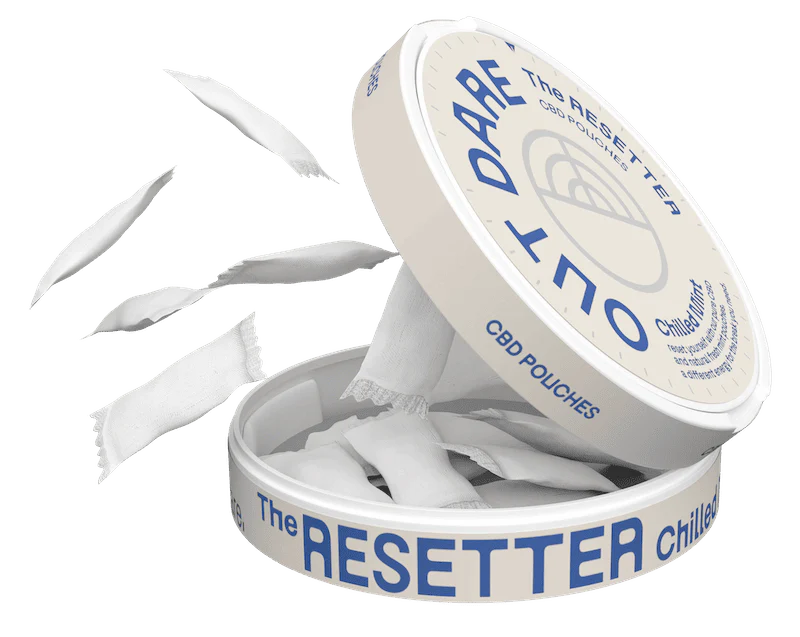
That's the core of what Outdare LTD was built to solve. Three pouches. Same taste, same burn, same mouthfeel. You control what's inside. Energy for focus, CBD for calm, nicotine only when you actually choose it. Most users reduce their nicotine intake by 60–90% in the first month — not through willpower, but through a system that respects how addiction actually works. If you're done white-knuckling this approach and ready for a method that addresses the full picture, that's where to start.
Recommended Articles
Explore more from our content library: