


Do Energy Pouches Work? The Honest Answer
By Thomas Agaraté · Daily pouch user since 2014 · About
Editorial note: written by OutDare, the brand that makes and ships the pouches on this page. Prices are our live prices in EUR.
Do energy pouches work? Yes, within caffeine's known limits: a pouch delivers 75 mg of caffeine under the lip, with no sugar and nothing to swallow. I used pouches daily for years before I built mine, and I tested caffeine ones at 3 pm when the third coffee had my hand shaking. Here is the honest breakdown, inside and out, before you try OutDare Energy Pouches.
- We ship from our warehouse in Denmark
- Shipping from €9.45
- Prices are charged in euros.
- 18+ only. Age is verified at checkout.
- Rules on nicotine products vary by country and can change, check what applies where you live.
| Key Insight | Explanation |
|---|---|
| Caffeine is the active driver | The ingredient doing the work is caffeine, and public bodies like EFSA and the FDA have decades of data on it at everyday adult doses. |
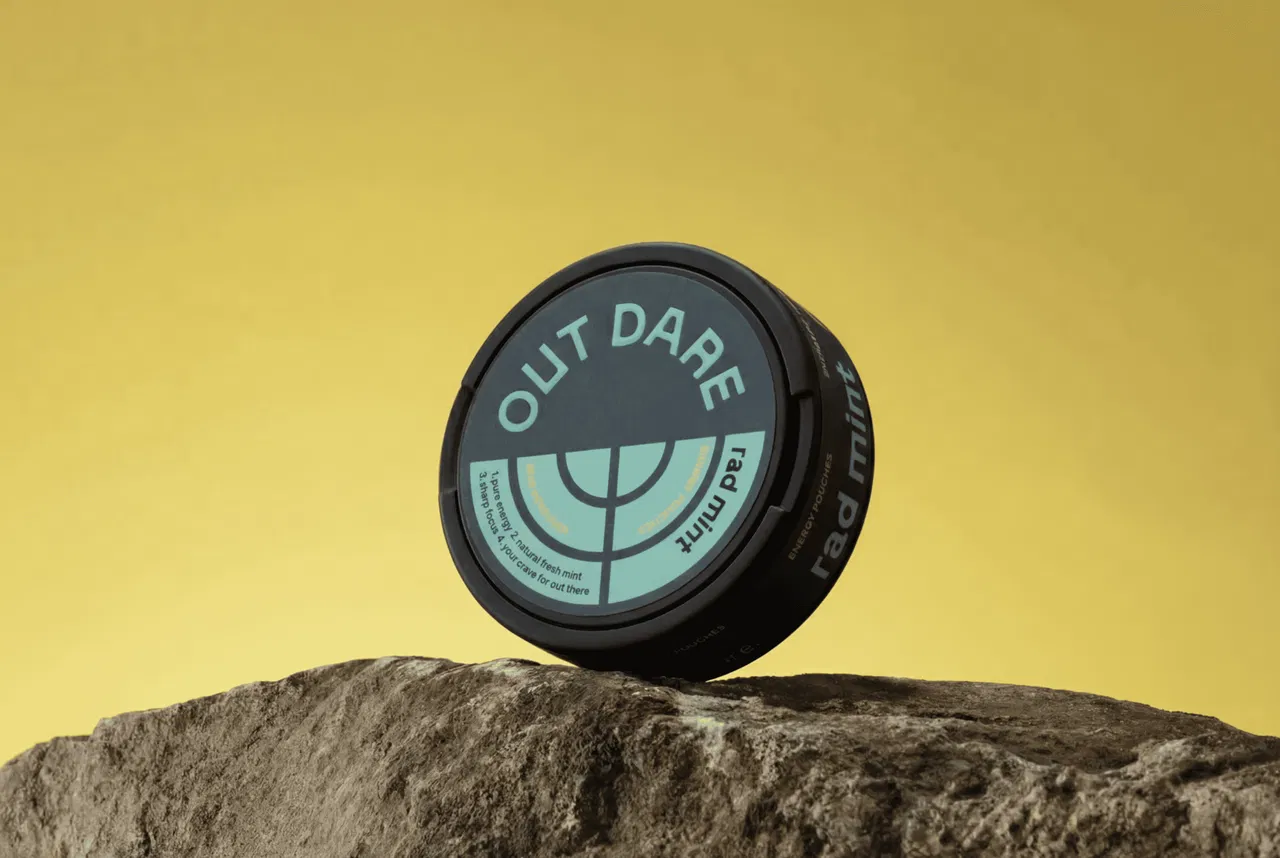
| Each pouch carries 75 mg | An OutDare Energy Pouch holds 75 mg of caffeine, roughly the amount in a small espresso, released under the lip over the hold. |
| Five more ingredients on the label | Alongside caffeine, the label lists L-theanine 25 mg, Alpha-GPC 20 mg, GABA 10 mg, vitamin B6 0.2 mg and vitamin B12 0.2 µg. |
| No sugar, nothing to swallow | The format carries caffeine without the sweetened can of an energy drink, the 300 ml of fluid or the mug of a coffee break. |
- Do energy pouches work? The short answer
- Where the doubt about energy pouches comes from
- What EFSA and the FDA actually say about caffeine
- What a 75 mg pouch changes at 3 pm
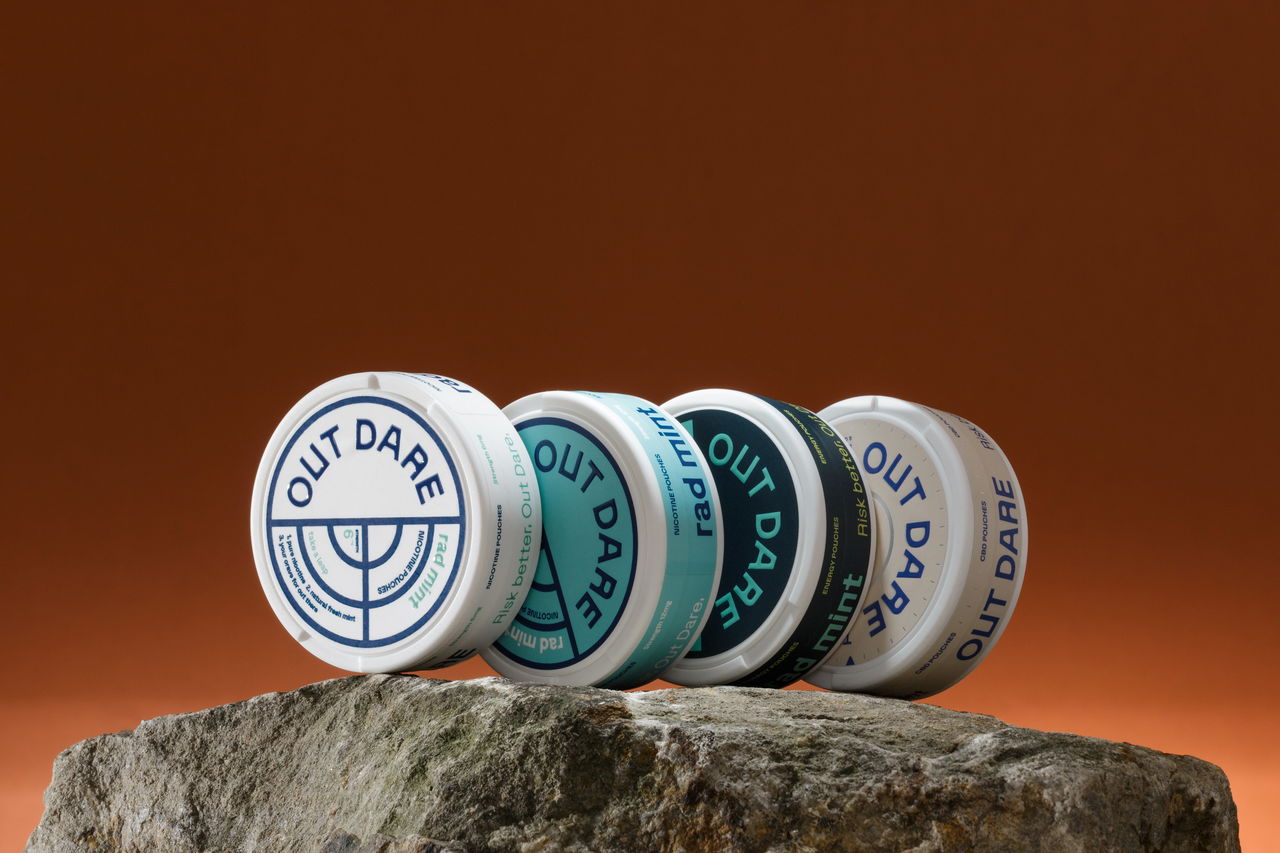
The range, same burn, same ritual, three chemistries
| Pouch | Strength | Best for | Flavour | Price | |
|---|---|---|---|---|---|
| Nicotine Pouches | 6 mg | when you need control (start here) | Rad Mint | €7.00 | |
| Nicotine Pouches | 12 mg | when you need control (when 6 mg does not hold the morning) | Rad Mint | €7.00 | |
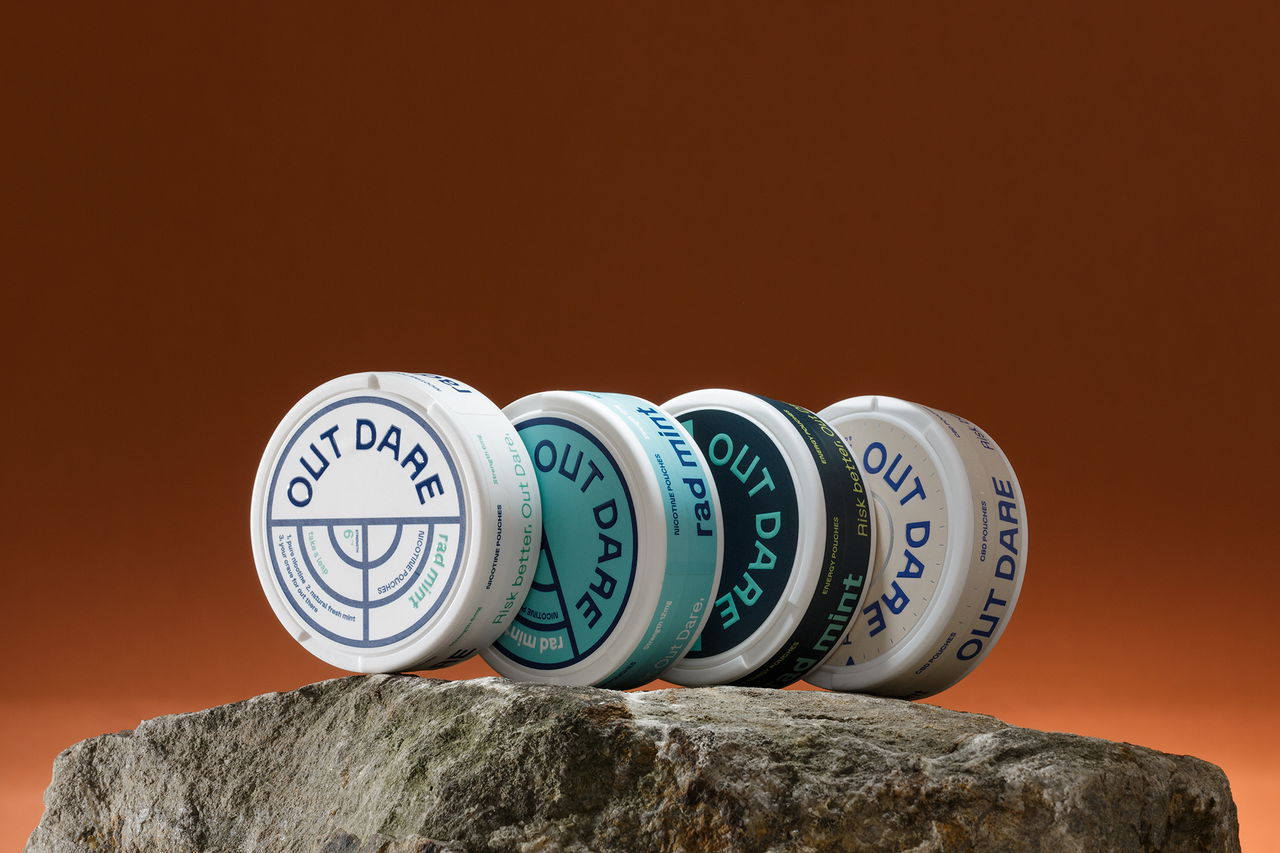
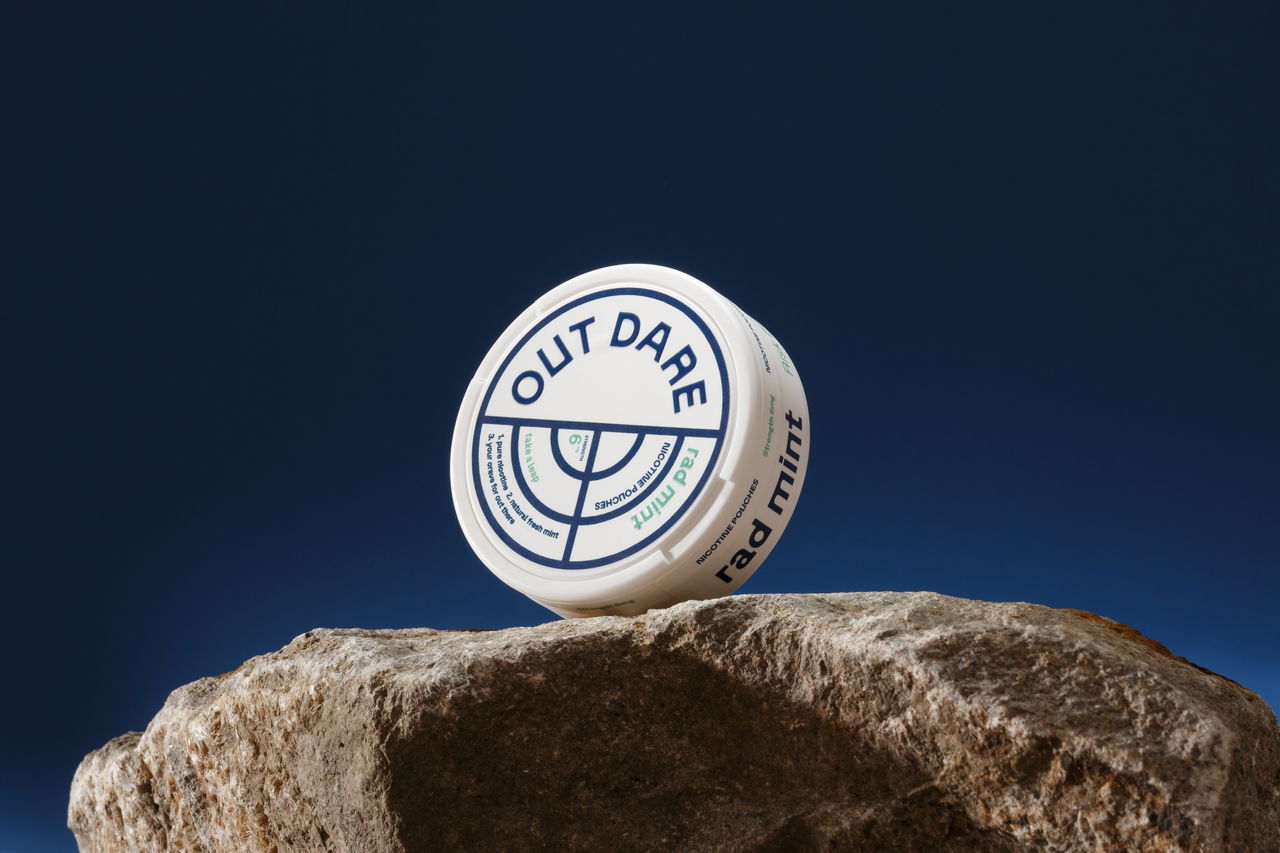
| Energy Pouches | 75 mg | for daytime focus | Rad Mint | €7.00 | |
| Sleep Pouches | 20 mg CBD | for the evening, the last pouch of the day | Mint Terpene | €9.90 |


Shipped from Denmark by PostNord Express · Trustpilot 4.6
Three pouches, one ritual · Shipped from Denmark · 210+ countries · Trustpilot 4.6
Do energy pouches work? The short answer
Yes, within what caffeine actually does. An OutDare Energy Pouch carries 75 mg of caffeine, released under the lip through the gum rather than swallowed with a drink, and that figure is the operative one behind every answer in this piece. The pouch does what caffeine does: it reduces the feeling of fatigue and lifts short-term alertness. It does not do what caffeine does not do.
What "work" means in a pouch
Buccal delivery changes the shape of the curve, not the molecule. You park a pouch under the lip, the burn tells you it has landed, and the caffeine starts crossing the gum within a minute or two. There is nothing to swallow, nothing to sip, no sugar in the ride and no liquid to carry around. For a reader coming off a third coffee or a sugared can, that is the practical difference: same active, different arrival, dose you can count.
What else is on the label
The caffeine is the lift. Five other declared ingredients sit next to it on each can of our Energy Pouches, in the amounts printed on the box:
- L-theanine 25 mg
- Alpha-GPC 20 mg
- GABA 10 mg
- Vitamin B6 0.2 mg
- Vitamin B12 0.2 µg
Those are declared quantities on a food supplement. Treat the 75 mg as the figure that moves the needle, and treat the rest as what is on the label when you check it. If the real question is whether a pouch replaces an energy drink or a late-afternoon coffee for daytime focus, the honest answer is: it uses the same molecule, in a known dose, without the sugar and without a cup. The rest of this article is where that answer comes from and where it falls short.
Where the doubt about energy pouches comes from

The doubt is fair, and it has four roots. The format is new, caffeine under the lip is unfamiliar, "focus" labels in the energy aisle have let readers down before, and plenty of pouches on the shelf keep the caffeine number off the front of the can. Any one of those is reason to pause; together they explain why the question gets typed into search every day.
A format most people have not tried
A pouch under the lip is a ritual, not a drink. If your reference points are a flat white and a tall can, you have no benchmark for how a pouch feels, how long it stays in or how it ramps. You are measuring something new against habits you already know, which almost always reads at first as "weaker" even when the dose on the label is comparable or higher.
Caffeine without a cup
Caffeine through the gum is unusual. Readers associate the molecule with hot water, milk and sugar. Take those away and the brain's expectation of "stimulant" wobbles, because half of what you learned to feel is the drink around the caffeine. The molecule is doing the same job; the delivery is where the suspicion lives.
A tired aisle
The energy-drink shelf has been promising "focus" for a decade. Many of those promises arrived with 40 g of sugar, a wall of taurine and a dip by 4 pm. A reader who has been burned there reads any new "focus" claim with narrowed eyes, and rightly so.
Pouches that hide the number
Some caffeine pouches on the market stack a long ingredient list and never print the caffeine dose on the front of the can. If you cannot see the mg per pouch, you cannot judge whether the format works for you: you are judging a mystery. That is a strong reason to ask whether energy pouches work in general, and a stronger reason to read the label before buying any of them.
- Unfamiliar format: no mental benchmark for a pouch under the lip.
- Unfamiliar delivery: caffeine without hot water or sugar.
- A sceptical aisle: "focus" has been oversold next to it.
- Hidden doses: no mg per pouch on the front of some cans.
Shipped from Denmark by PostNord Express · Trustpilot 4.6
What EFSA and the FDA actually say about caffeine
Two independent bodies have put real numbers on caffeine, and both are worth reading before you decide whether a pouch is for you. The European Food Safety Authority's 2015 Scientific Opinion on caffeine and the US Food and Drug Administration's consumer page "Spilling the Beans: How Much Caffeine is Too Much?" cover the same molecule from two angles, in plain language. These findings describe caffeine itself, not any brand.
EFSA 2015: the reference values
The European Food Safety Authority's 2015 opinion set reference values of 200 mg per single intake and 400 mg per day for adults in the general population. A lower reference of 200 mg per day is given for pregnant and breastfeeding women in the same opinion, and children and adolescents are treated separately. Those numbers describe caffeine from any source: filter coffee, espresso, tea, cola, energy drinks, chocolate, pouches. The dose is what matters, not the vehicle.
FDA: how it adds up over a day
The FDA's "Spilling the Beans" page echoes the 400 mg daily figure for most adults and underlines a point readers often miss: caffeine stacks across sources through the day. The agency also notes that individual sensitivity varies, that some medications change how caffeine lands, and that sleep debt pushes the same dose further than you expect.
Reading the two together
The FDA page gives the arithmetic in household terms. Compared like for like, 75 mg is a known quantity you can count against those figures, which is more than can be said for a syrup pump at the counter:
| Source (per FDA) | Typical caffeine |
|---|---|
| Brewed coffee, 8 oz cup | about 80 to 100 mg |
| Espresso, 1 oz shot | about 60 to 70 mg |
| Energy drink, 8 oz | about 40 to 250 mg |
| OutDare Energy Pouch | 75 mg |
At 400 mg a day the maths is easy to run. Two coffees already sit around 180 mg; add a tall can and you are close to the ceiling before any pouch arrives. A reader who swaps one of those sources for a pouch is counting the same way, with the dose printed on the can rather than guessed at the till.
Pro Tip: count caffeine the way you would count calories for one week. Add the pouches, the coffees, the teas and the cans against the 400 mg daily figure that both EFSA and the FDA anchor on. Most readers find the pouch is not the issue; the third coffee was.
What a 75 mg pouch changes at 3 pm

Here is what a 75 mg pouch changes at 3 pm: the caffeine arrives without the cup, without the sugar, and without the sip-sip-sip that empties a litre of liquid into you by five. One pouch sits under the lip and the work carries on.
The afternoon swap, step by step
Picture the usual move. Third coffee of the day, hand slightly unsteady on the mug. Or the cold sugared can you grab because the coffee stopped landing an hour ago. Both put a vehicle in your hand you did not actually want: liquid, caffeine on an already-caffeinated gut, sugar on top of a lunch you have forgotten. A pouch replaces the vehicle, not the moment. The ritual is still there, the burn tells you it landed, and the delivery is a cushion of plant fibre on the gum instead of a cup on the desk.
- No mug on a shared desk, no spill on the laptop
- No sugar going in behind lunch
- No bathroom round trip at 3.45 pm
- Hands free for a keyboard, a steering wheel, a tool
- Nothing to swallow on a client call or in traffic
Where the OutDare Energy Pouch fits
Honest paragraph: an OutDare Energy Pouch is €7.00 a can and it is the daytime pouch of the three. It is not a nootropic promise and it is not a substitute for a night of sleep you did not take. It is 75 mg of caffeine with L-theanine, Alpha-GPC, GABA, B6 and B12 on the label, in a format that does not sit in a mug on your desk. If your 3 pm pattern is "coffee I do not want" or "can I know is too sweet", that is where a pouch fits. If your 3 pm pattern is "I need a nap", a pouch will not fix that; no caffeine will.
Pro Tip: Set a hard cutoff. Caffeine has a long tail, and a pouch after 5 pm is the one that keeps you up at midnight. If the day is really falling apart that late, close the laptop sooner, not stronger.
If 3 pm is where your afternoon loses the thread, the daytime focus pouch is the move to try instead of a fourth coffee.
Sources & References
- Scientific Opinion on the Safety of Caffeine · European Food Safety Authority (EFSA) (2015)
- Spilling the Beans: How Much Caffeine is Too Much? · U.S. Food and Drug Administration (FDA) (2024)
- Caffeine content for coffee, tea, soda and more · Mayo Clinic (2024)
- The rate of absorption and relative bioavailability of caffeine administered in chewing gum versus capsules · International Journal of Pharmaceutics (2002)
Frequently Asked Questions
How much caffeine is in one energy pouch?
An OutDare Energy Pouch holds 75 mg of caffeine, roughly the dose of a small espresso. The label also lists L-theanine 25 mg, Alpha-GPC 20 mg, GABA 10 mg, vitamin B6 0.2 mg and vitamin B12 0.2 µg.
How long does an energy pouch last?
A typical hold runs 20 to 40 minutes under the lip, which is where the caffeine releases. The focus itself lingers after you throw the pouch, in the way any caffeine dose does over the next few hours.
Do energy pouches contain nicotine?
No. An OutDare Energy Pouch contains zero nicotine, zero tobacco and zero sugar. Caffeine is the active ingredient, with L-theanine, Alpha-GPC, GABA, vitamin B6 and vitamin B12 on the label alongside it.
Do energy pouches work faster than coffee?
Caffeine from a pouch releases through the mouth lining rather than the stomach, so the onset feels earlier than a filter coffee for many users. The molecule is the same, though, so expect the same arc, not a different drug.
Can I use an energy pouch in the evening?
You can, but 75 mg of caffeine late in the day is still 75 mg of caffeine late in the day. For evenings OutDare makes a separate pouch, the Sleep Pouches, with 20 mg of CBD and melatonin instead of caffeine.
Are energy pouches better than energy drinks?
They are different formats. A pouch carries 75 mg of caffeine, no sugar and nothing to swallow; an energy drink carries fluid, usually sweetener and a caffeine load that varies by brand. The pouch suits a desk, a drive or a meeting.
How many energy pouches can I use per day?
Start with one. The EFSA opinion on caffeine places adult intake at up to 400 mg per day as of no safety concern; one 75 mg pouch sits well inside that. Space them if you want more than one, and read your own tolerance.
What is actually inside an OutDare Energy Pouch?
Caffeine 75 mg, L-theanine 25 mg, Alpha-GPC 20 mg, GABA 10 mg, vitamin B6 0.2 mg, vitamin B12 0.2 µg, on a plant-fibre base with Rad Mint flavour. Zero nicotine, zero tobacco, zero sugar.
Do energy pouches work? Yes, as a format for delivering caffeine, and the research you lean on is the research on caffeine itself. The honest bits: it is still caffeine, so the ceiling is the ceiling of any 75 mg dose; the format gives you that dose without sugar, without 300 ml of liquid and without anything to swallow in a meeting. If that is what your afternoon actually needs, try a can of OutDare Energy Pouches.
Related guides
Published 11 October 2026 · Last updated 11 October 2026