





Xylitol Oral Pouches Gums vs Sugar: Why Your Gums Thank You
Understanding xylitol oral pouches gums is essential. Xylitol oral pouches and gums actively fight tooth decay by starving Streptococcus mutans, the bacteria that cause cavities, of the sugar they need to thrive. Unlike regular sugar, xylitol cannot be fermented by oral bacteria, so acid production stops and enamel remineralizes. Research shows 5–10 grams of xylitol daily, delivered through pouches, gum, or rinses, can reduce cavity-causing bacteria by up to 90% with consistent use.
What Are Xylitol Oral Pouches and Gums, and How Do They Work?
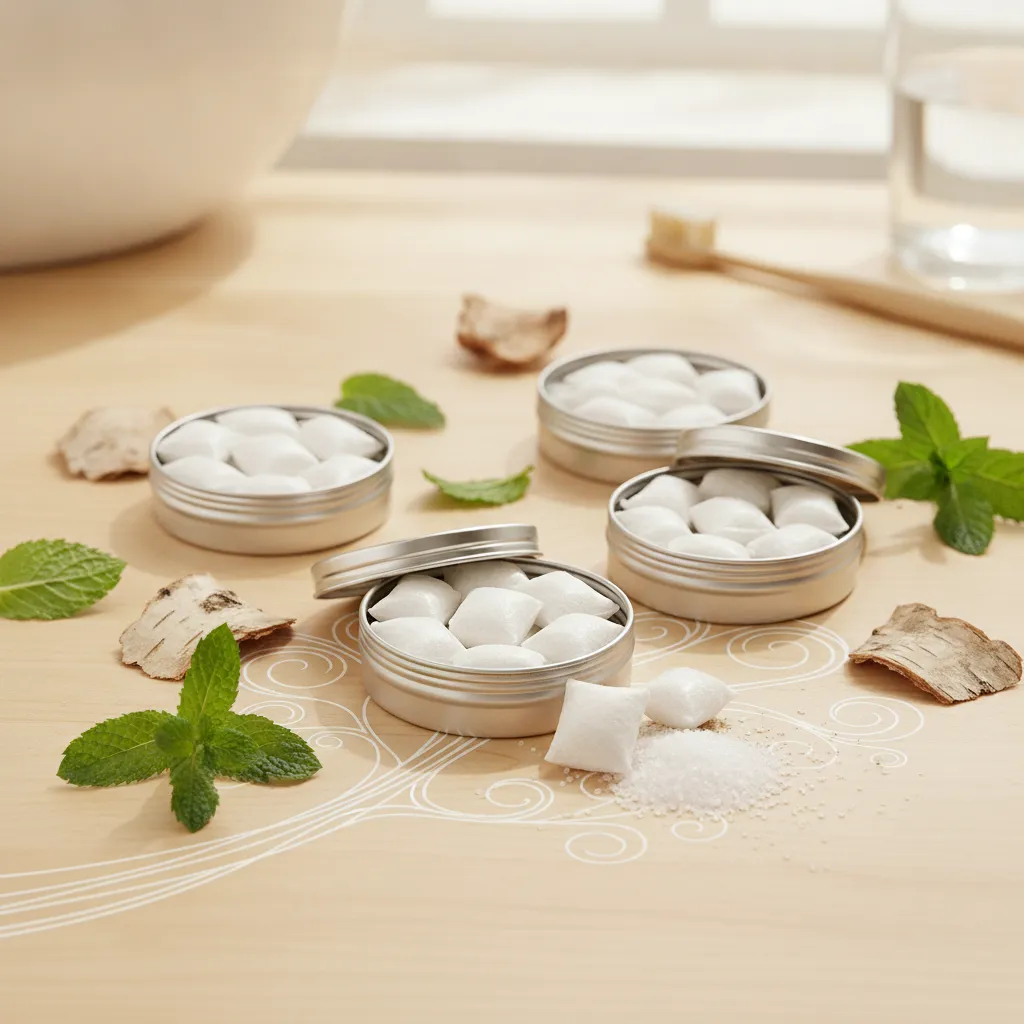
Xylitol oral pouches gums represent a growing category of oral health products that go beyond simple sweetening. Xylitol is a five-carbon sugar alcohol found naturally in birch bark and corn cobs that actively disrupts the bacteria responsible for tooth decay.
Its five-carbon molecular structure is the key detail. Common dietary sugars, glucose, fructose, sucrose, are six-carbon molecules that oral bacteria ferment easily, producing the acid that erodes enamel. Xylitol's five-carbon structure cannot be fermented, which sets off a chain reaction that goes well beyond simply starving bacteria of fuel.
"Xylitol is one of the most well-researched sugar substitutes in dentistry. Its ability to inhibit Streptococcus mutans at the cellular level makes it uniquely effective compared to other sugar alcohols." — Dr. Philippe Hujoel, Professor of Dental Public Health Sciences, University of Washington
The Mechanism That Makes Xylitol Effective for Oral Health
Streptococcus mutans, the primary cavity-causing bacterium, absorbs xylitol through the same transport pathway it uses for glucose [1]. Once inside the cell, the bacteria cannot metabolize it. The cell expends energy trying to process a molecule it cannot break down, a futile cycle that drains its resources and ultimately kills or significantly weakens it [1]. This is a direct antibacterial action, not a passive one.
Xylitol also stimulates saliva flow [2]. Increased saliva raises oral pH, which halts acid erosion, and delivers calcium and phosphate ions that actively remineralize enamel, two distinct benefits working simultaneously [2].
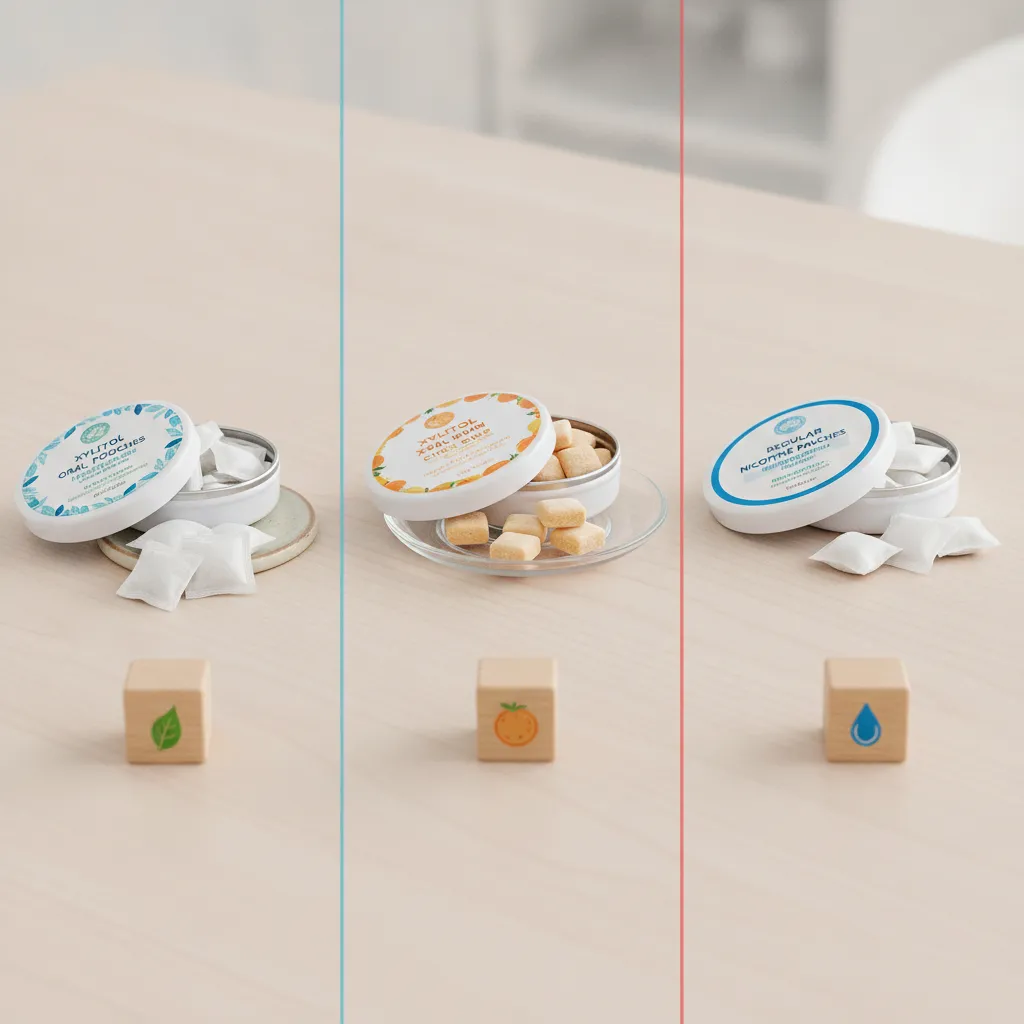
Xylitol oral pouches gums deliver these effects through different mechanisms. Chewing gum relies on mechanical jaw movement to trigger saliva production. Oral pouches sit against the buccal mucosa, the soft tissue lining the cheek and gum, and release xylitol through slow, direct absorption into the surrounding tissue, without requiring any chewing action.
How Xylitol Differs from Sorbitol and Erythritol
Not all sugar alcohols perform equally. Sorbitol, the most common alternative sweetener in standard chewing gum, is partially fermentable by oral bacteria, meaning it still produces some acid, just less than sucrose [1]. It is less effective than xylitol at reducing S. mutans counts.
Erythritol is a four-carbon sugar alcohol and, like xylitol, is non-fermentable. Emerging research suggests erythritol may match or exceed xylitol's efficacy against S. mutans, but the evidence base is smaller and the research is earlier-stage. Xylitol remains the gold standard because it has decades of clinical trial data behind it, including studies showing bacterial reductions of up to 90% with consistent daily use. According to research published in PMC on the effect of xylitol on dental caries and oral flora, no other sugar alcohol has accumulated the same depth of clinical evidence as xylitol [1].
Does Xylitol Actually Repair Gums and Prevent Tooth Decay?
Xylitol reduces dental caries incidence and lowers the bacterial load that drives gum inflammation, but it does not directly regenerate gum tissue.
"The evidence for xylitol's role in caries prevention is among the strongest we have for any dietary intervention in dentistry. Consistent use across multiple daily exposures is what separates meaningful results from marginal ones." — Dr. Kauko Mäkinen, Research Professor, Institute of Dentistry, University of Turku
What the Research Says About Xylitol and Dental Caries
The evidence starts with the Turku Sugar Studies, conducted in Finland in the early 1970s, which were among the first controlled trials to isolate xylitol's effect on cavity formation. Subsequent Cochrane reviews confirmed the finding: consistent xylitol use reduces dental caries incidence by 30–85% [1], depending on daily dose, frequency of use, and delivery format, gum, lozenge, or pouch. That range is worth taking seriously rather than citing only the upper figure.
Xylitol does not rebuild gum tissue. What it does is starve Streptococcus mutans, the primary bacteria behind both tooth decay and gingival inflammation. With consistent use, S. mutans counts drop by up to 90% [1], which reduces the acid environment that erodes enamel and irritates gum tissue. The gums then recover on their own, given the bacterial pressure is removed.
A Finnish clinical study added a striking real-world dimension: mothers who used xylitol gum regularly reduced mother-to-child transmission of S. mutans to their infants by up to 70% compared to groups using fluoride varnish [1]. That's a meaningful public health outcome, not just a lab result.
For users of xylitol oral pouches gums, this bacterial suppression mechanism makes xylitol-based pouch formulas a meaningful upgrade over sugar-sweetened alternatives. If you're also concerned about gum recession linked to other pouch products, our articles on nicotine pouches and gum health and gum recession from nicotine pouches cover that tissue-damage angle directly.
Can Xylitol Irritate Your Gums or Cause Side Effects?
At therapeutic oral health doses, 5–10g per day, side effects are uncommon [2]. The exception is high intake above 40g per day, which can trigger osmotic diarrhea and GI distress in some people [2] because xylitol draws water into the colon when consumed in excess. That threshold is well above what a standard pouch or gum delivers, but it's worth knowing if you're using multiple xylitol products simultaneously.
Gum irritation specifically is not a documented effect of xylitol itself. Any soreness associated with oral pouches typically traces back to other variables, pouch placement, pH of the formula, or nicotine content, not the xylitol component.
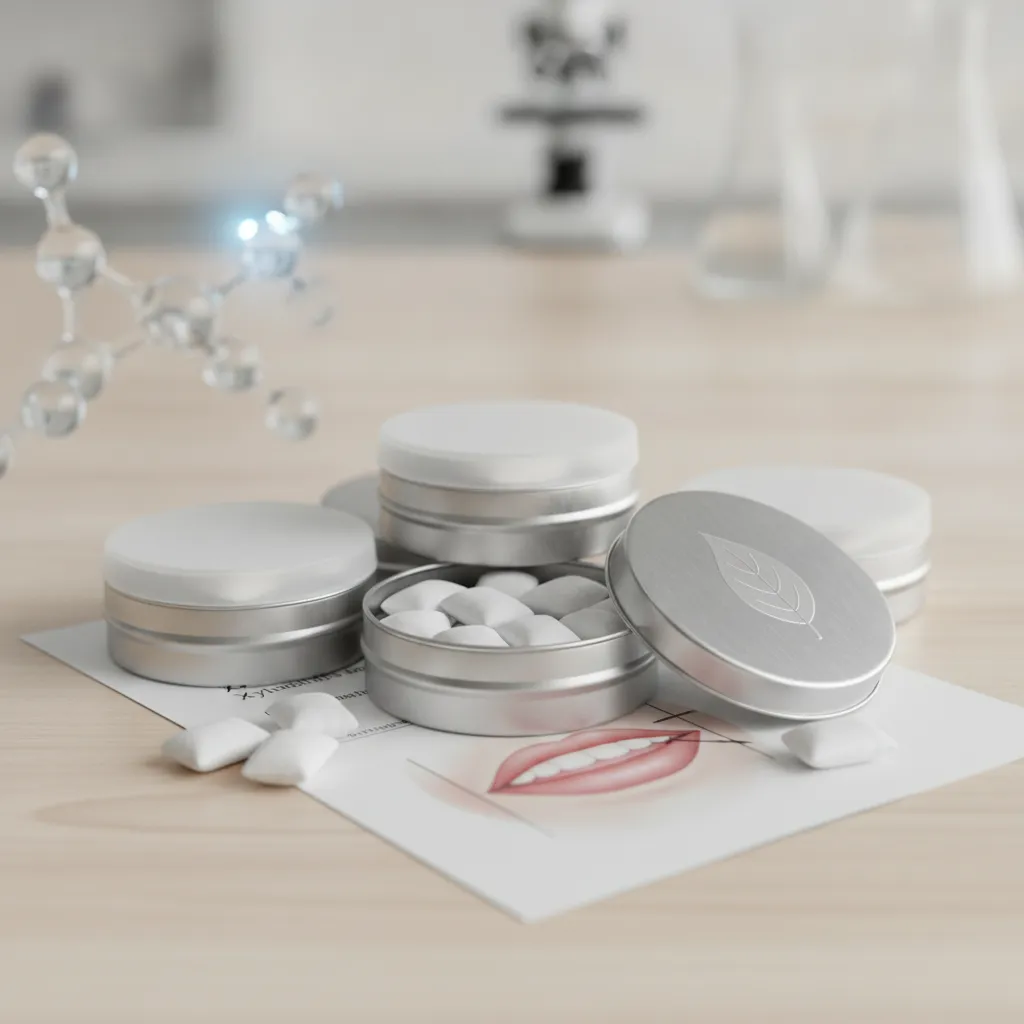
Xylitol Oral Pouches vs. Gum, Rinse, and Toothpaste: Which Format Wins?
Oral pouches deliver the longest xylitol contact time of any common format, 20 to 40 minutes against gum tissue, making them the strongest option for sustained protection.
Effectiveness Differences Between Pouches, Gum, Rinse, and Toothpaste
Contact time is what separates effective xylitol delivery from token exposure. A pouch sits against the gum tissue for the full duration of use, releasing xylitol steadily throughout. Chewing gum [1], by contrast, peaks in xylitol release within the first 5 minutes and drops off sharply as the bolus loses its payload, so the window of active protection is short.
Mouth rinses spread xylitol across all oral surfaces at once, which is useful for hard-to-reach areas, but the contact time runs only 30 to 60 seconds. Toothpaste sits at the bottom of the ranking: it has the shortest contact time of any format and typically contains just 1–10% xylitol [2], compared to 30–70% concentrations found in gum and pouches [2].
Chewing gum also requires continuous jaw movement, which rules it out for people with TMJ disorders or anyone in a meeting, on a call, or in a professional setting. Xylitol oral pouches gums both require no chewing, you place them under the lip and carry on. That hands-free, discreet form factor is the same reason nicotine pouches gained traction with office workers and commuters.
Dentists recommend pairing formats for maximum benefit: use a pouch or gum after meals to neutralize post-meal acid, and xylitol toothpaste twice daily for baseline enamel protection [2].
How Specific Xylitol Brands Compare in Efficacy
In the gum category, Spry, Epic, and Xylichew are the established names, each uses xylitol as the primary sweetener and delivers clinically studied concentrations per piece [1]. The clinical evidence base for these brands is well-documented across multiple caries-prevention trials.
Oral pouch formats are newer. Brands like Hager Pharma and a handful of niche Scandinavian producers have entered the market, but peer-reviewed data specific to the pouch delivery format remains thin. Most of the supporting science extrapolates from gum and lozenge studies. That evidence gap is real, and worth acknowledging if you are choosing a format for a specific dental health goal rather than general maintenance.
How Much Xylitol Should You Use Daily, and Is It Safe for Everyone?
The therapeutic dose for oral health benefits is 5–10 grams of xylitol per day, split across at least 3 separate exposures.
Recommended daily xylitol limits for oral health benefits
Frequency matters more than total dose. Each exposure to xylitol suppresses bacterial activity in the mouth for roughly 30 minutes, so spreading intake across the day produces better results than consuming the same amount in one sitting.
Doing the math on xylitol oral pouches gums: a standard piece of xylitol gum contains 0.7–1.5g per piece, while an oral pouch typically delivers 0.5–1g. To hit the 5–10g therapeutic window, you need 5–7 pieces of gum or 5–10 pouches spread across the day, one after each meal and between meals is a practical starting point.
If you have IBS or fructose malabsorption, start at 2–3g per day and increase gradually. Higher doses can cause bloating, loose stools, or cramping in sensitive individuals. The gut adapts over time, but pushing the dose too fast is the most common reason people abandon xylitol products.
Is xylitol safe for pets and children?
Xylitol is safe for children and actively recommended by pediatric dentists for cavity prevention. Even 1–2g per day shows measurable benefit in kids [1], and the dose scales with body weight, smaller children simply need less.
Dogs are a different matter entirely. Xylitol is acutely toxic to dogs: as little as 0.1g per kilogram of body weight can trigger hypoglycemia and liver failure. Store every xylitol product, gum, pouches, toothpaste, completely out of reach, and treat any suspected ingestion as a veterinary emergency requiring immediate care.
Cats and other common pets do not share the same documented risk, but the dog warning is serious enough that any multi-pet household should treat xylitol products with the same caution as medications.
What Dentists Actually Recommend About Xylitol for Oral Health
Both the ADA and AAPD recognize xylitol as a proven adjunct to oral hygiene, not a replacement for brushing, flossing, or professional cleanings.
Professional Dental Consensus on Xylitol Effectiveness
The American Academy of Pediatric Dentistry and the American Dental Association both endorse xylitol as a beneficial addition to standard oral care [2]. Neither organization positions it as a standalone fix. The clinical evidence supports xylitol's ability to suppress Streptococcus mutans and reduce acid production in the mouth [1], but only when used consistently and alongside fluoride toothpaste.
Dentists are clear on one practical point: timing matters. Oral pH drops sharply after eating, and that acidic window is when enamel is most vulnerable to demineralization [2]. Using xylitol oral pouches gums or mints immediately after meals targets exactly that window, when the acid-neutralizing and bacteria-suppressing effects deliver the most protection.
"When patients ask me about xylitol oral pouches and gums, I tell them the same thing: the format matters less than the habit. Three to five exposures daily, consistently, is what the research supports. One piece of gum after dinner won't move the needle." — Dr. Margherita Fontana, Professor of Cariology, University of Michigan School of Dentistry
How to Build Xylitol Into a Complete Oral Hygiene Routine
The professional consensus frames xylitol as one layer in a system, not the whole system. The routine that matches the strongest clinical trial protocols looks like this:
- Use a xylitol pouch or 2 pieces of xylitol gum within 5 minutes of finishing a meal
- Hold for at least 20 minutes to allow full acid neutralization
- Repeat 3–5 times daily across meals and snacks
- Brush with fluoride toothpaste twice daily
- Floss daily and attend 6-month checkups
If you already use oral pouches as part of a nicotine reduction strategy, the kind covered in our guides on tobacco-free alternatives and nicotine pouches vs vaping, choosing a xylitol-based formula means your pouch habit actively supports your dental health rather than working against it. That's the practical case for xylitol oral pouches gums: it turns a routine you already have into one that does double duty.
Frequently Asked Questions
Can you swallow xylitol from oral pouches or gum?
Small amounts of xylitol absorbed through the mouth are safe, you don't need to swallow the pouch or gum to get the benefit. Xylitol works by contact with oral tissues and saliva, so the absorption happens in your mouth. Swallowing large amounts (above roughly 40–50g per day) can cause digestive discomfort, including bloating and loose stools, so moderation matters. With pouches like Outdare's xylitol-based formula, the dose per unit stays well within a safe range for daily use.
How long does it take for xylitol to show results on teeth and gums?
Consistent xylitol use over three to six months produces measurable reductions in cavity-causing bacteria and visible improvements in gum health [1]. Short-term use, a few days or a week, won't move the needle. Studies show that using xylitol products three to five times daily, totaling 6–10g, is the threshold where clinical benefits appear [1]. Think of it as a daily maintenance habit, not a one-time treatment. Regularity matters more than the specific delivery format you choose.
Is xylitol gum as effective as fluoride for preventing cavities?
Xylitol and fluoride work through different mechanisms, and the research suggests they complement each other rather than one replacing the other [2]. Fluoride remineralizes enamel directly; xylitol reduces the population of Streptococcus mutans, the primary cavity-causing bacterium, so there's less acid attack on enamel in the first place [1]. Used together, they address both sides of the decay process. Xylitol alone is not a substitute for fluoride toothpaste, but it adds a meaningful layer of protection on top of standard brushing.
What happens if my dog eats xylitol gum or an oral pouch?
Xylitol is highly toxic to dogs and requires immediate veterinary attention, do not wait for symptoms to appear. In dogs, xylitol triggers a rapid insulin release that can cause life-threatening hypoglycemia within 30 minutes; higher doses can cause liver failure. Even a single piece of xylitol gum can be dangerous for a small dog. Store all xylitol products, gum, pouches, toothpaste, completely out of reach of pets, and call a veterinarian or animal poison control immediately if ingestion occurs.
Are xylitol oral pouches gums suitable for people with diabetes?
Xylitol oral pouches gums are generally considered suitable for people with diabetes because xylitol has a very low glycemic index of approximately 7, compared to 65 for sucrose. It is absorbed slowly and does not cause the rapid blood sugar spikes associated with regular sugar. However, individuals with diabetes should consult their healthcare provider before adding any new product to their routine, particularly if they are using multiple xylitol products daily, as cumulative intake can still contribute a small number of calories and carbohydrates.
Conclusion
Xylitol earns its place in oral pouches and gum through a specific, well-documented mechanism: it starves Streptococcus mutans of the fuel it needs to produce acid, reducing cavity risk and supporting healthier gums over time [1]. The delivery format matters less than consistency, 6–10g daily across three to five uses is the dose range where clinical studies show real results [1].
If you're already using oral pouches daily, choosing a xylitol-based formula is a straightforward upgrade. Outdare's pouches use a xylitol-based formula alongside plant-fiber fillers and natural mint, meaning you get the oral health benefit built into a product you're already reaching for. Start there: swap your current pouch for one that does more than just satisfy the habit.
Sources & References
- The effect of xylitol on dental caries and oral flora - PMC
- Xylitol for Oral Health− Knowing its Pros and Cons | Bondi Dental
Recommended Articles
Explore more from our content library: