





Habit Replacement Therapy: Breaking Addiction Cycles
Habit replacement therapy is a behavioral treatment that breaks unwanted habits by substituting a competing response, a physically incompatible action, every time the urge to perform the habit arises. Rooted in Habit Reversal Training (HRT), it works by disrupting the automatic neurological loop that drives repetitive behaviors. Clinical trials show 80–90% reduction in tic frequency for Tourette's, and strong outcomes for hair pulling, skin picking, and other body-focused repetitive behaviors.

What Is Habit Replacement Therapy and How Does It Work?
This behavioral intervention blocks an unwanted habit by training a physically incompatible action to occupy the same moment in time.
The core mechanism is the competing response principle: the replacement behavior must make it physically impossible to perform the unwanted one simultaneously. Clenching a fist, for example, cannot coexist with nail-biting. The replacement isn't symbolic, it has to be mechanically exclusive.
"The competing response must be something the person can do continuously for at least one minute, and it must be socially inconspicuous so the individual will actually use it in real-world situations." — Douglas Woods, Professor of Psychology, Marquette University
What Is the Difference Between HRT and CBIT?
Habit Reversal Training (HRT) is the specific clinical protocol developed by Nathan Azrin and R. Gregory Nunn in 1973 [1]. It is a structured, multi-component program that includes awareness training, competing response training, and social support procedures. The broader approach of substituting behaviors is the general framework, and HRT is one formal implementation of it.
CBIT (Comprehensive Behavioral Intervention for Tics) is a tic-specific evolution of HRT, developed decades later and approved by the American Academy of Neurology as a first-line treatment for Tourette syndrome and chronic tic disorders [1]. CBIT adds a functional intervention component, identifying environmental triggers that worsen tics, which standard HRT does not include. According to the Cleveland Clinic, CBIT is now considered the gold standard behavioral approach for tic disorders.
One separate modality worth naming here: TF-CBT (Trauma-Focused Cognitive Behavioral Therapy) is not a variant of HRT. It targets trauma-related distress through cognitive restructuring, not habit substitution. The similar acronym causes frequent search confusion, but the two approaches share no clinical overlap.
How Does the Habit Loop Explain Why Replacement Works?
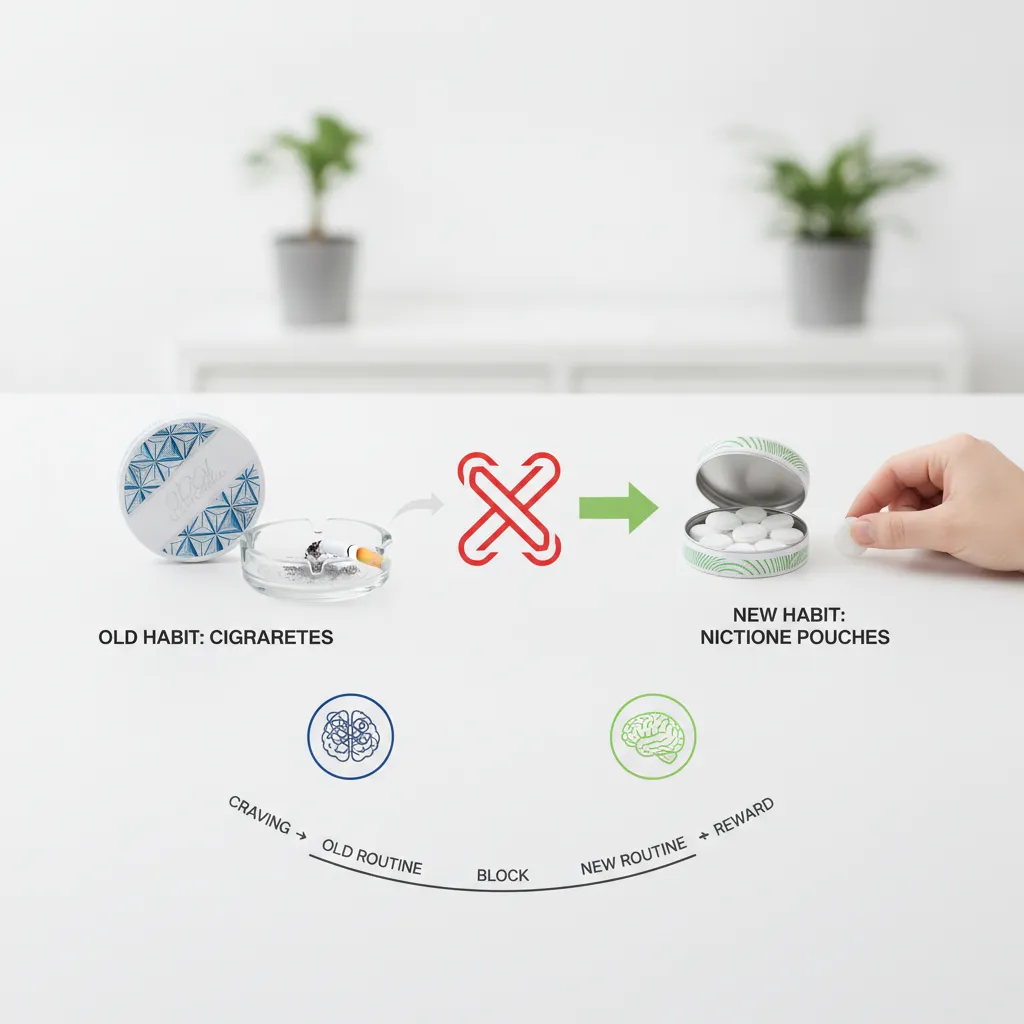
Neurological research describes habitual behavior as a three-stage loop: cue → routine → reward. The cue triggers the behavior; the routine is the behavior itself; the reward reinforces it, wiring the loop deeper over time.
HRT intervenes at the routine stage, after the cue fires but before the reward is delivered. By inserting a competing response at exactly that point, the therapy prevents the original routine from completing, which gradually weakens the neural pathway reinforcing it. The cue still arrives; the automatic response does not.
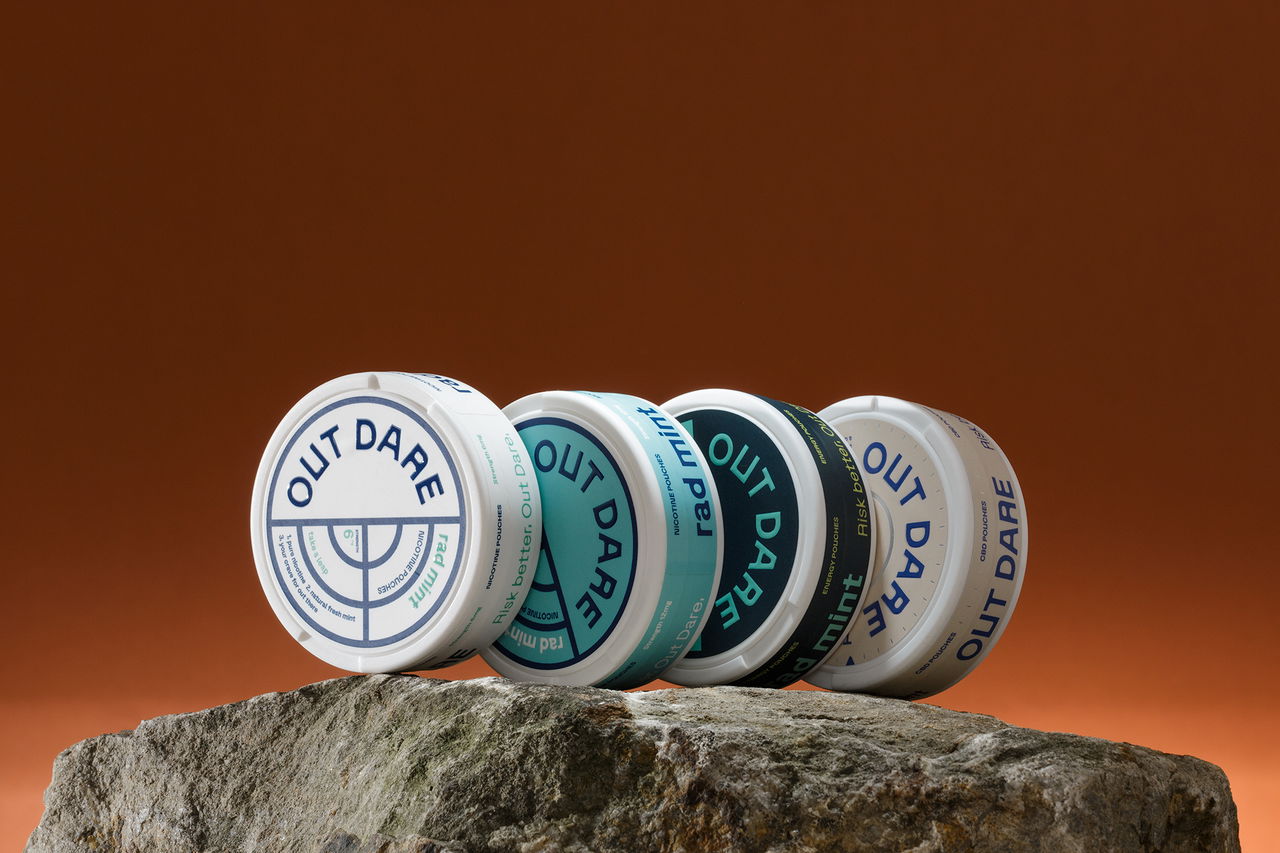
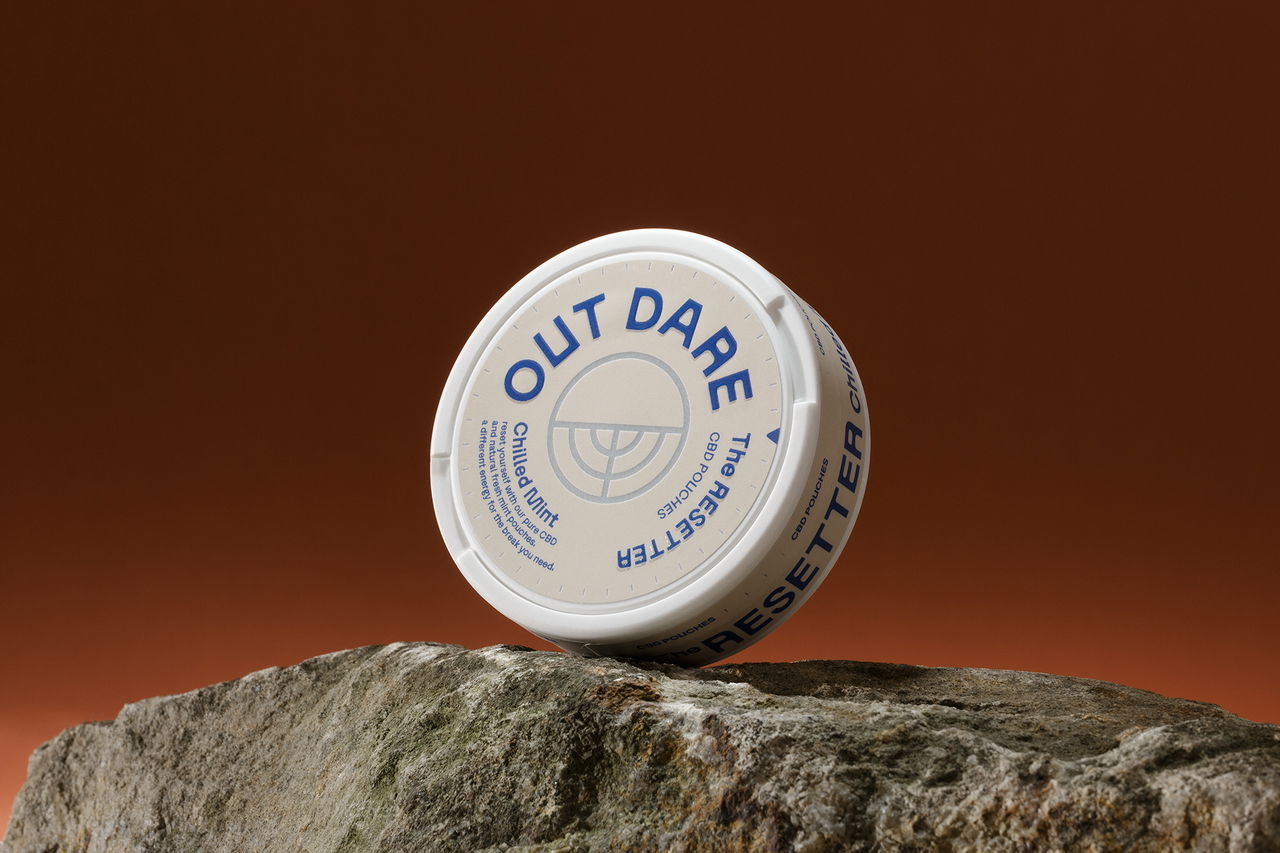
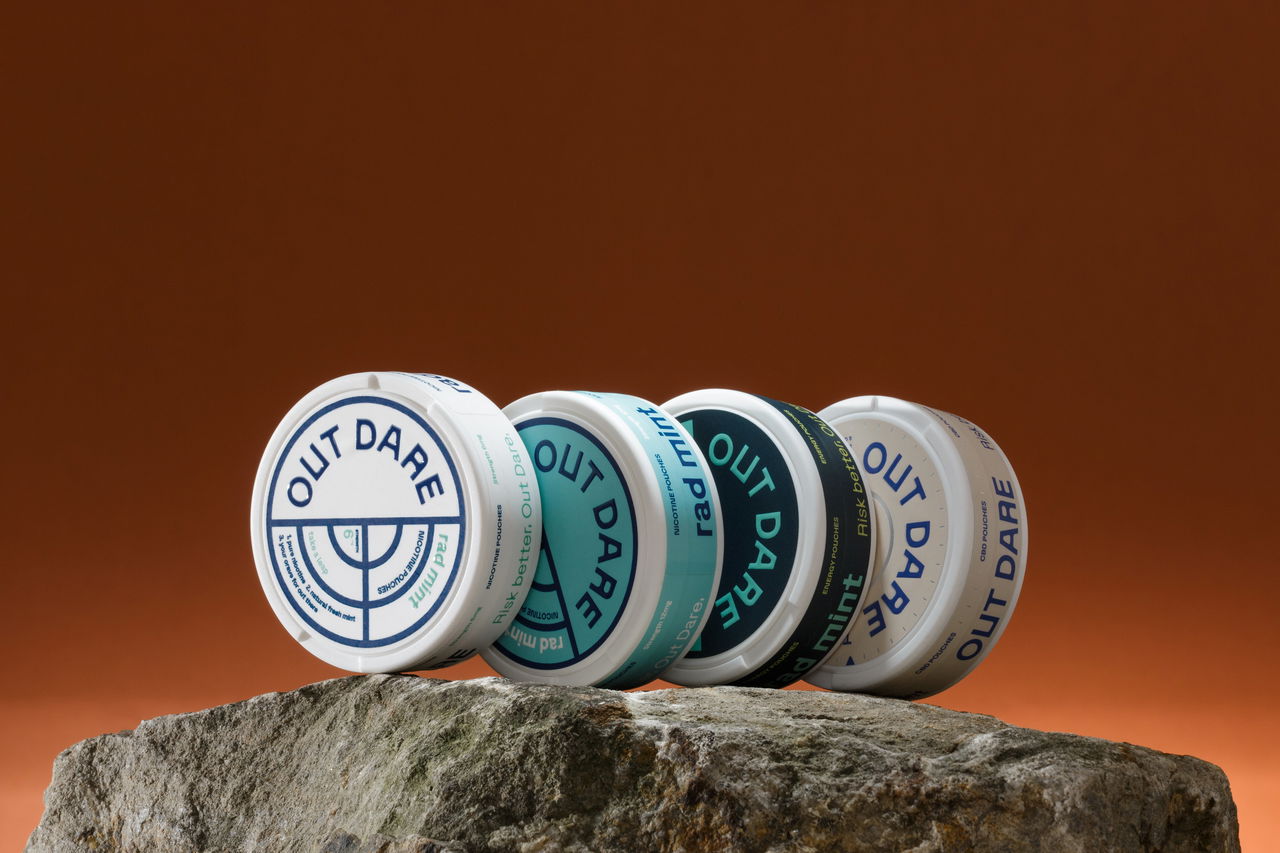
This same mechanism applies well beyond tics. Nicotine pouch users, for instance, experience a cue (stress, boredom, the 3pm focus dip) that triggers a deeply ingrained oral routine. Outdare's three-pouch system uses this principle directly, replacing a nicotine pouch with a sensorially identical Energy or CBD pouch at the cue moment, so the routine completes and the reward fires, without the chemical dependency advancing.
The 4 Core Components of Habit Reversal Training
Habit reversal training breaks down into four clinical components: awareness training, competing response training, social support, and generalization training [1].
The Four Components Defined
Awareness training teaches you to detect the earliest physical warning signs before the habit fires. The practical tool here is an ABC log, a habit diary where you record the Antecedent (what triggered the urge), the Behavior (the habit itself), and the Consequence (what followed). Completing this log across several days reveals patterns most people never consciously notice.
Competing response training has you practice a physically incompatible replacement behavior for at least 60 seconds every time an urge hits. The response must be held for that full minute, and therapists typically require 10–15 deliberate practice trials per session before the response starts to feel automatic. That's the realistic effort benchmark most guides skip.
Social support means enlisting a partner, a friend, family member, or colleague, who can prompt you to use the competing response when they notice the habit occurring and reinforce you when you succeed.
Generalization training extends practice beyond the clinic into real-world settings: your desk, your commute, a social event. A response that only works in a therapist's office won't hold under the conditions that actually trigger the habit.
What Is an Example of Habit Reversal Therapy in Practice?
Take a nail-biter. Awareness training helps them notice jaw tension and a slight hand drift, the warning signs that appear before fingers reach the mouth. Their competing response: clench both fists firmly for 60 seconds whenever that tension appears. The ABC log confirms that stress before meetings is the primary antecedent, so they practice the fist-clench specifically in pre-meeting situations until it becomes the default response.
Common competing responses used in clinical practice include:
- Clenching both fists tightly for 60 seconds (nail-biting, hair pulling)
- Pressing fingertips together firmly (skin picking, thumb sucking)
- Placing hands flat on thighs (tic disorders)
- Slow diaphragmatic breathing through the nose (vocal tics)
- Substituting a non-nicotine oral product (Nicotine Pouches: A Science-Based Guide">nicotine pouch habits)
Why the Competing Response Must Be Socially Invisible
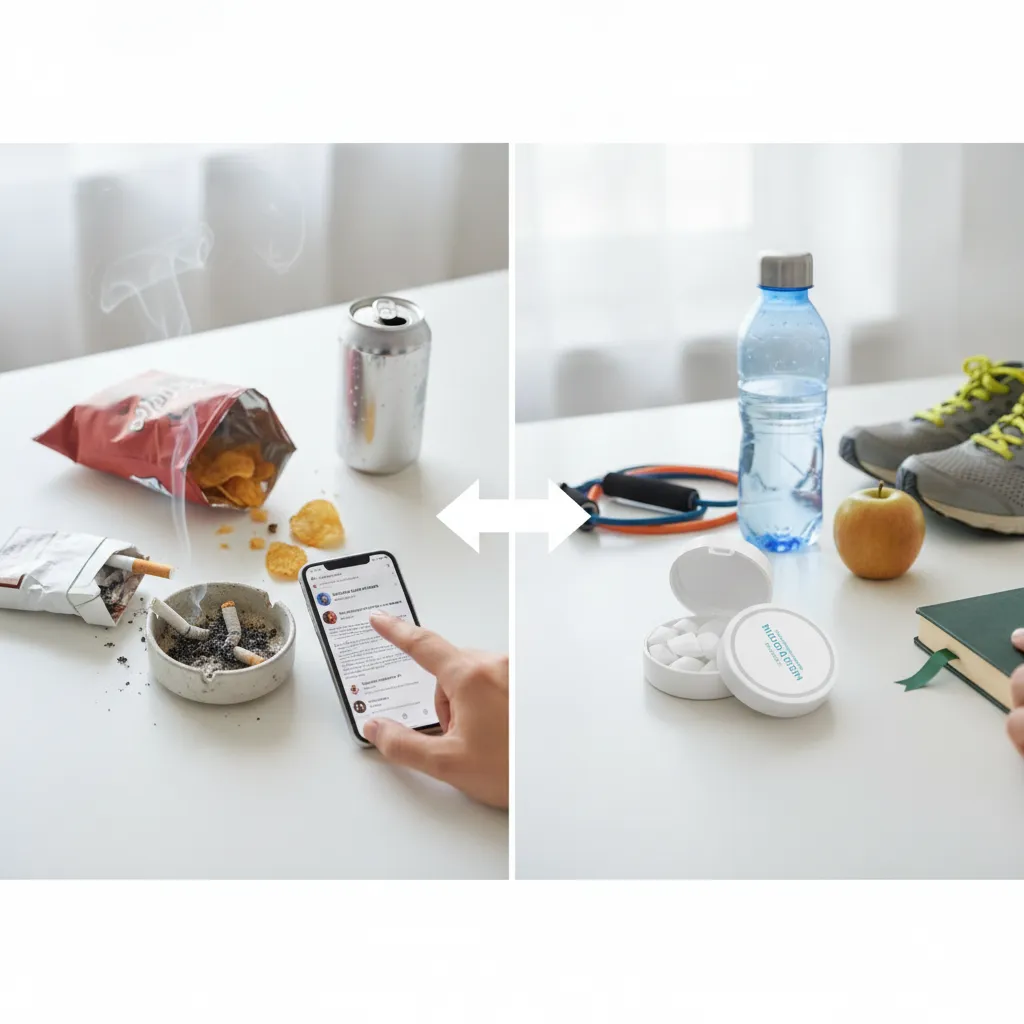
This is a deliberate design criterion in behavioral habit substitution, not an afterthought. A competing response that draws attention, arm-waving, loud verbal cues, reduces compliance because people simply stop using it in public [1]. Clenching a fist, pressing fingertips together, or placing a pouch under the lip are all responses that work precisely because nobody around you notices them.
How Habit Replacement Therapy Compares to CBT and Exposure Therapy
HRT, CBT, and ERP each target a different layer of behavior, choosing the wrong one for the condition is a documented clinical error, not just a suboptimal choice.
When Is Habit Replacement Therapy More Effective Than CBT?
CBT works top-down: it targets the distorted thoughts that drive feelings, which then drive behavior. Habit replacement therapy works bottom-up, it operates at the behavioral-motor level and bypasses cognition entirely. That distinction matters clinically.
For motor habits like tics, nail-biting, or hair pulling, the urge is sensory and physical, not thought-driven. CBT's cognitive restructuring has little to work on because there is no distorted belief maintaining the behavior, just an automatic motor sequence. HRT interrupts that sequence directly, which is why it outperforms CBT for this class of habits.
The clinical decision rule is straightforward. Choose habit replacement therapy when the habit is motor or sensory-driven. Choose Exposure and Response Prevention (ERP) when avoidance and intrusive thoughts dominate, ERP is the gold standard for OCD, not HRT, and misapplying HRT to OCD is a recognized clinical mistake. Choose CBT when negative self-beliefs are actively maintaining the behavior.
"Habit reversal training is most powerful when the behavior is automatic and sensory-driven. Trying to apply cognitive restructuring to a motor tic is like trying to think your way out of a knee-jerk reflex — the intervention has to meet the behavior at the right level." — Michael Twohig, Professor of Psychology, Utah State University
Clinical Outcome Data: HRT vs. Other Behavioral Approaches
The outcome data support these distinctions clearly. A 2010 RCT by Wilhelm et al. found that Comprehensive Behavioral Intervention for Tics (CBIT), an HRT-based protocol, produced a 53% response rate in Tourette's patients, compared to 19% for psychoeducation and supportive therapy [1]. That gap is large enough to be clinically decisive.
For trichotillomania, a 2006 study by Ninan et al. found HRT superior to clomipramine, a first-line pharmacological treatment, at 12-week follow-up. HRT outperforming medication at that interval is a strong result, and it reinforces why behavioral specificity matters more than treatment intensity when the habit is motor-driven. According to research published in PMC, behavioral interventions like HRT demonstrate durable effects that pharmacological treatments often fail to match at long-term follow-up.
What a Typical Habit Replacement Therapy Session Looks Like
A standard course of this treatment runs 8–10 sessions over 10–12 weeks, moving from assessment to real-world practice in a structured sequence.
What to Expect in Your First HRT Session
Session 1 is assessment only. Your therapist maps the habit's full topography, how often it occurs, how long each episode lasts, which settings trigger it, and what physical sensations (the premonitory urge) precede it. No competing response is introduced yet.
The tools are a structured interview and a habit diary you start keeping immediately after. That diary is not optional. Patients who complete their daily homework log have roughly 2× better outcomes at 6-month follow-up than those who skip it, making consistent record-keeping one of the strongest predictors of success in the entire program.
Sessions 2–4 shift to awareness training. You practice detecting the premonitory urge the moment it appears, then execute the competing response under direct therapist observation. The goal is automatic detection before the habit fires, not willpower after it already has.
Sessions 5–8 introduce generalization. You rehearse the competing response in progressively harder real-world scenarios, a crowded office, a stressful commute, a social situation. A support person, typically a partner or family member, joins at this stage to provide live prompts when the habit appears outside the clinic.
This graduated structure mirrors what products like Outdare apply to nicotine pouch dependency: the ritual and sensory components are addressed first, and chemical reduction follows once the behavioral layer is stable.
How Long Does Habit Replacement Therapy Take?
Standard HRT completes in 8–10 sessions [1]. CBIT, the tic-specific adaptation, follows the same session arc but adds function-based interventions that target environmental triggers shown to worsen tic frequency, extending the clinical focus without significantly changing the total timeline.
Most patients reach discharge within 12 weeks. Relapse prevention work, if needed, is brief and typically handled in one or two follow-up sessions rather than a full new course.
Conditions HRT Treats, Success Rates, and What It Costs
This behavioral approach treats many conditions, from clinical tic disorders to everyday compulsive habits, with strong evidence and measurable success rates.
Can HRT Treat Skin Picking, Hair Pulling, and Other Non-Tic Habits?
The most established clinical applications are Tourette's syndrome and chronic tic disorders. Comprehensive Behavioral Intervention for Tics (CBIT) trials report 80–90% tic reduction in patients who complete the full protocol [1]. The same core framework applies to body-focused repetitive behaviors (BFRBs): trichotillomania (hair pulling), excoriation disorder (skin picking), onychophagia (nail biting), and thumb sucking all respond well to HRT's competing-response structure.
Emerging evidence supports HRT for gambling disorder and compulsive shopping, where the habit loop, trigger, behavior, relief, mirrors the mechanics behind tic and BFRB cycles. Nicotine and oral habits follow the same pattern. For users trying to reduce or quit nicotine pouches, HRT principles directly underpin gradual-reduction approaches: replacing the chemical hit with a sensorially identical non-nicotine substitute addresses the 60% of addiction that is ritual and sensation, not pharmacology. Outdare's 4-week reduction method applies exactly this logic, the Energy and CBD pouches share the same mint flavor, burn, and mouthfeel as the Nicotine pouch, so the behavioral loop stays intact while chemical exposure drops.
A 2019 meta-analysis across 21 HRT studies found a mean effect size of d = 1.2, a large effect, with 70–85% of patients showing clinically significant improvement at 6-month follow-up [2].
Does Insurance Cover Habit Replacement Therapy?
In the US, out-of-pocket HRT sessions typically run $150–$250 each; a standard 8-session course costs $1,200–$2,000. Many insurance plans cover HRT under behavioral health benefits when a licensed psychologist or LCSW delivers it. Patients should request CPT code 90837 (60-minute psychotherapy) or 90834 (45-minute) when verifying coverage, these are the billing codes most insurers recognize for this type of session.
Access remains a real barrier. Fewer than 15% of licensed therapists hold specific training in HRT or CBIT. The TLC Foundation for BFRBs and the Tourette Association of America both maintain vetted therapist directories, these are the most reliable starting points for finding a qualified provider.
Frequently Asked Questions
Is habit replacement therapy the same as habit reversal training?
No, habit replacement therapy is a broad term for any structured approach that swaps an unwanted behavior for a healthier one, while habit reversal training (HRT) is a specific clinical protocol developed by Azrin and Nunn in 1973 [1]. HRT involves formal steps: awareness training, competing response training, and social support. Habit replacement therapy can include HRT as one method, but it also covers behavioral activation, sensory substitution, and product-based systems like nicotine reduction protocols.
How long does it take for a replacement habit to become automatic?
Research published in the European Journal of Social Psychology (Lally et al., 2010) found that new habits take between 18 and 254 days to become automatic, with a median of 66 days. The wide range reflects how complex the behavior is and how consistently you repeat it. Simple replacement behaviors, like reaching for a non-nicotine pouch instead of a nicotine one, tend to automate faster because the sensory cue and physical ritual remain unchanged.
Can you do habit replacement therapy on your own without a therapist?
Yes, self-directed habit replacement is possible and widely practiced, though clinical guidance improves outcomes for severe dependencies [1]. The core requirement is identifying your specific trigger, choosing a replacement behavior that satisfies the same need, and repeating it consistently at the same cue. Structured systems, like Outdare's 4-week reduction method, which uses the 30/30/30 Addiction Rule to guide users from nicotine pouches toward Energy or CBD variants, give you the protocol without requiring a clinical appointment.
What is the difference between HRT and TF-CBT?
HRT (habit reversal training) targets repetitive, automatic behaviors like tics, nail-biting, or compulsive rituals by training a competing physical response [1]. TF-CBT (Trauma-Focused Cognitive Behavioral Therapy) addresses trauma-driven thoughts and emotional patterns, not behavioral automaticity. The two therapies treat different root causes: HRT works on the motor and sensory loop of a habit, while TF-CBT works on the cognitive and emotional triggers that precede behavior.
Who is a good candidate for habit reversal training?
HRT is most effective for individuals whose unwanted behaviors are motor-driven, automatic, and triggered by a sensory premonitory urge rather than by intrusive thoughts or emotional distress. Ideal candidates include people with tic disorders, body-focused repetitive behaviors like hair pulling or skin picking, and oral habits such as nail-biting. Adults and children as young as eight can benefit, provided they have sufficient self-awareness to detect the urge before the behavior fires. Those with co-occurring OCD or severe anxiety may need ERP or CBT alongside HRT.


Conclusion
Habit replacement therapy works because it respects how the brain actually builds and maintains behavior, through cues, routines, and rewards, not willpower alone. The clearest takeaway: your replacement behavior must satisfy the same need as the habit you're dropping, or the substitution will fail within days. For nicotine users, that means the oral ritual, the burn, and the sensory hit all need a match, not just a lower dose.
If you're ready to test this in practice, start with Outdare's Discovery Pack. It puts all three pouch types, Nicotine, Energy, and CBD, in your hands so you can run the 4-week reduction method with real data on what your triggers actually are.
Sources & References
- Habit Reversal Training: What It Is & How It Works — Cleveland Clinic
- Behavioral Interventions for Habit Disorders: A Meta-Analysis — PubMed Central
Recommended Articles
Explore more from our content library: